Booking a Visit
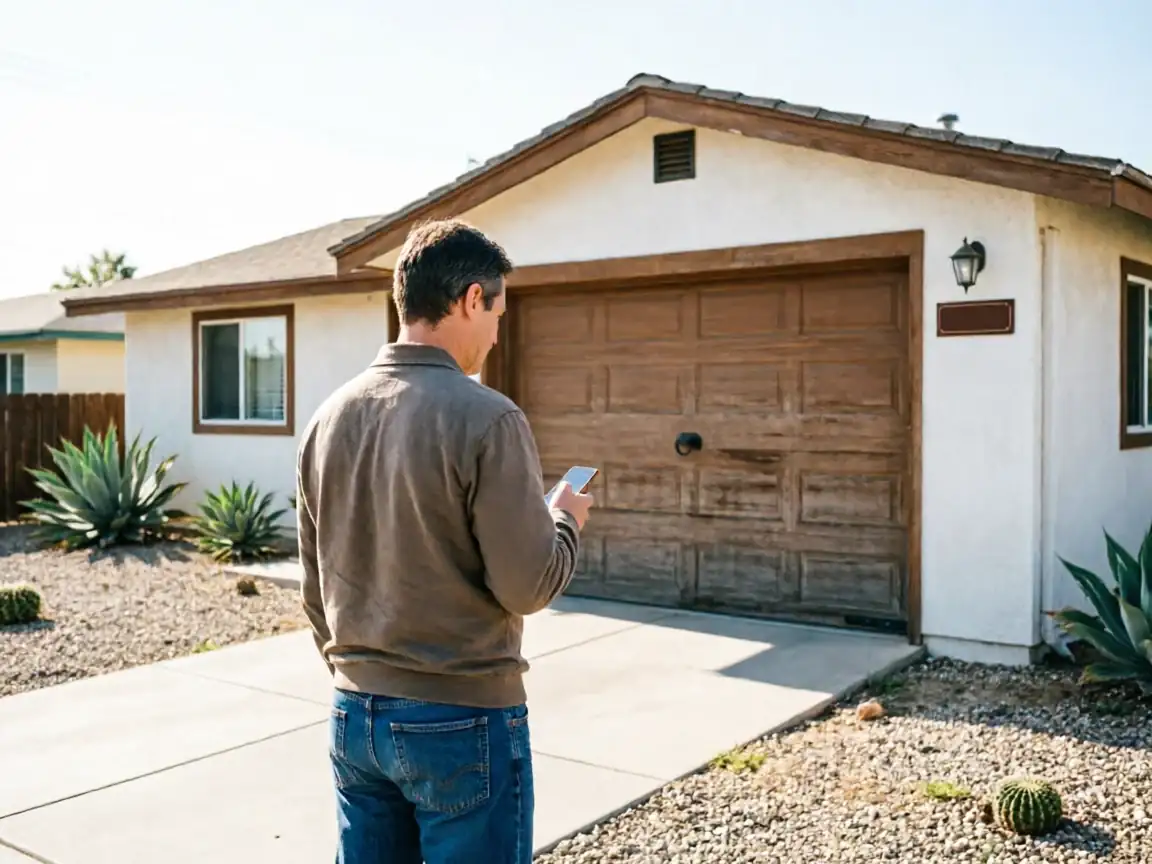
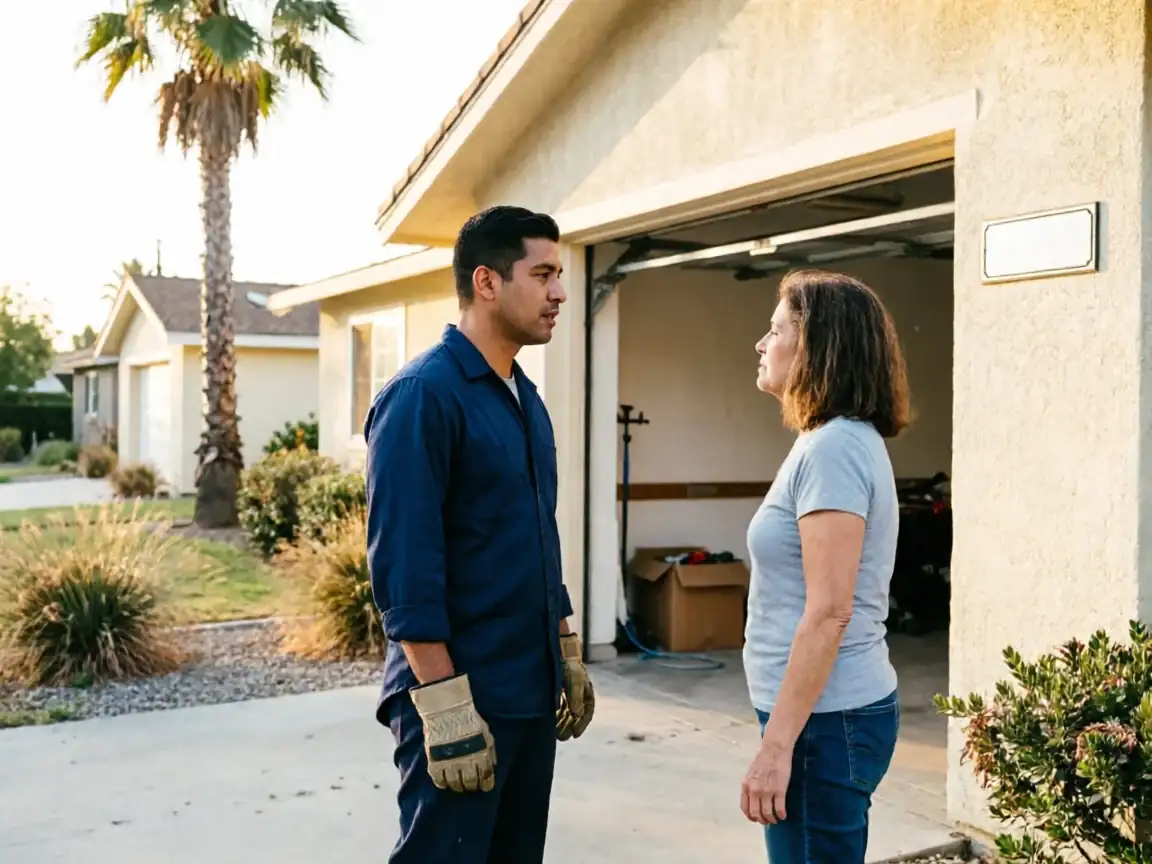
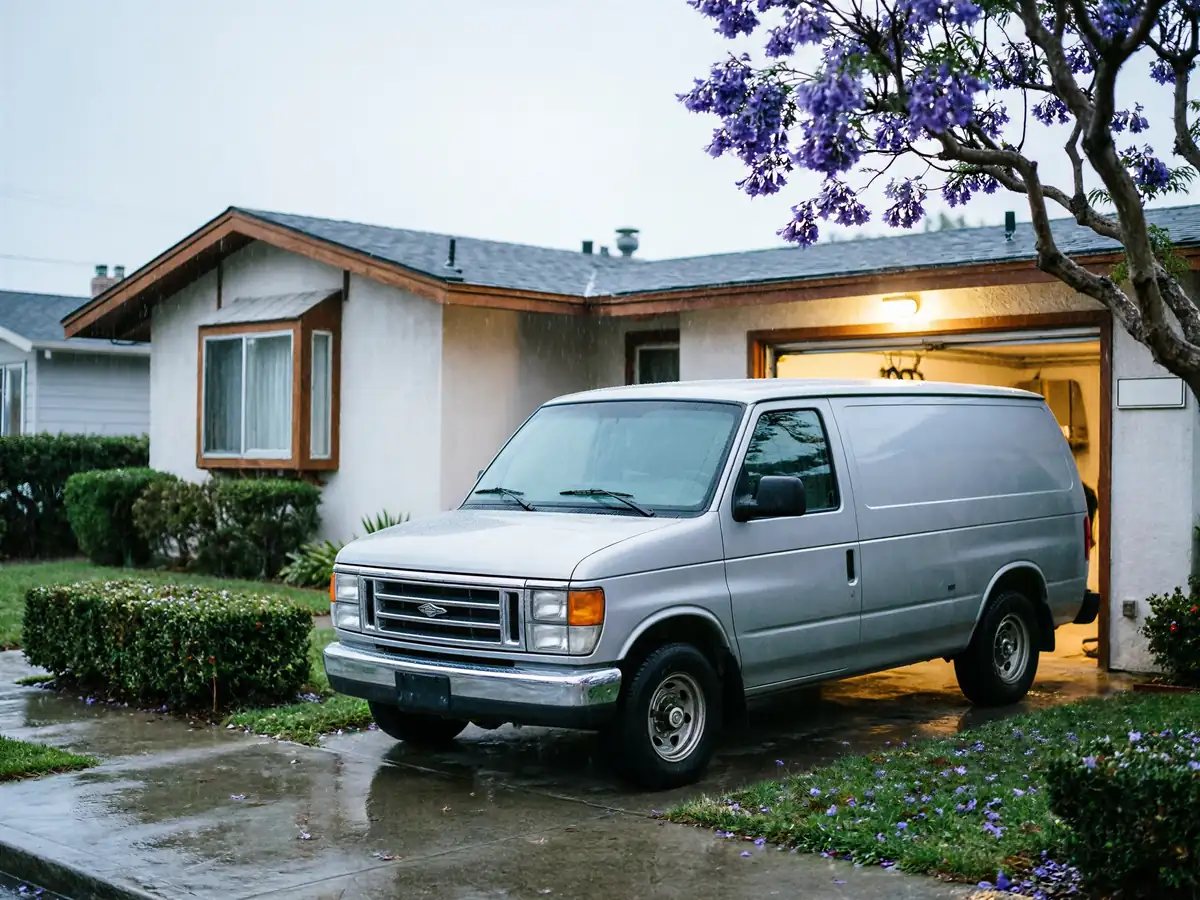
We work out of Vista, six miles from Bonsall, and a spring call here goes on the same truck route as everything else west of the Valley. When you call, tell us whether the door won't move at all or just sags on one side when it opens halfway - that tells us if we're dealing with one broken spring or a pair about to go. Bring the door's age into the conversation too. Bonsall's housing stock centers on a median build year of 1989, and a lot of those openers and spring setups have never been swapped out. We carry standard torsion spring sizes on the truck, but if your door turns out to need something unusual, we'll say so up front instead of promising a same-visit fix we can't deliver. We don't keep a branch or a storage yard in Bonsall itself, so if a part has to be special-ordered, that adds a day or two beyond the drive time. Across the roughly 1,599 households here, most doors are closer in age to each other than you'd think, which means the job we quote your neighbor is usually close to the job we'll quote you.
Why It Happens Here
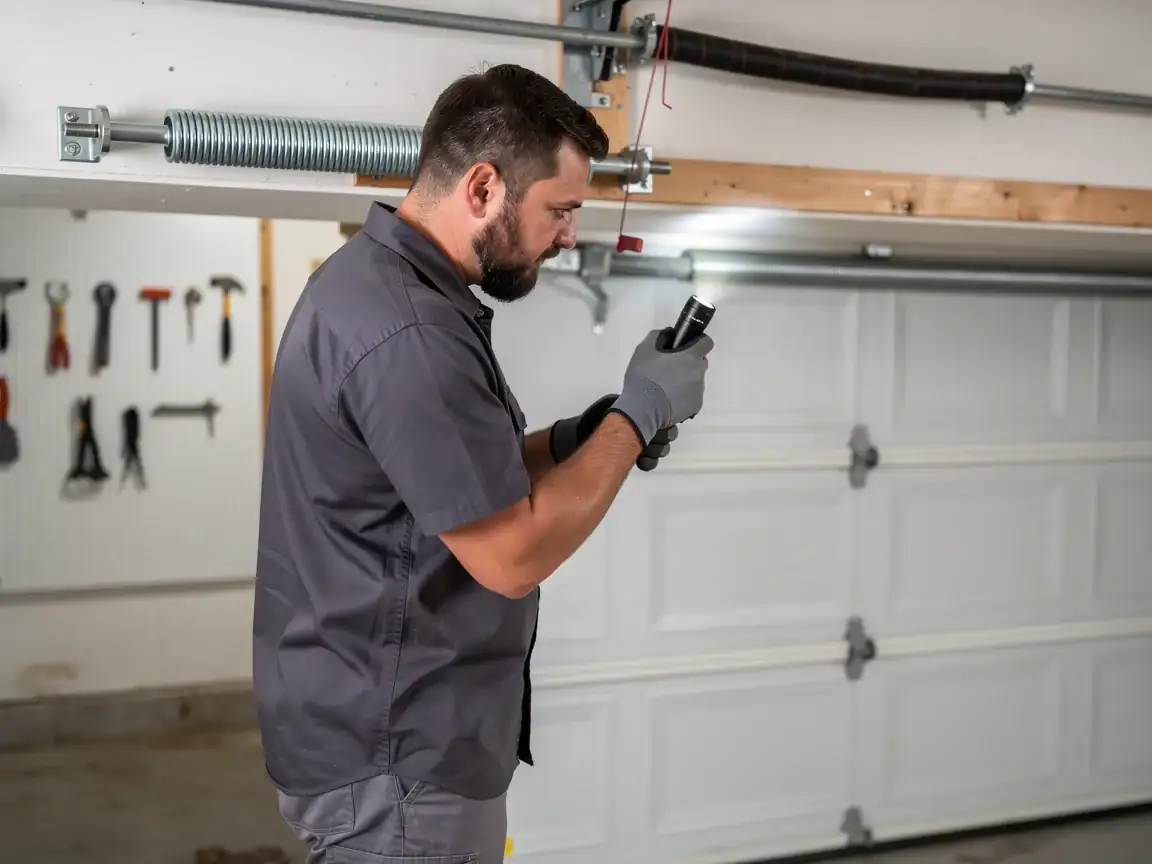
A door built around 1989 has had over three decades of cycles on its original torsion spring, and torsion springs are rated in cycles, not years - somewhere between 7,000 and 10,000 openings is normal before the metal fatigues and snaps. If nobody's touched the spring since the house was framed, you're well past that number. Bonsall sits in the mild temperate band that covers this whole service area, so the springs here aren't fighting the hard freeze-thaw cycles that kill hardware in colder climates. That's a point in your favor: the spring itself usually fails from plain metal fatigue and age, not from rust seizing the coils or a winch frozen by ice. What we see more often out this way is the spring going quietly brittle under paint and dust, with no obvious warning until the day it lets go. If your door is original to a late-1980s build and you've never had the spring replaced, you're not early for this repair - you're about due.
The DIY Question
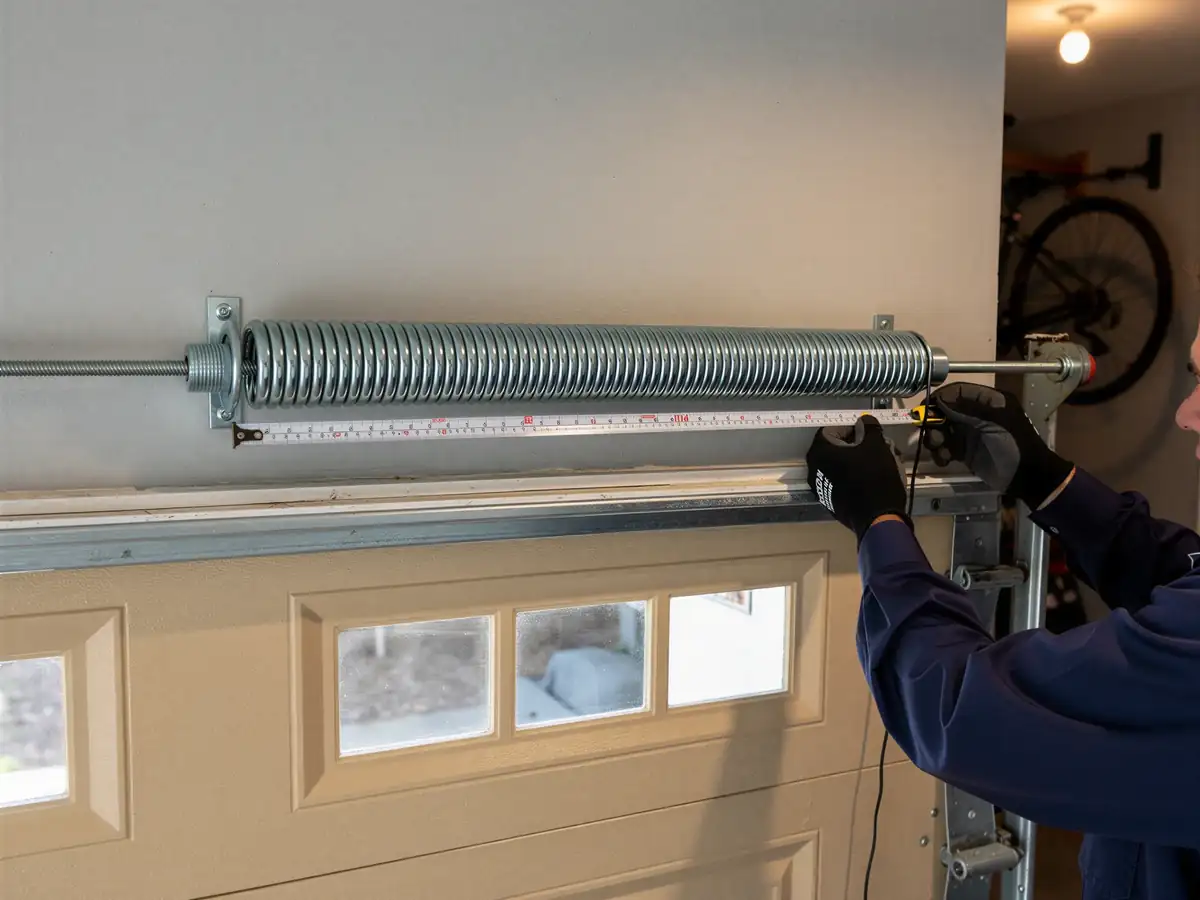
Don't do this one yourself. A torsion spring under tension can put someone in the hospital, and that risk doesn't change because the door is in Bonsall instead of anywhere else - what does change is how likely it is that the spring you're looking at has never been replaced. A spring original to a 1989 build has had no maintenance history for you to go on, which means you can't tell by looking whether it's one cycle from failing or already failed and just hasn't finished coming apart. Extension springs are a little more forgiving to inspect, torsion springs are not forgiving at all. If you're comfortable swapping a garage door opener's remote battery, that's a different skill level entirely from winding a torsion bar. This is the one place on a garage door job where the honest advice is simply: call someone, don't learn on the job.
The Complications
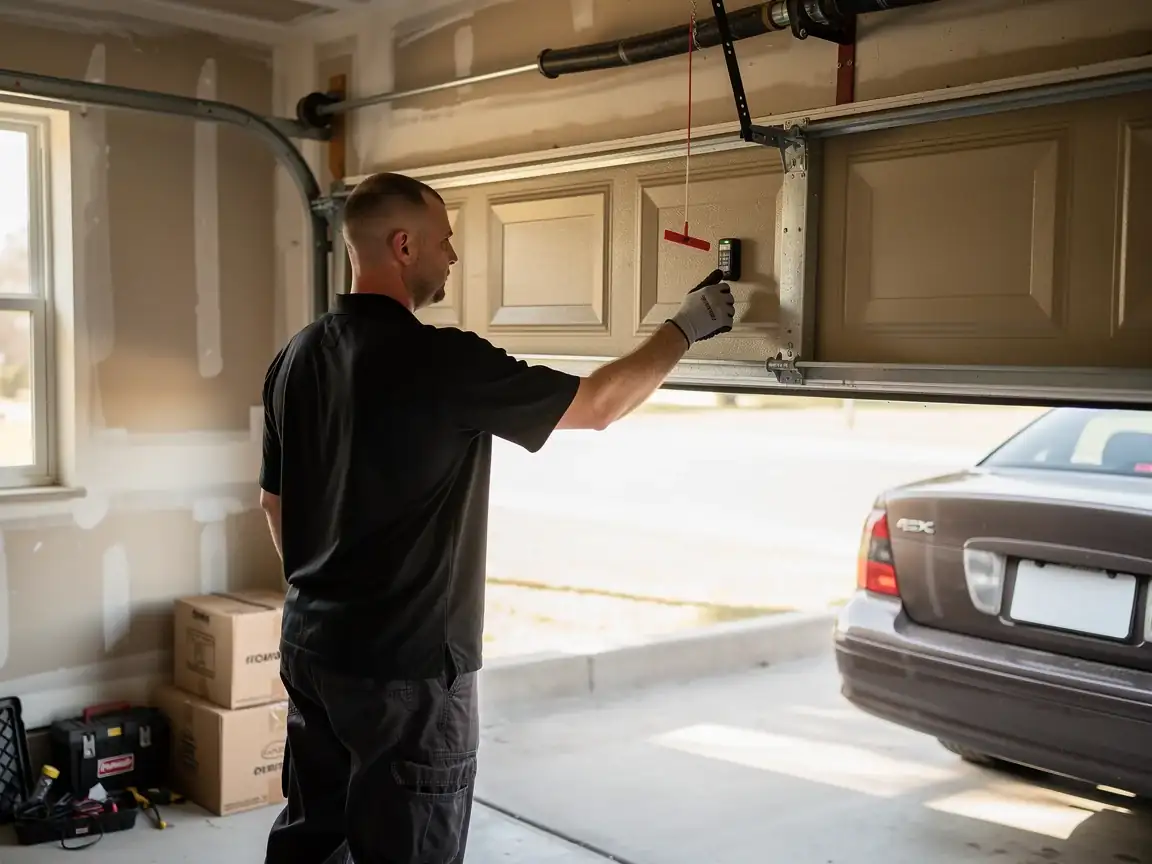
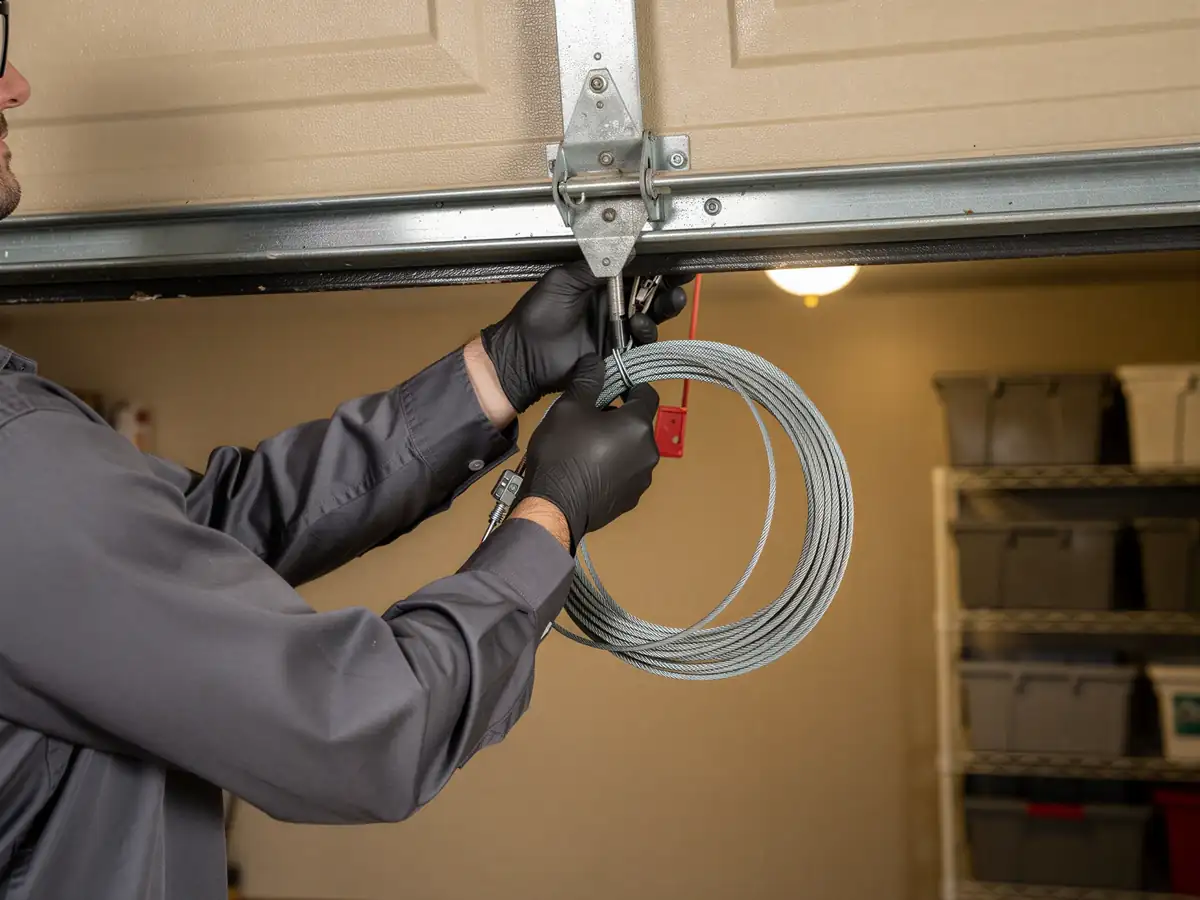
The complication we run into most in Bonsall is a door where the spring failed but so did something it was holding up - a bent track, a cracked panel seam, a cable that frayed before it snapped. On a door that's been running on its original 1989 hardware for over thirty years, that's common enough that we check for it before we quote the job as just a spring. Household income here runs well above the regional median, and we've found that often translates to doors that got cosmetic upkeep - paint, weatherstripping - without the drivetrain hardware ever being touched, since nobody thinks about a spring until it breaks. The other complication is parts availability for anything non-standard; most 1980s doors use common spring sizes, but garage models vary, and if yours doesn't match what's on the truck we'll be upfront about the wait instead of forcing a part that's close but wrong.