Why It Happens Here
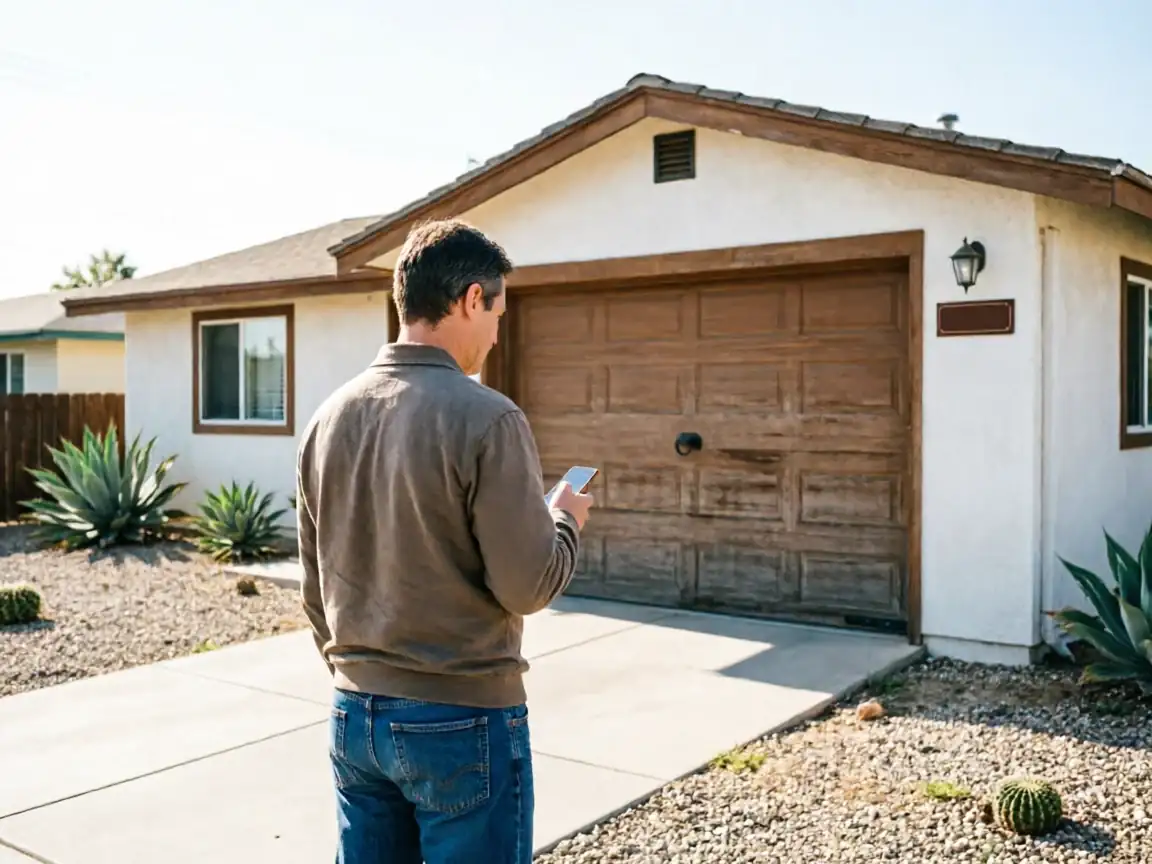
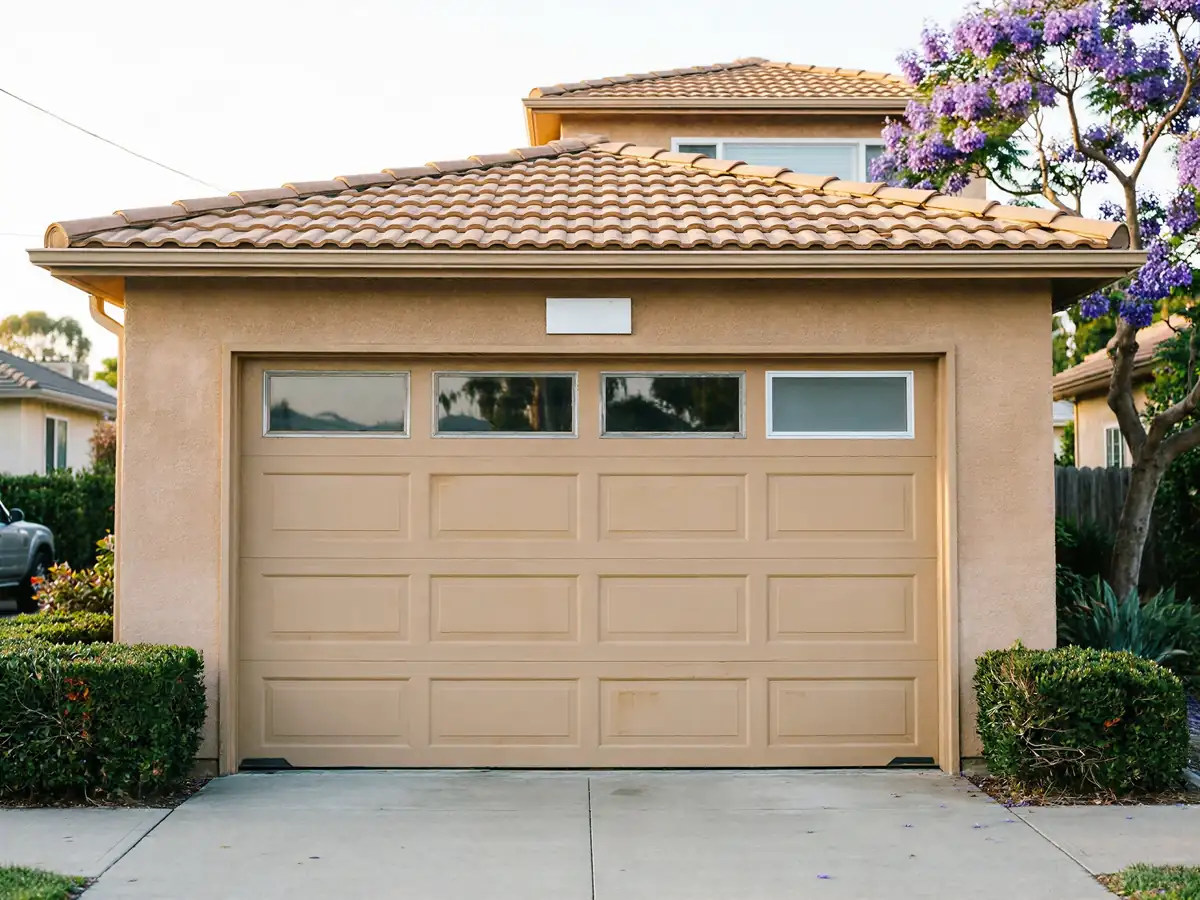
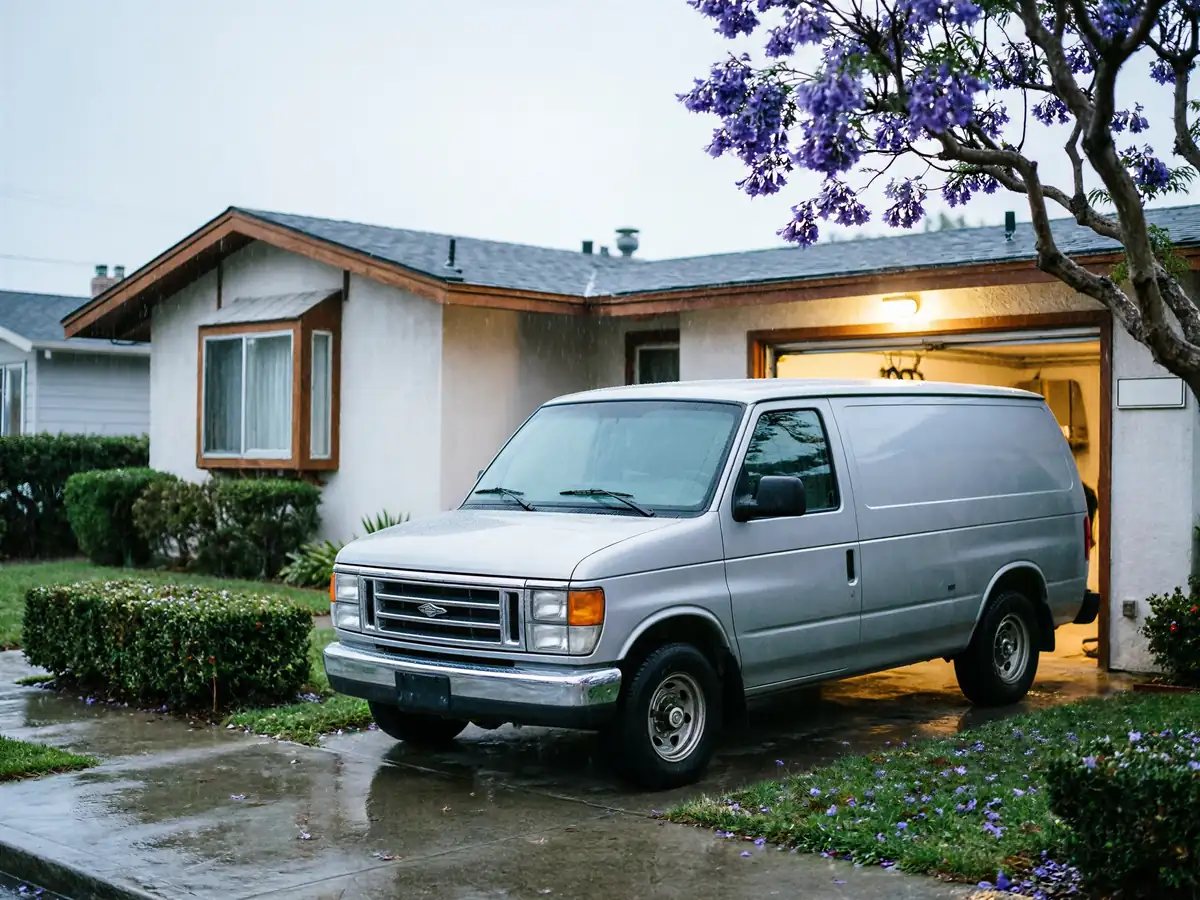
Most houses across this part of the county went up between 1970 and 2003, with a lot of that stock clustered in the 1980s and 90s. That matters for one reason: torsion springs have a duty-cycle rating, usually somewhere around 10,000 cycles, and a door that's been opening and closing twice a day since the Reagan or Clinton years is well past due for failure. The springs on these doors are original or one replacement removed, and the galvanized coating on a lot of that era's hardware wears thin faster than newer coated springs.
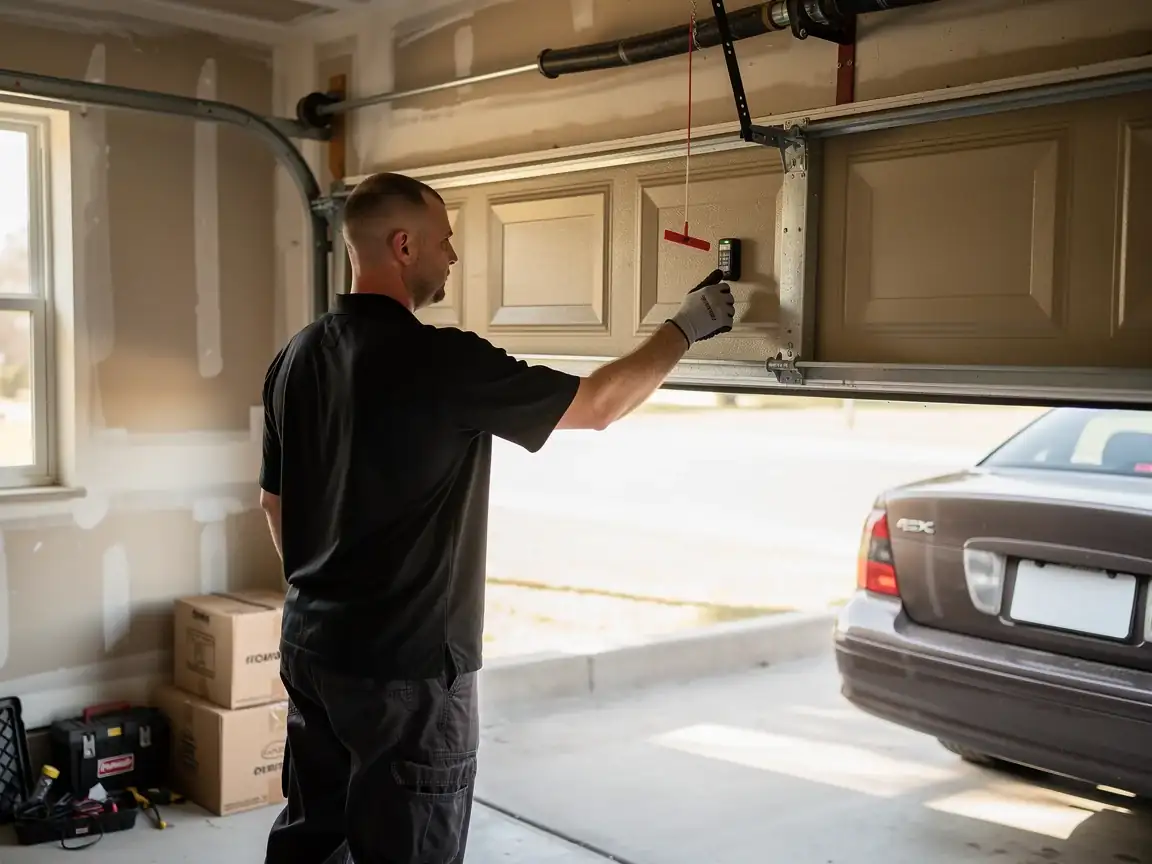
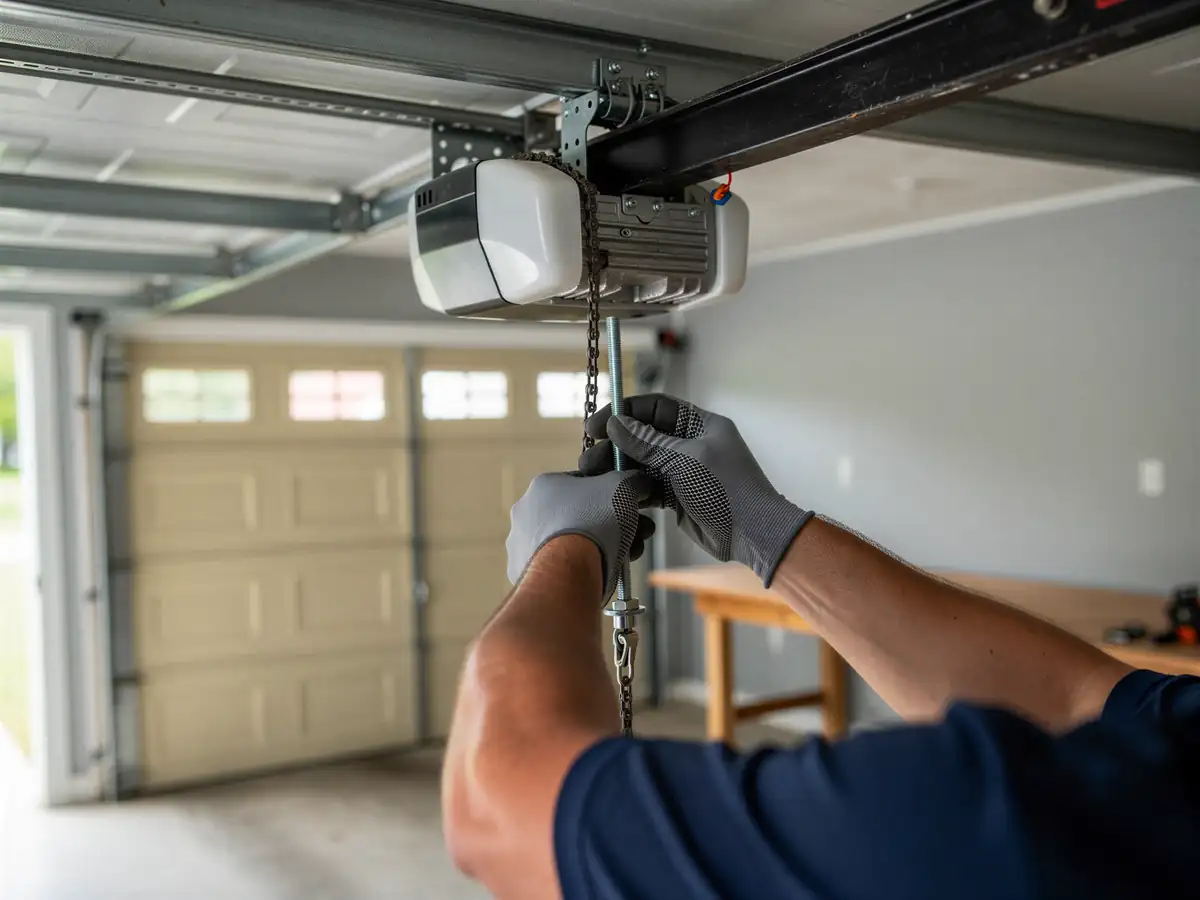
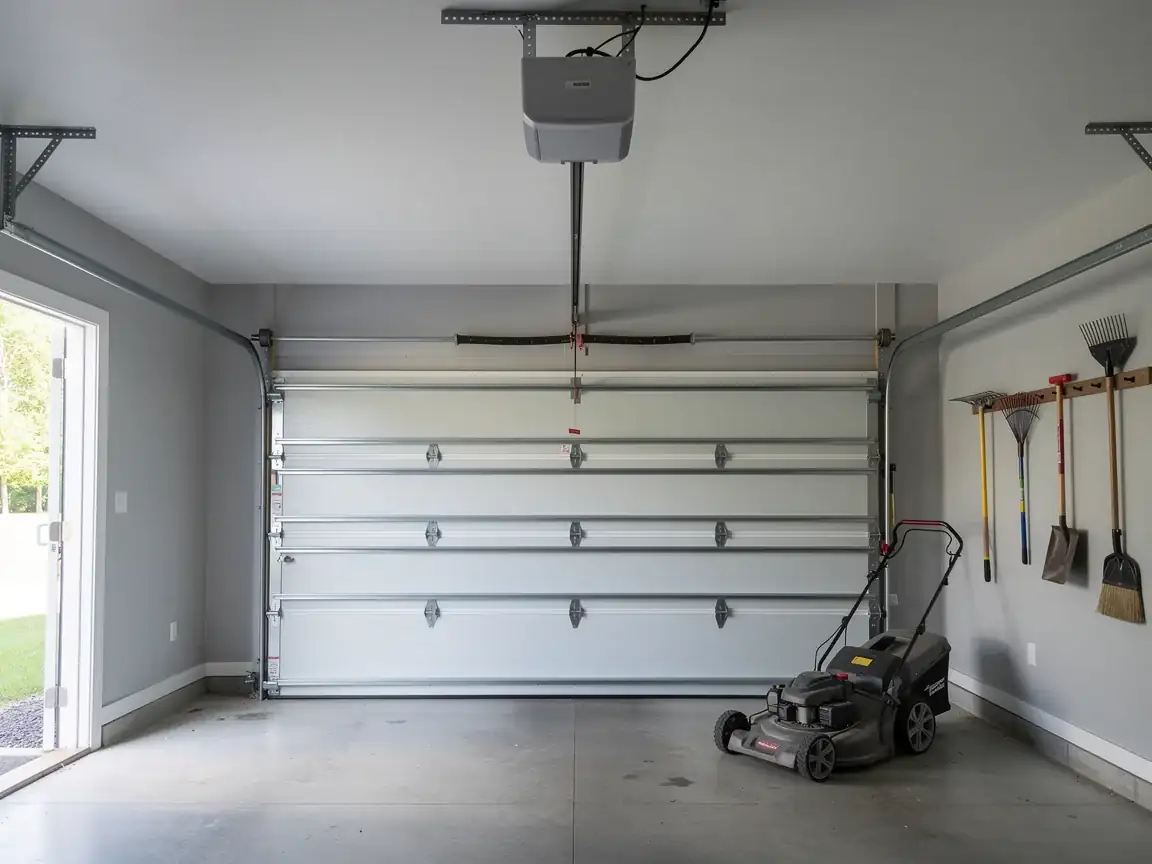
The mild temperate climate out here doesn't cause rust the way a humid or coastal-fog zone would, so the springs don't usually fail from corrosion. They fail from fatigue - plain metal stress after tens of thousands of cycles. That's a quieter kind of failure. No warning creak, no visible crack. One morning the door just won't lift, or it slams down on the way shut because the spring that used to counterbalance the weight isn't doing its job anymore. Openers from that same build era are also reaching the end of their gear-and-capacitor life, which is why a dead opener and a broken spring often show up as the same kind of panic call.
The Symptom
The calls we treat as emergencies usually sound like one of these: the door won't move at all and the opener motor hums without lifting it, the door comes down fast and hard instead of settling, or there's a loud bang from the garage followed by the door sitting crooked in the track. A door that's gone noticeably heavier to lift by hand - to the point a person can barely raise it - almost always means a broken or weakened torsion spring, not an opener problem.
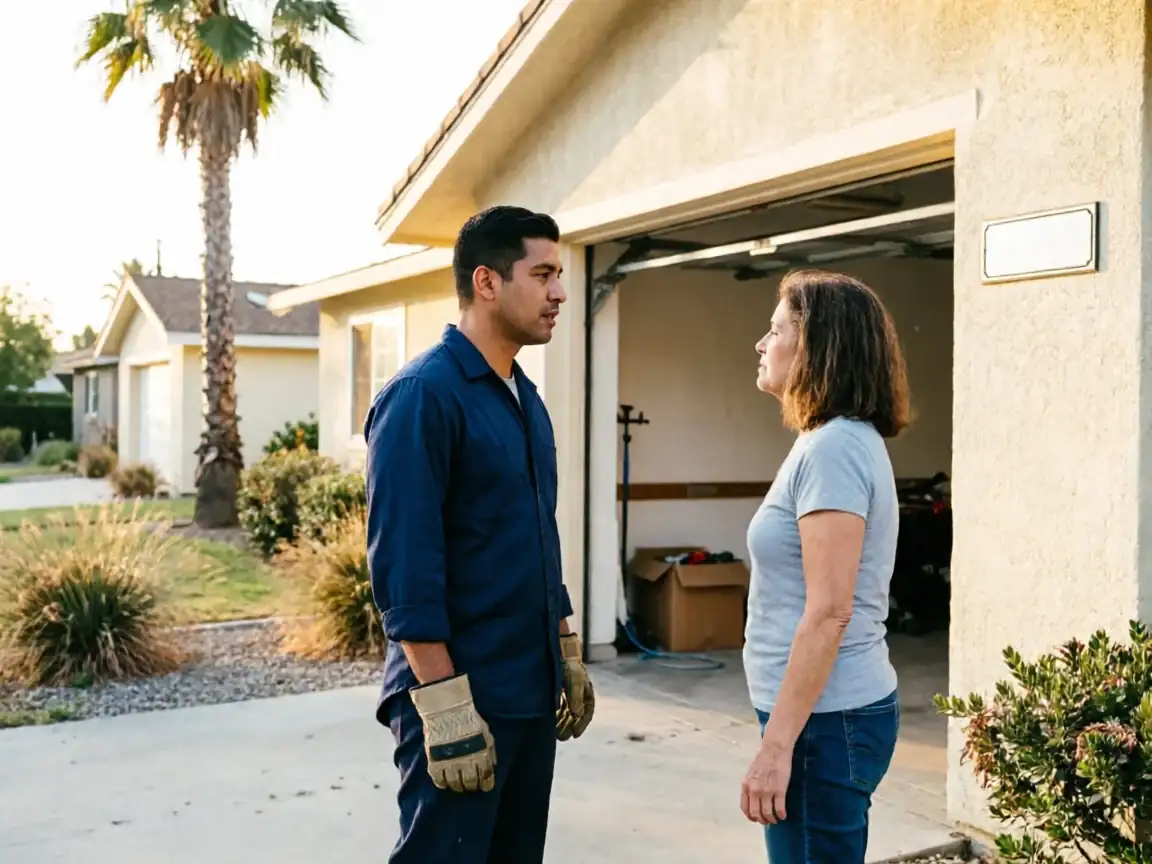
A door that opens a few inches and then opener reverses on its own is usually a safety sensor or a track obstruction, not a spring. We ask about these specifics on the phone because they tell us what's in the truck before we knock on the door. A car trapped inside a garage because the opener died is a different priority than a door that's merely noisy, even though both get called 'emergency.'
The Complications
A garage door is a system under tension
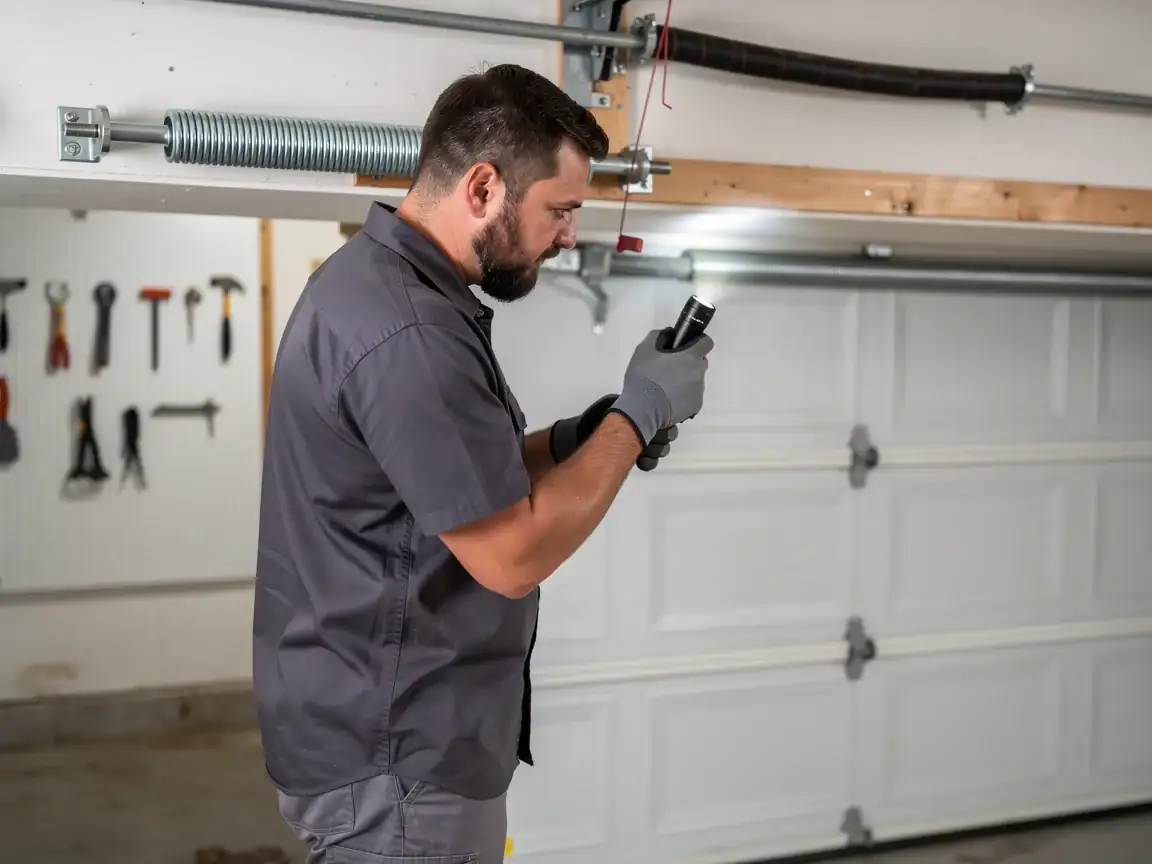
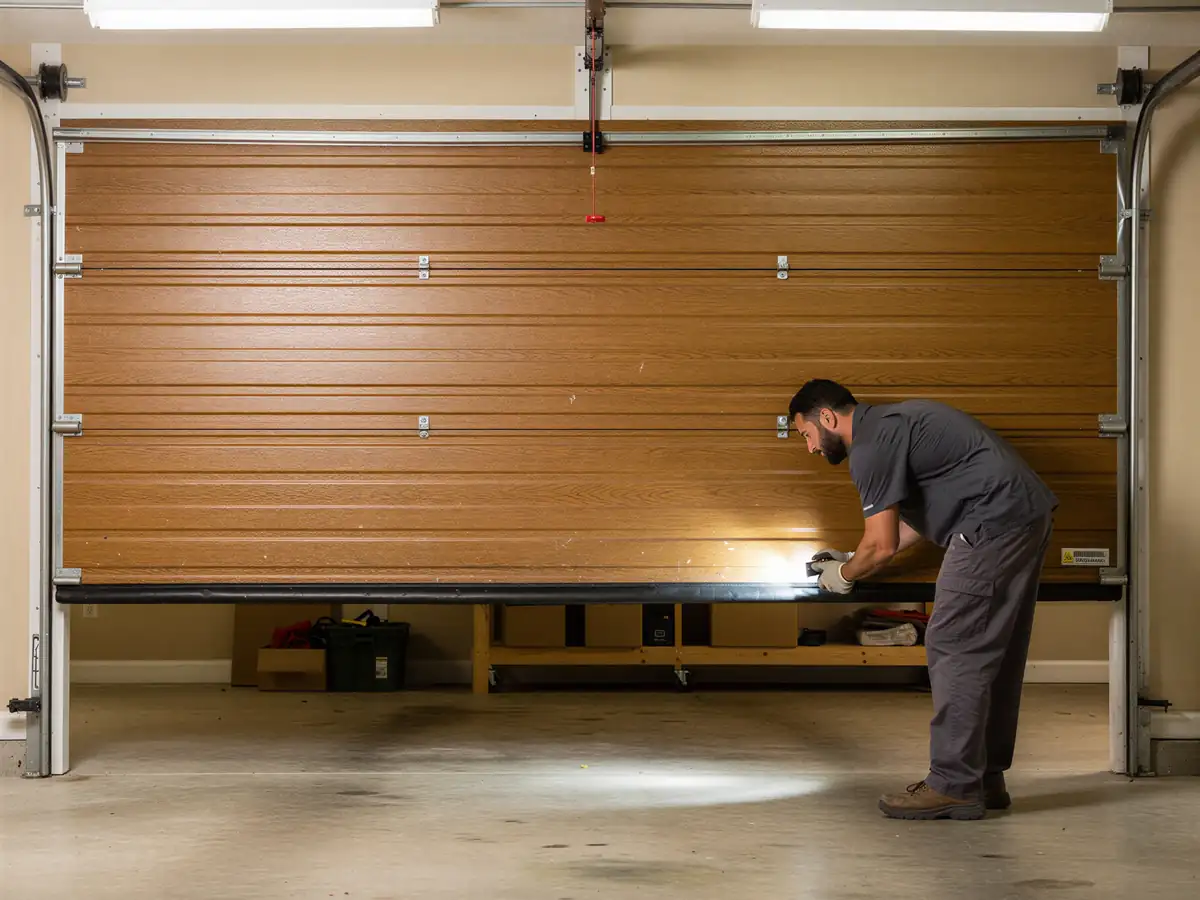
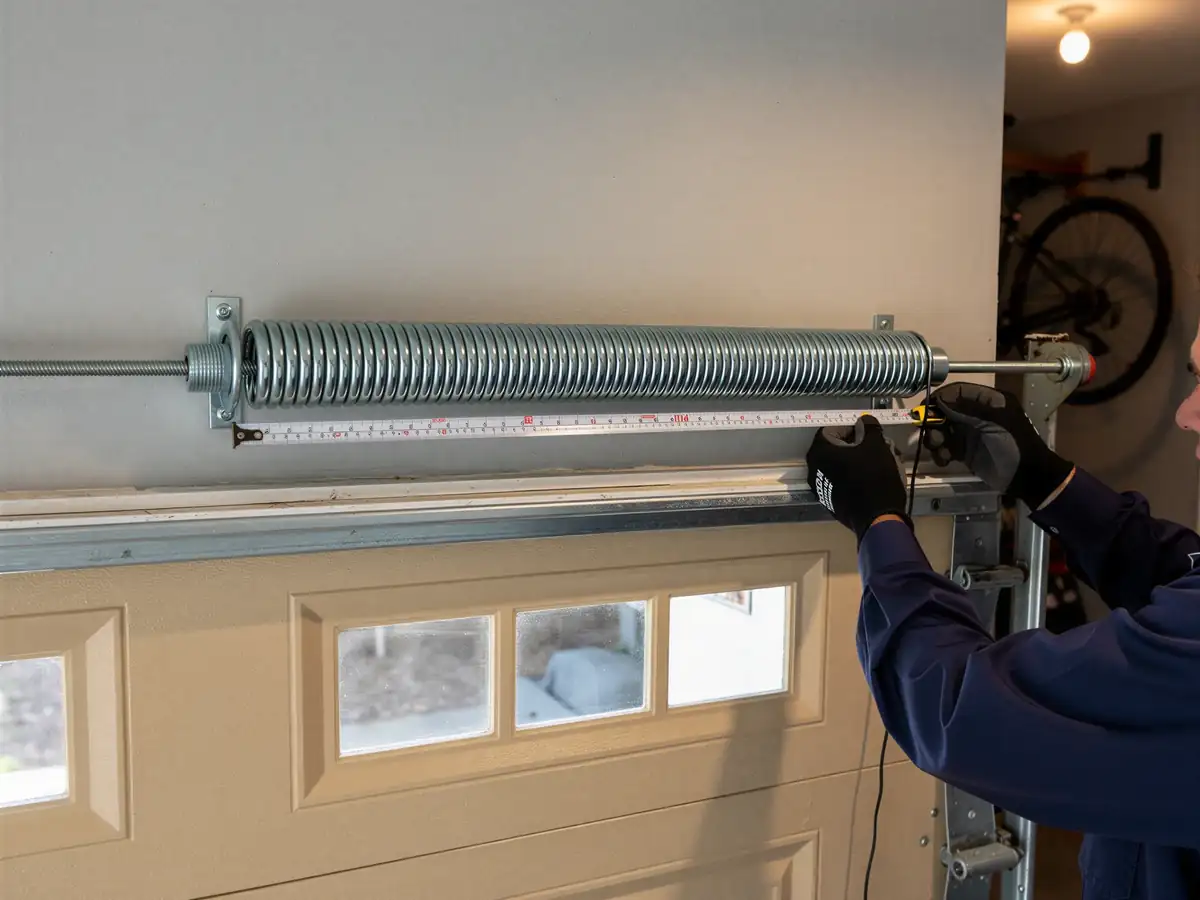
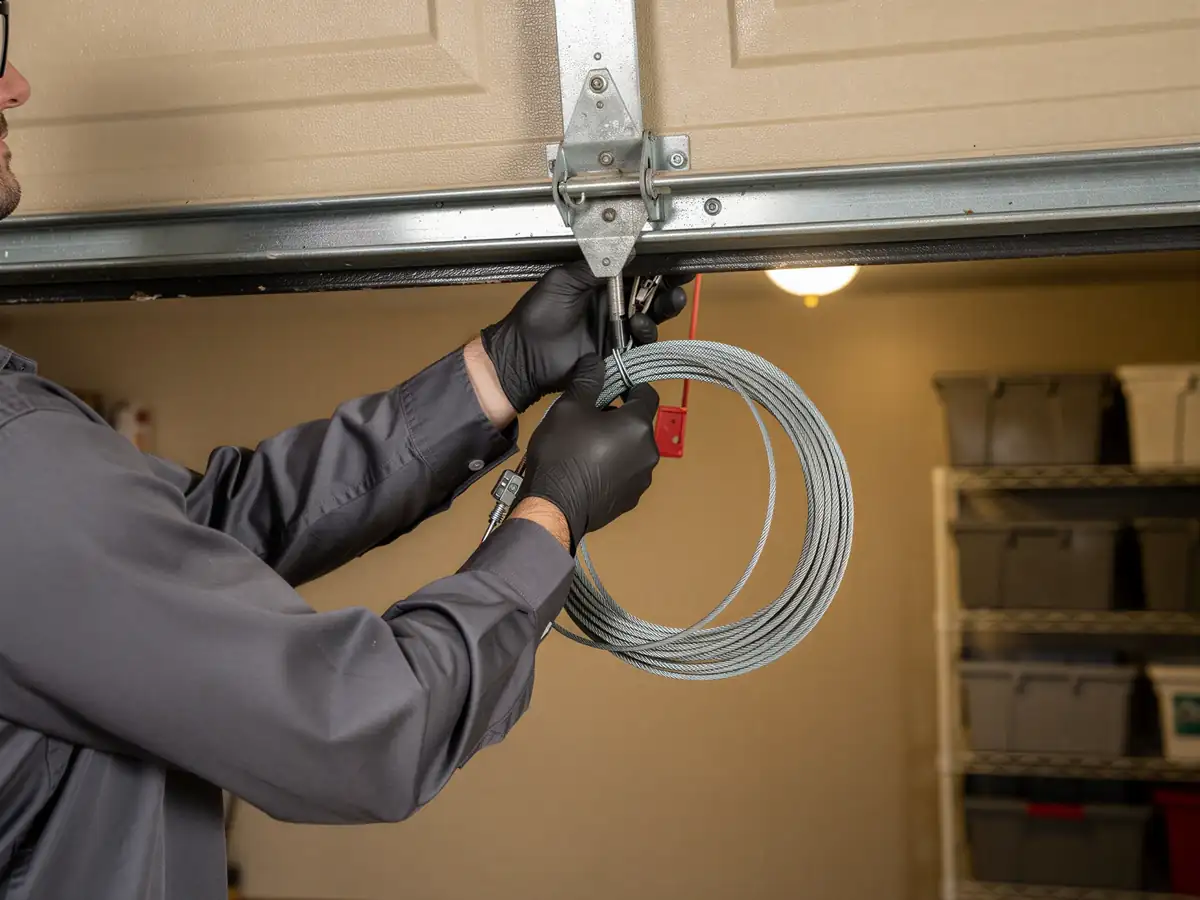
The spring, the cable, the drum, and the track all depend on each other being correctly set. When a spring breaks, the cable can slip off the drum, and if nobody deals with that right away, the next attempt to force the door open can bend the track or pull the bottom bracket loose from the panel. That turns a spring job into a spring-plus-track-plus-bracket job.
Households here are mostly owner-occupied, single-family properties
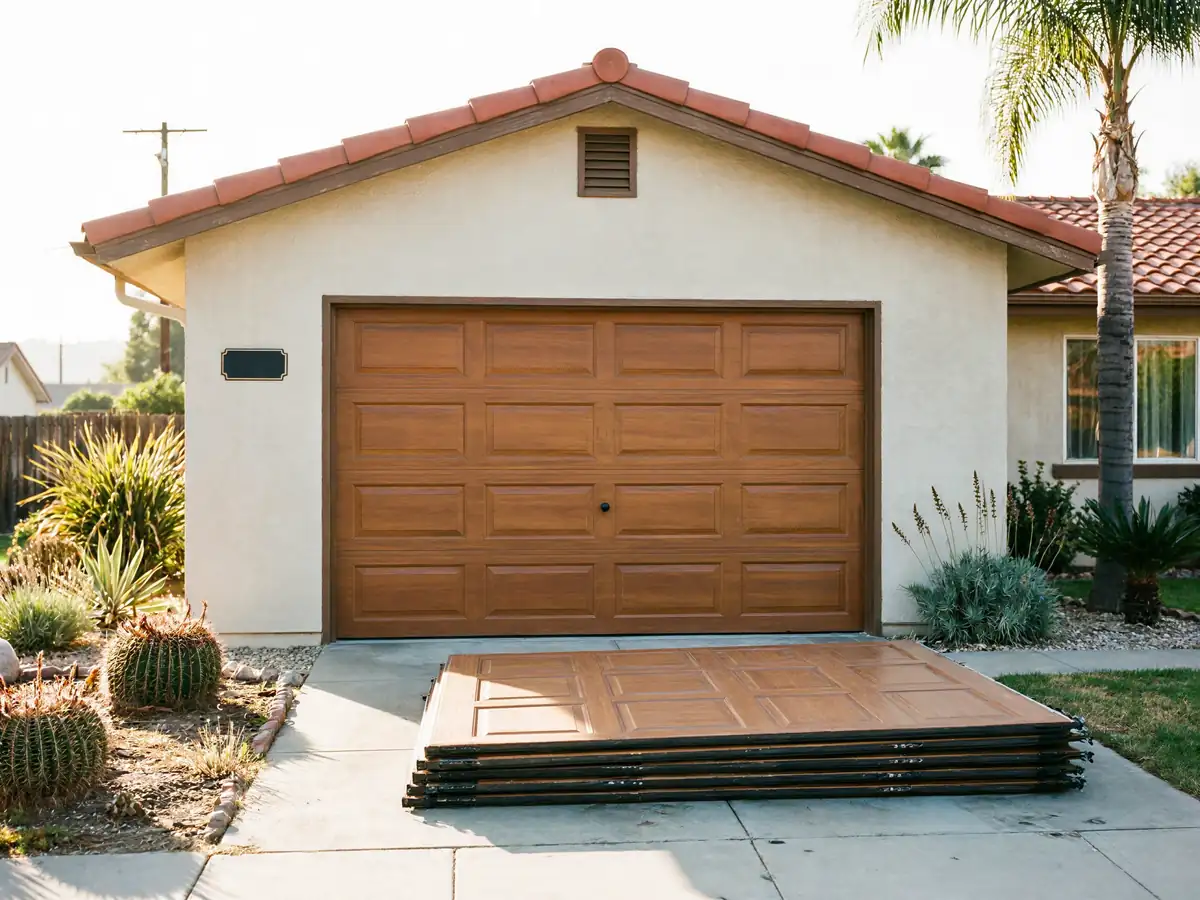
Which usually means a single garage opening and no backup way to get a car out once the door is stuck. That's the real complication: it's rarely just inconvenient, it's a car trapped behind a door that physically can't be lifted safely by one person once the spring tension is gone. We also see double doors on original torsion hardware that was sized for a lighter door than what's on it now, after a past owner upgraded to an insulated steel panel without upgrading the spring to match - a mismatch that shows up as premature failure years before it should.
The DIY Question
Torsion springs store enough energy to break a bone or worse if you unwind them without the right bars and a clear idea what you're doing - this isn't a YouTube-and-a-wrench job, and we'll say that to anyone who asks. Replacing the spring itself is not something we recommend attempting at home, full stop.
There's lower-risk work you can do yourself first: check that the opener is actually plugged in and the breaker hasn't tripped, make sure nothing's blocking the photo-eye sensors near the floor, and look for an obvious bent track or dropped cable before you call. If the door is heavy to lift by hand, or won't move at all, stop there and get it looked at - don't keep hitting the opener button, because that's how a bent track becomes a torn-off bracket. One honest limitation: if your door and opener are both near the end of their service life, a repair call sometimes turns into a replacement conversation on the spot, and we'll tell you that straight rather than patch something that'll fail again in a season.