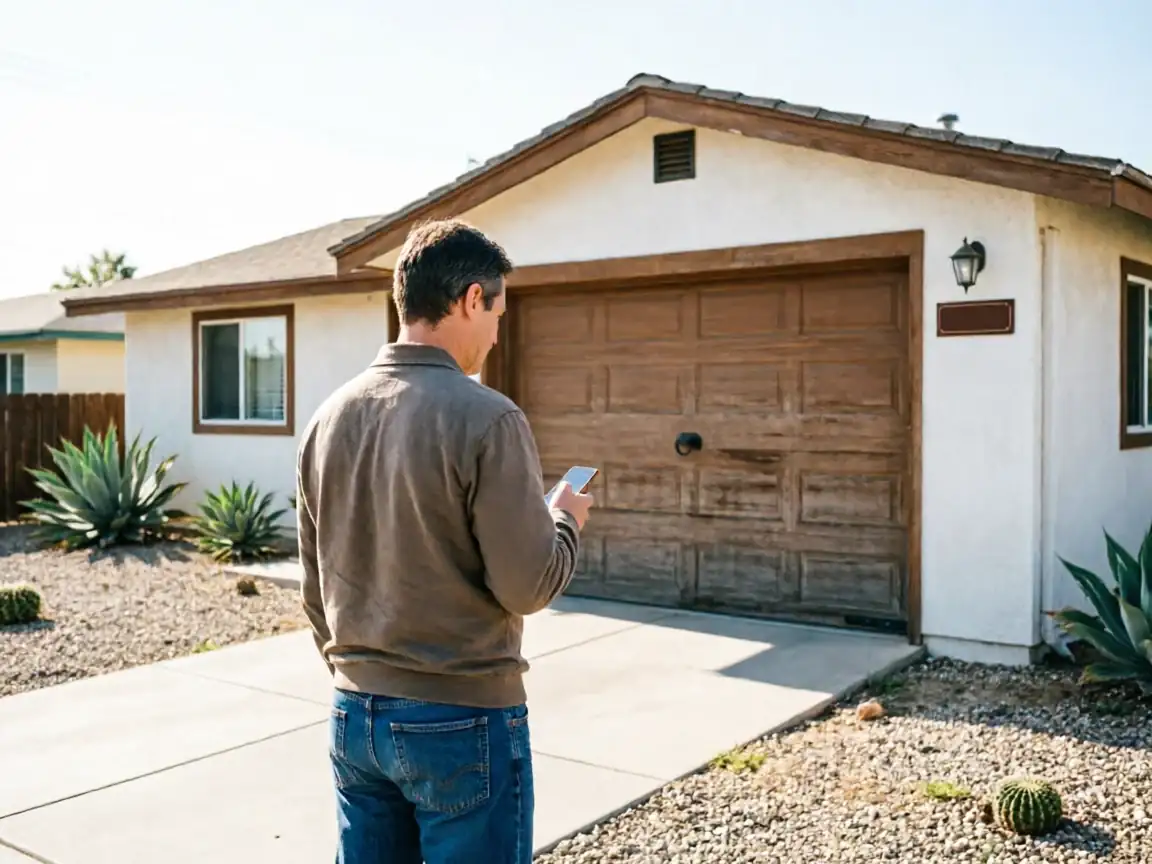
How Long You Are Without the Door
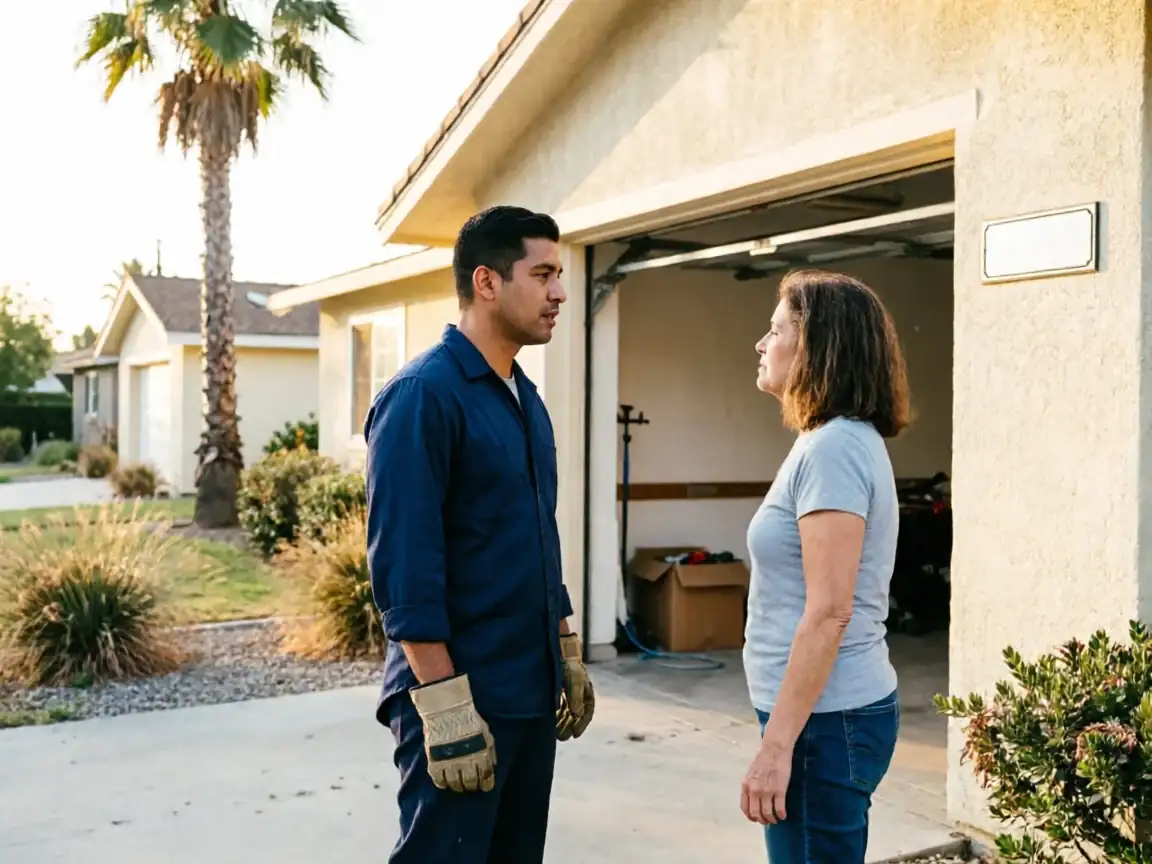
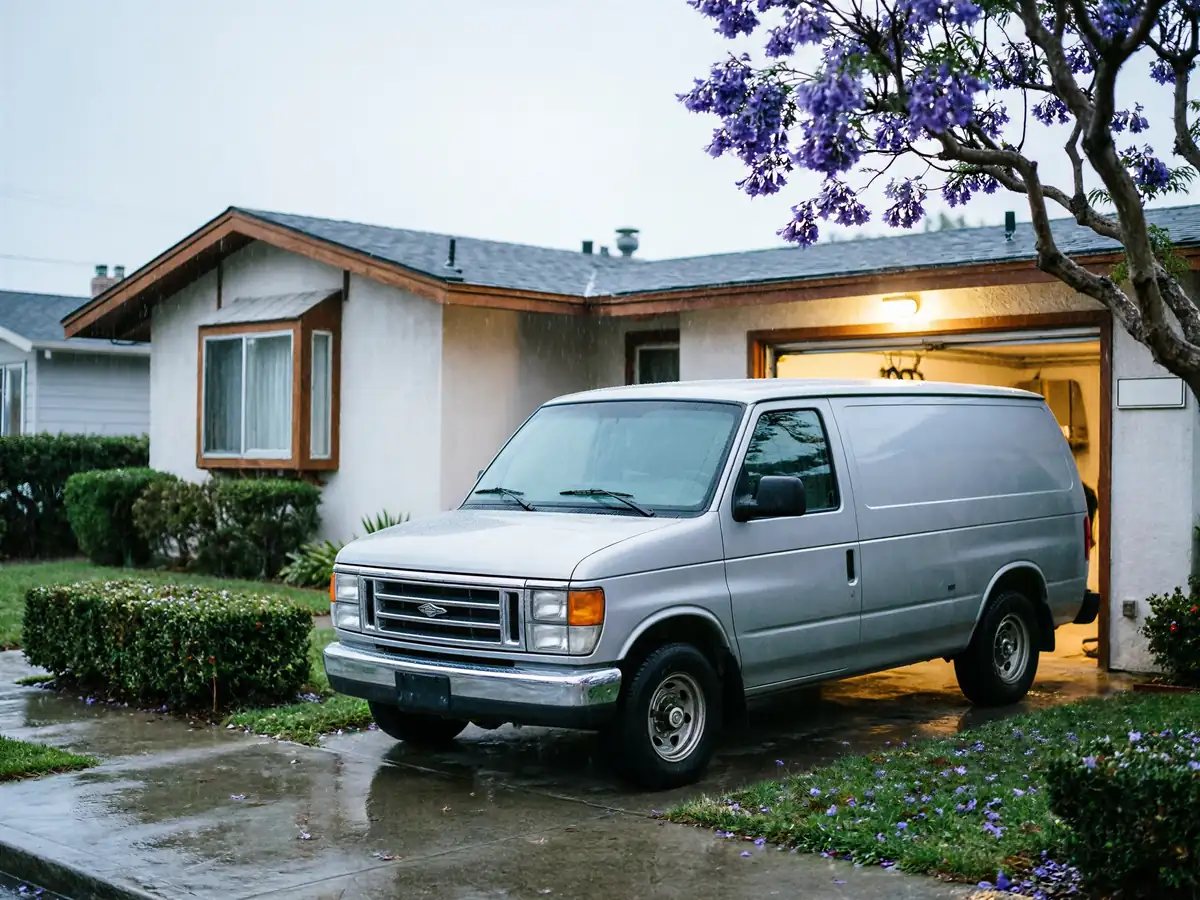
Fairbanks Ranch sits about 14 miles from our shop in Vista, which matters more here than it does on closer jobs. We don't keep a crew stationed in the area, so every call means a truck making that drive with the right spring size, the right cable gauge, and the right opener parts already loaded, because a custom-lot home out here rarely takes a stock part off a shelf twice. We'd rather show up once with the correct torsion spring for a door that's heavier and wider than the regional average than make a second trip. That drive time is the honest trade-off for not having a branch fifteen minutes from your driveway - we tell you a window before we leave Vista, not an exact minute, because 14 miles of road traffic is not something we control.
The Complications
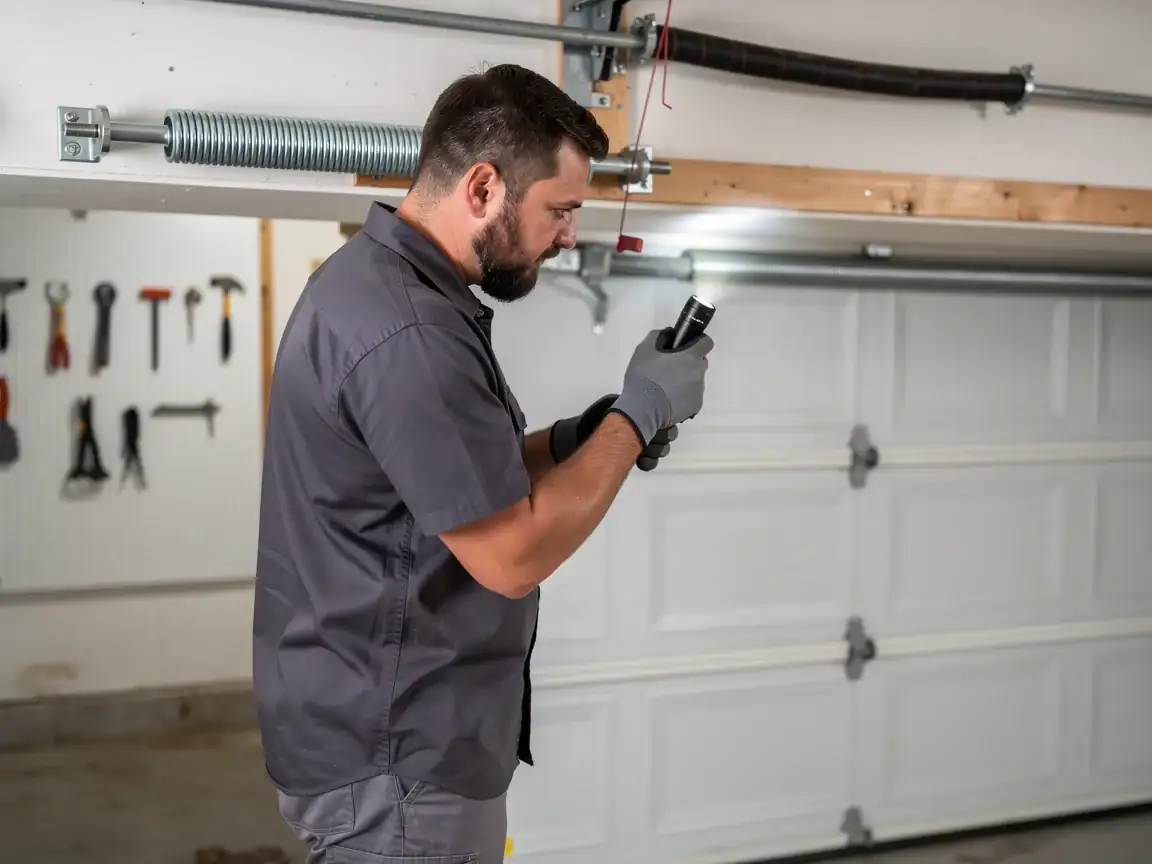
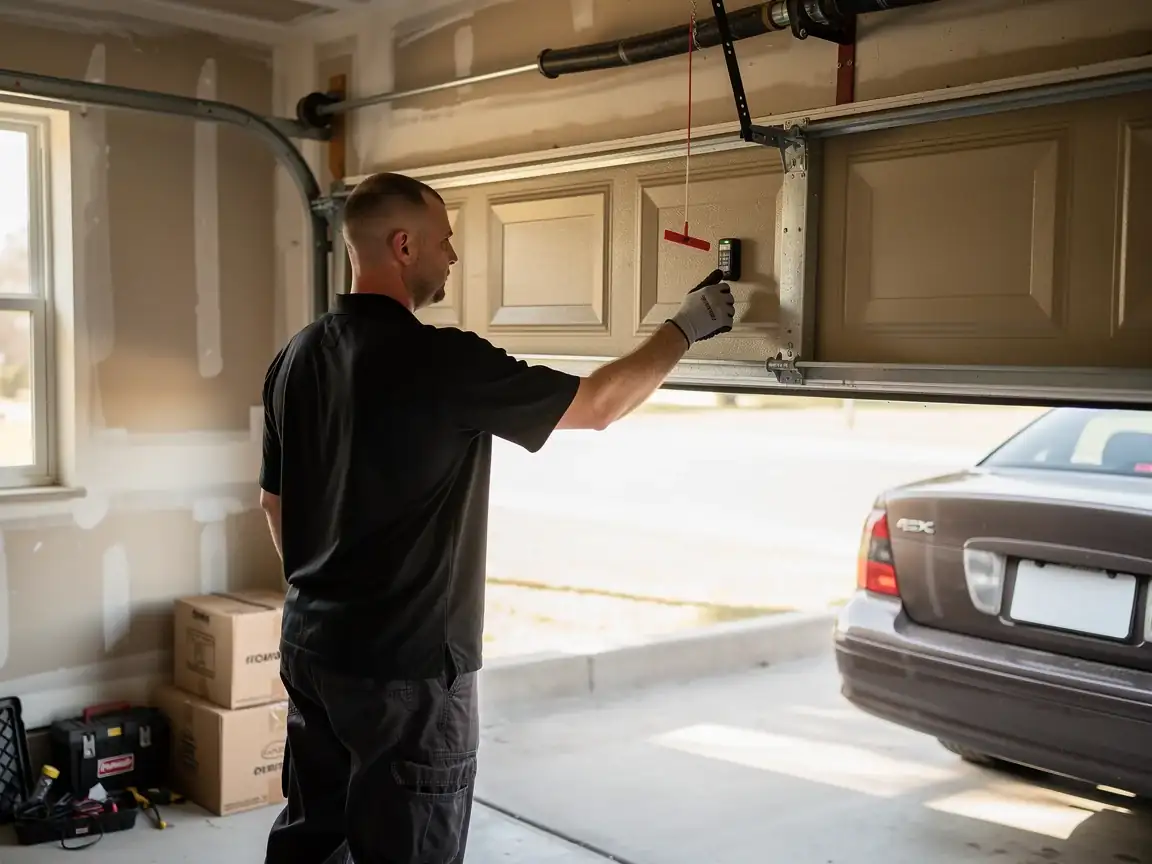
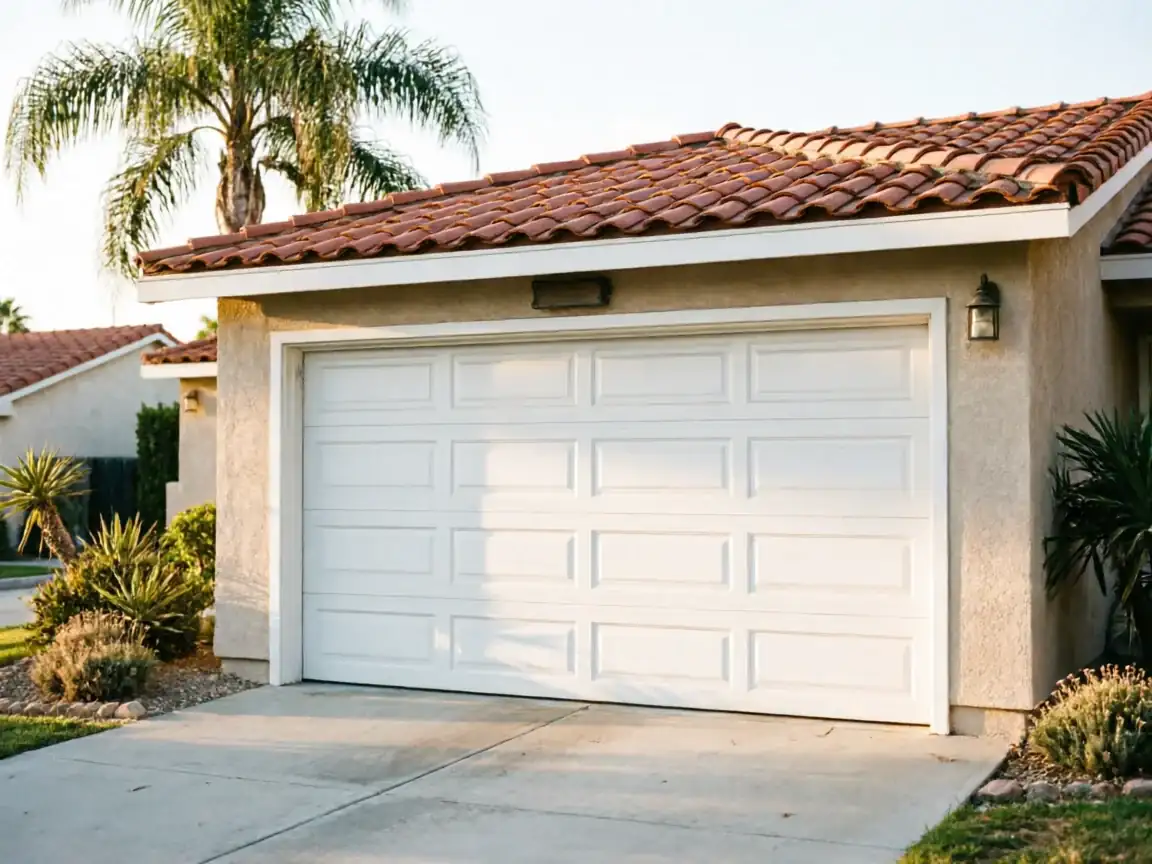
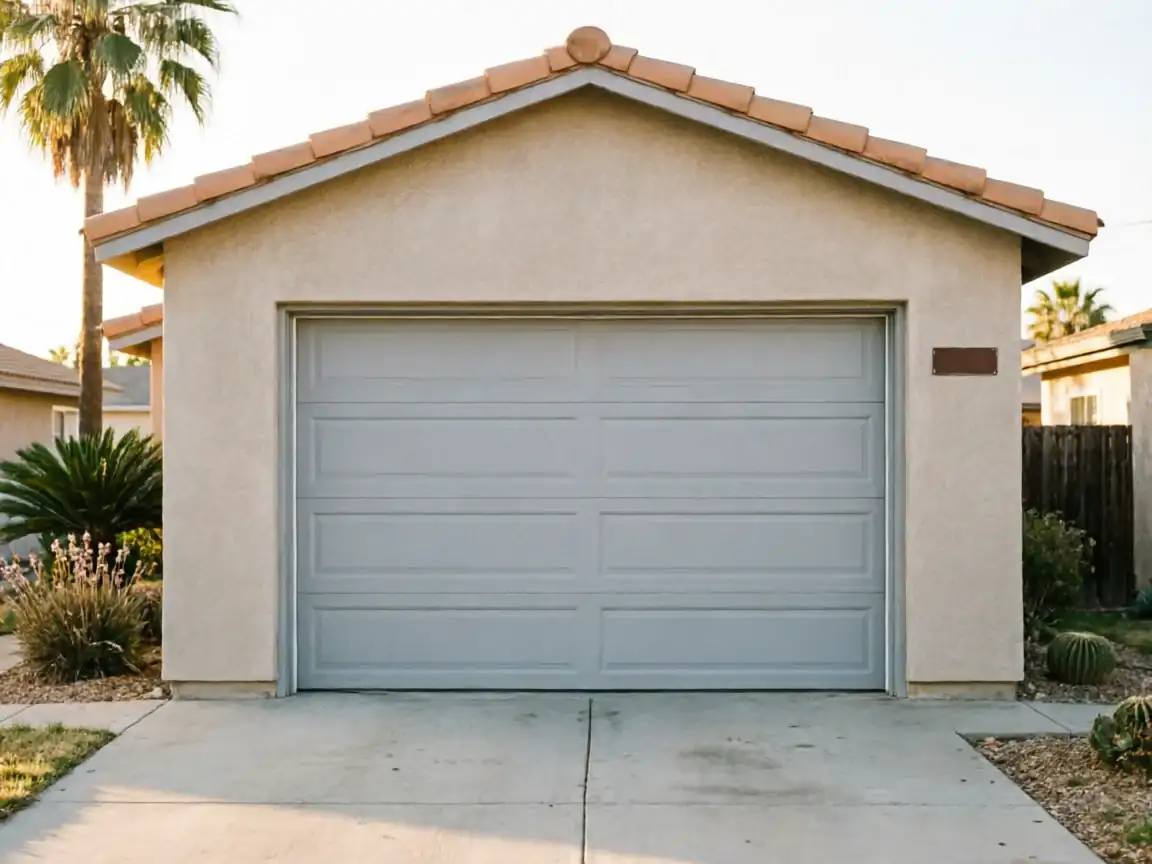
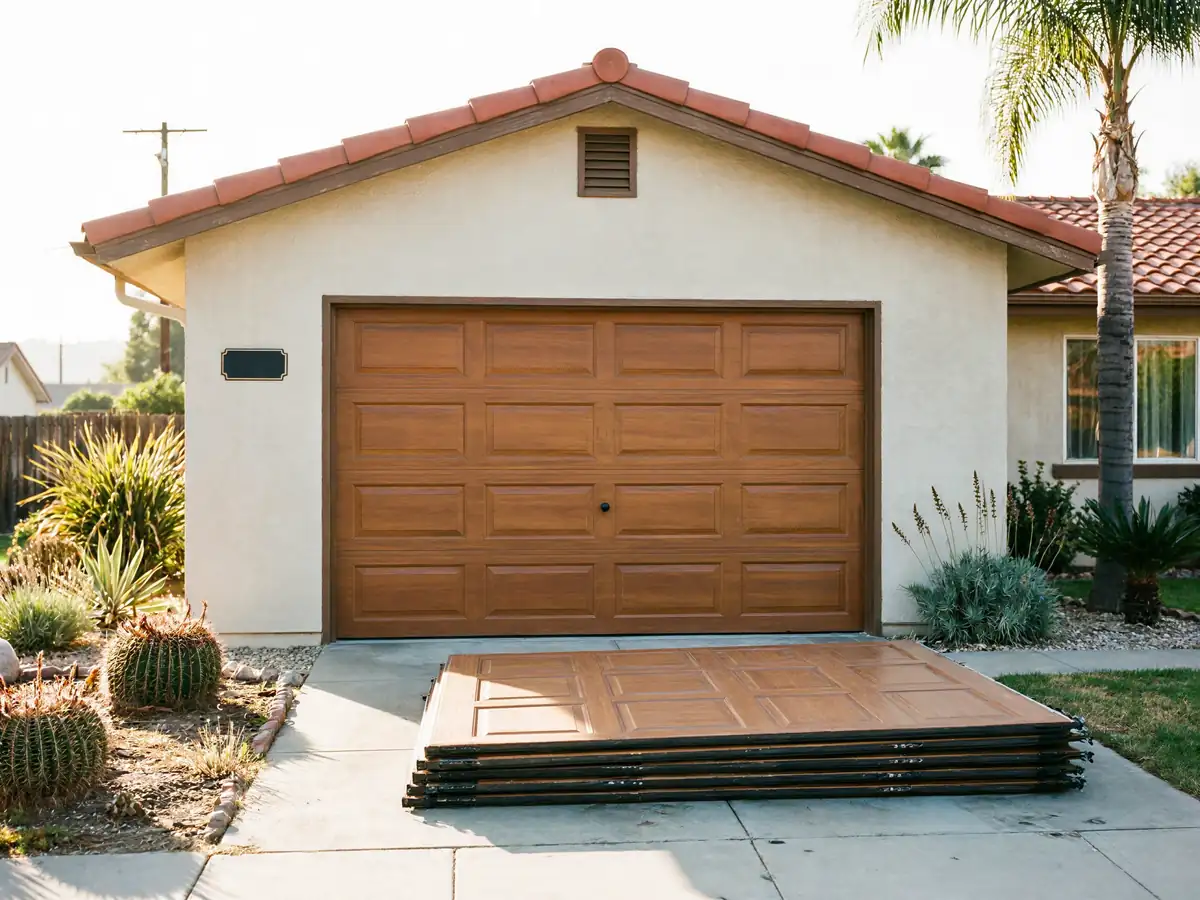
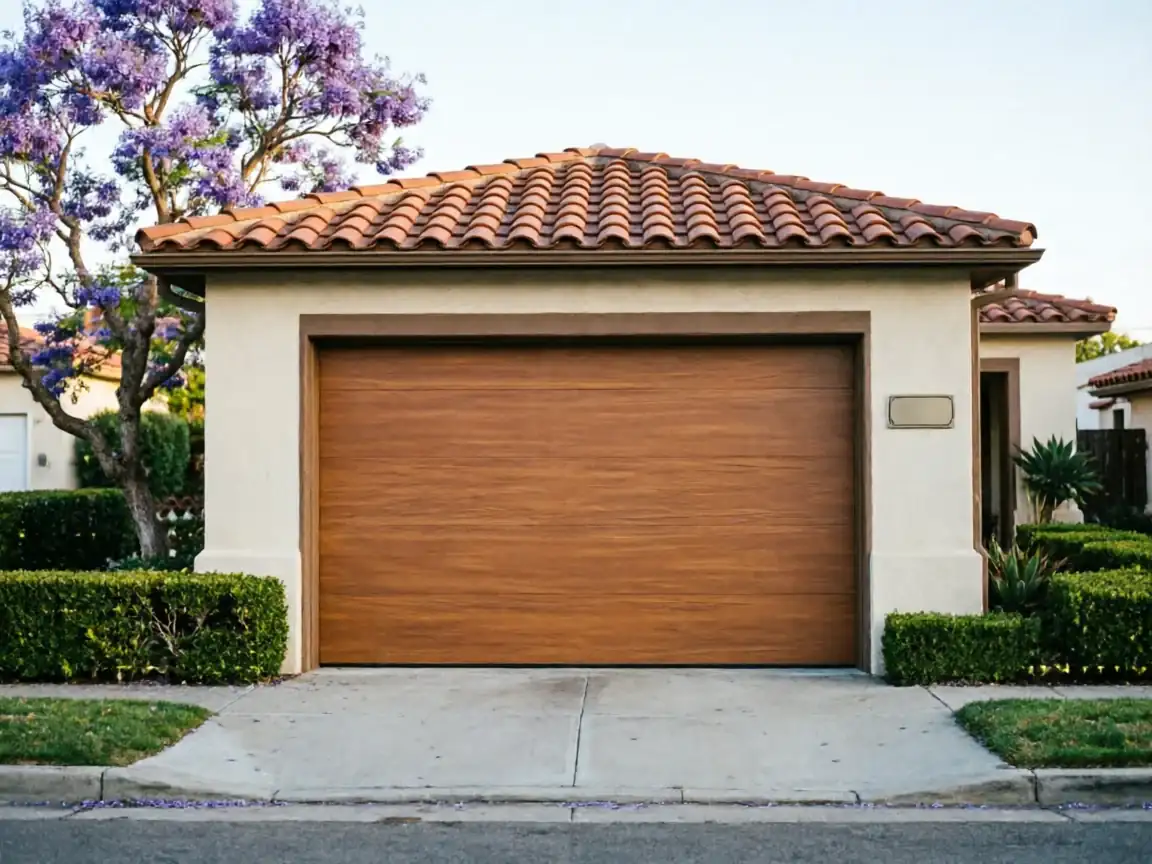
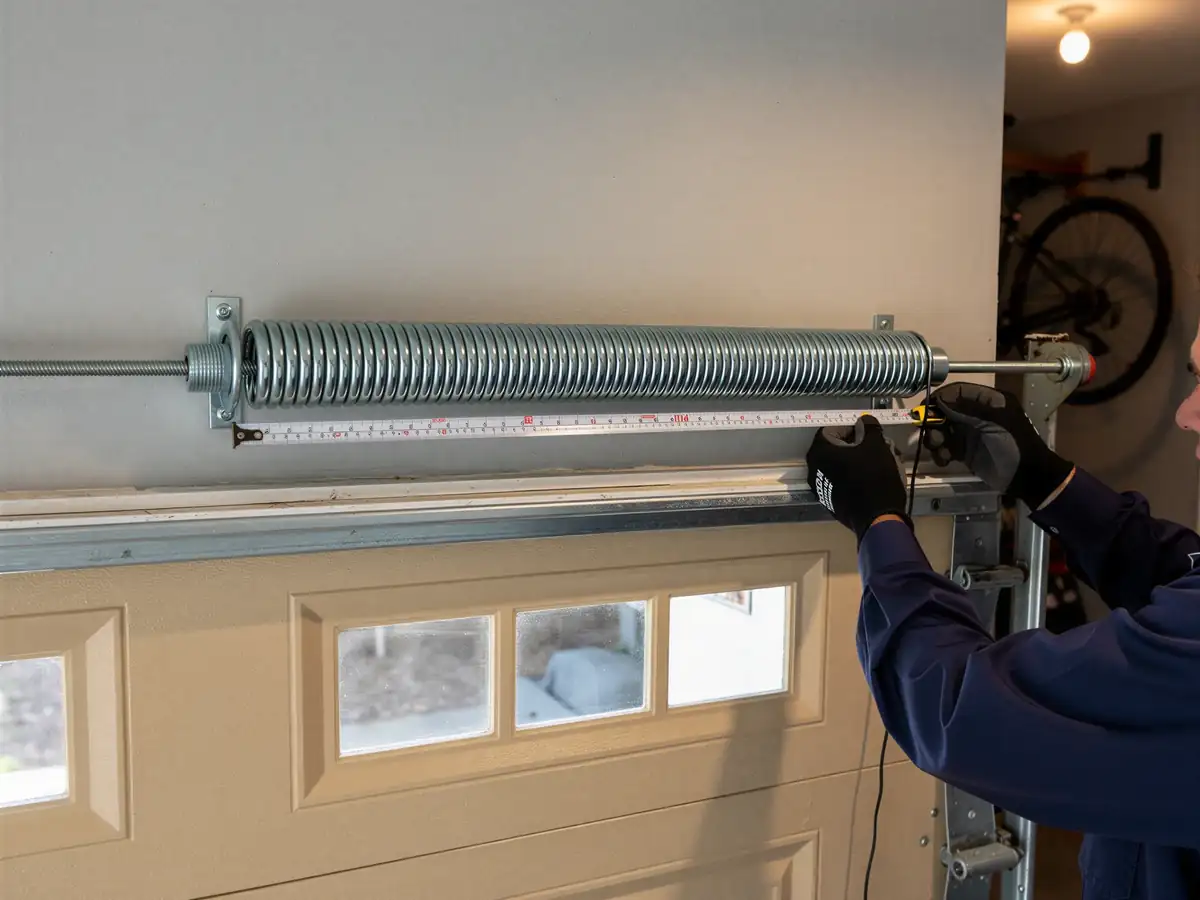
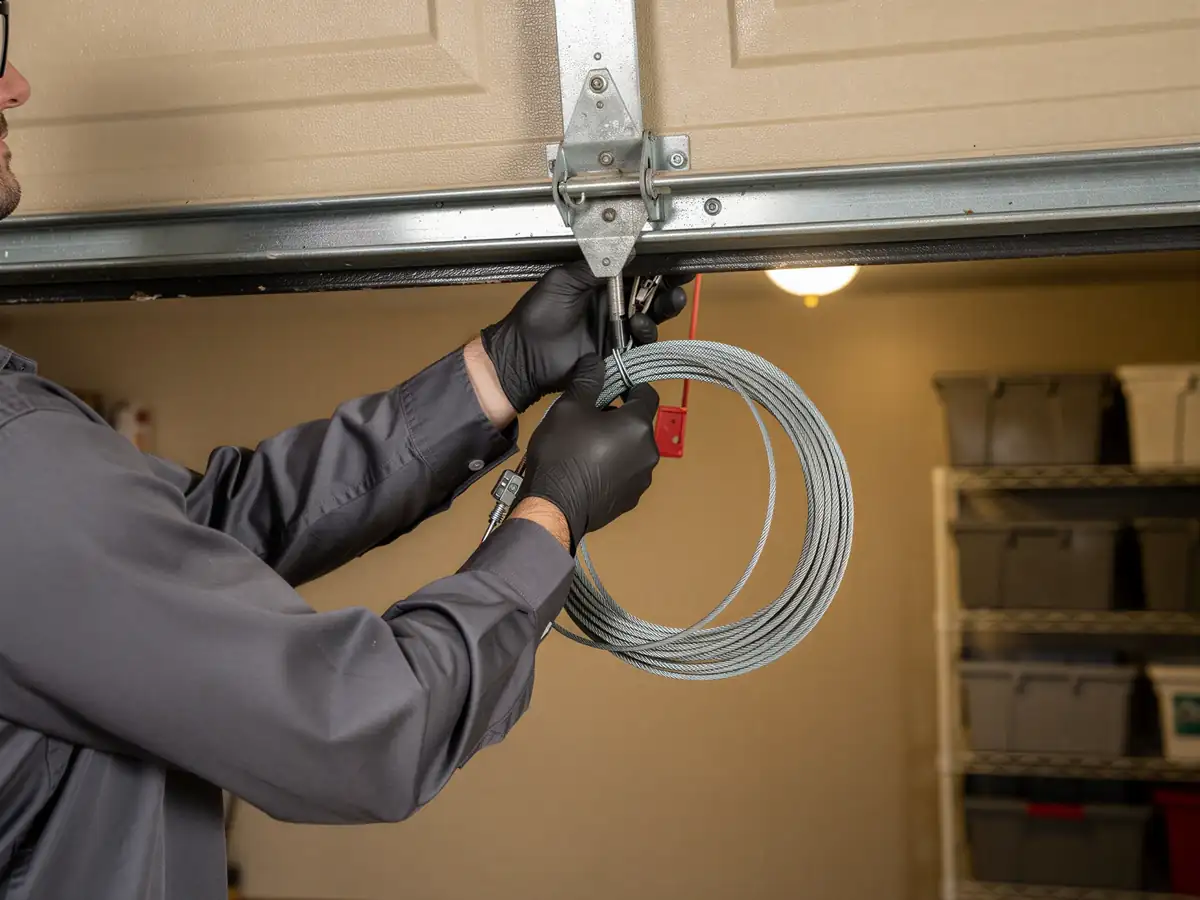
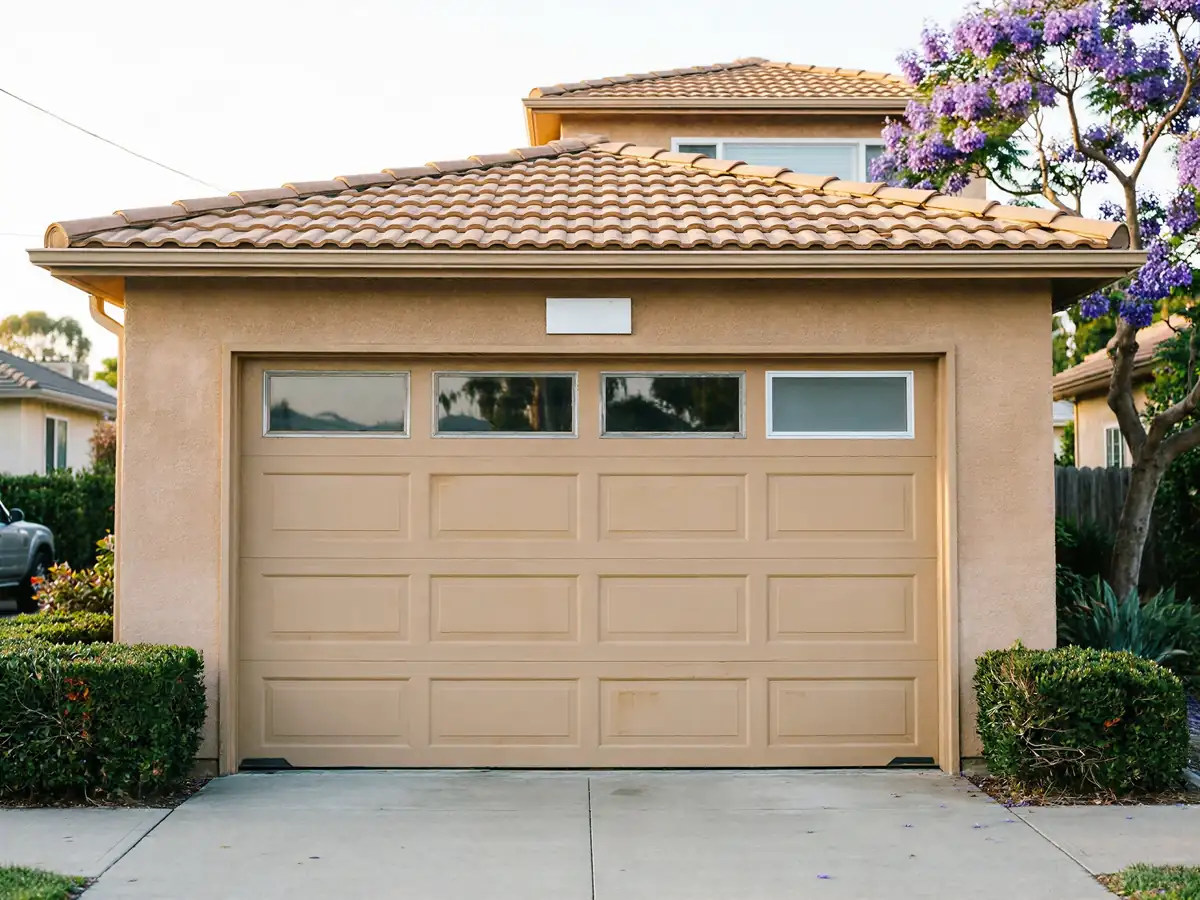
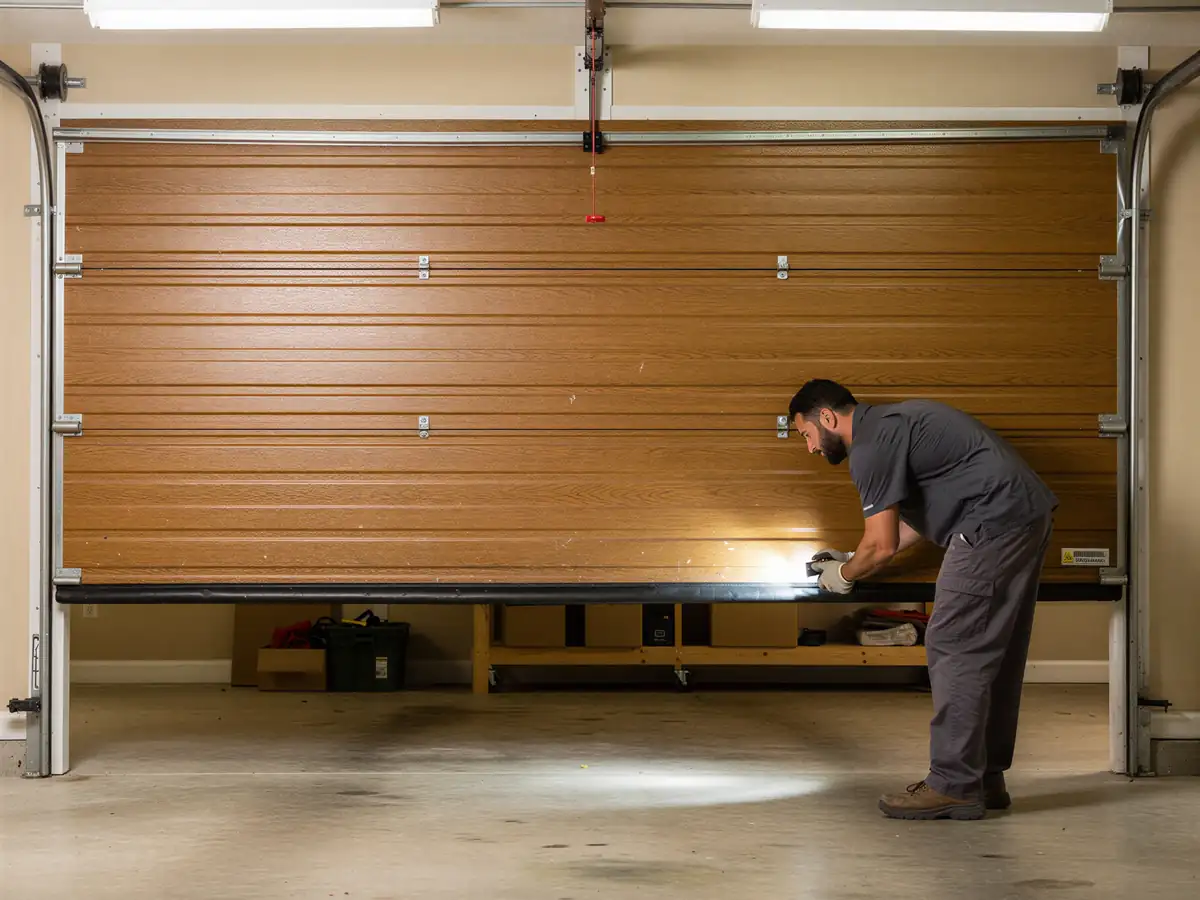
Homes in this part of the service area were mostly built around 1992, later than much of what we see closer to Vista, and that shows up in the door itself before it shows up in the fault. Builders here were putting up larger custom houses with three-car garages, which means doors wider than the 16-foot standard and taller sections to match higher garage openings. A wide door carries more weight across the same number of torsion springs, so when one spring goes, the door doesn't just stick - it can rack sideways in the track because the opposite spring is fighting a load it was never meant to hold alone. On a standard double door that's an inconvenience. On an oversized door built for a custom lot, it's a door that can jump the track entirely if someone tries to force the opener through it. We check both springs and the full track alignment on these doors before we touch the opener, not after.
Why It Happens Here
The mild temperate climate across this service area means the springs here aren't fighting the freeze-thaw cycling that wears out hardware faster in colder regions - that's one thing working in your favor. What isn't in your favor is the age and size of the door itself. A door built around 1992 for a custom three-car garage is now past 30 years old, and the torsion springs on a door that size were only ever rated for a set number of open-close cycles. Add a household income well above the median for the broader service area, and what we often find is a door that's been well maintained cosmetically - repainted, resealed - while the spring underneath has simply reached the end of its rated life on schedule. Nothing exotic, just a part doing exactly what its number of cycles predicted.
The Cost of This Job
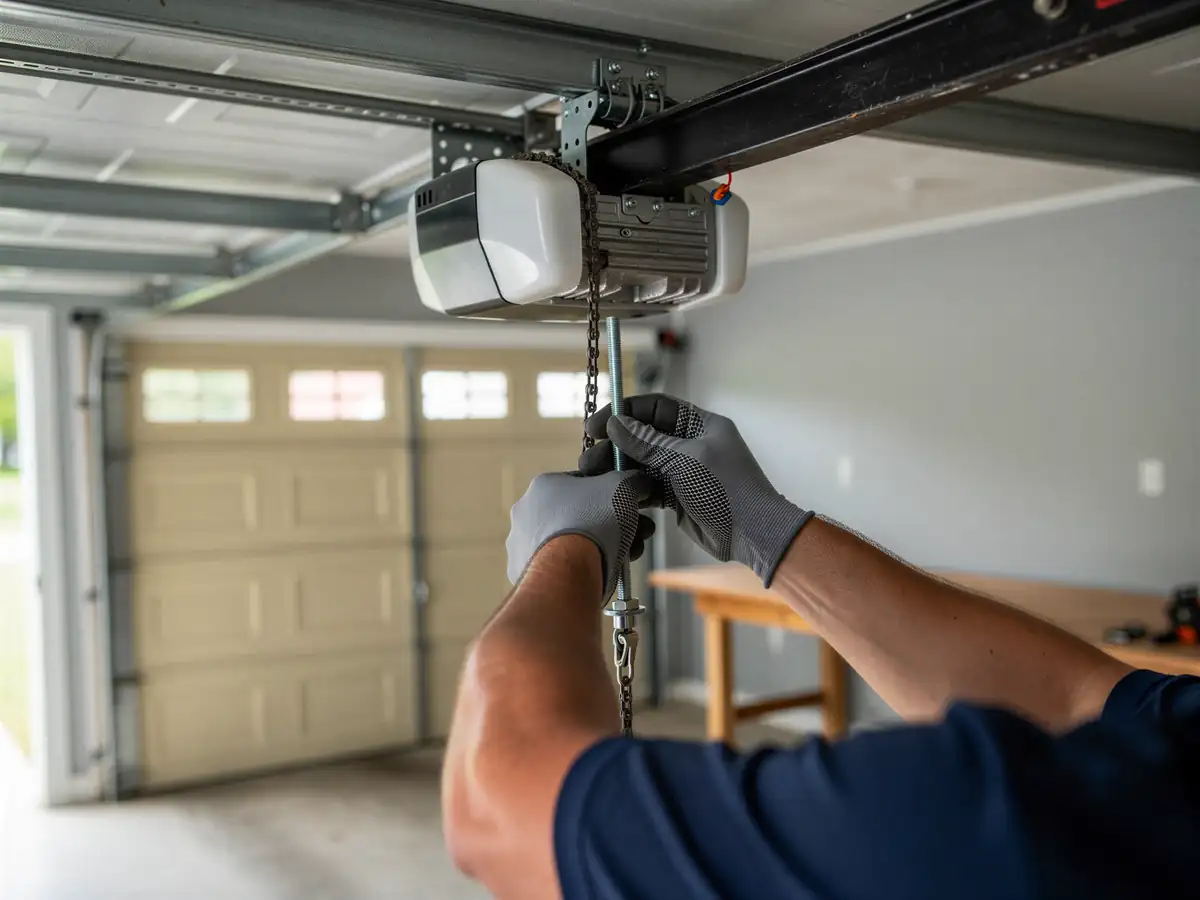
We can't quote a price without seeing the door, and we won't pretend otherwise on a page. What we can tell you is what drives the number: a wider or taller door uses larger, higher-tension springs than a standard 16-foot double, and those parts cost more than the ones we'd put on a smaller door closer to Vista. If both springs are original to a 1992 build, we'll usually recommend replacing them as a pair even if only one has failed, since the second is close behind on cycle count - that's the honest call, not an upsell. One limitation worth saying plainly: if the track or the opener rail was bent when the door jumped its track, that's a separate repair from the spring, and we'll tell you before we start, not after the invoice.