The Symptom
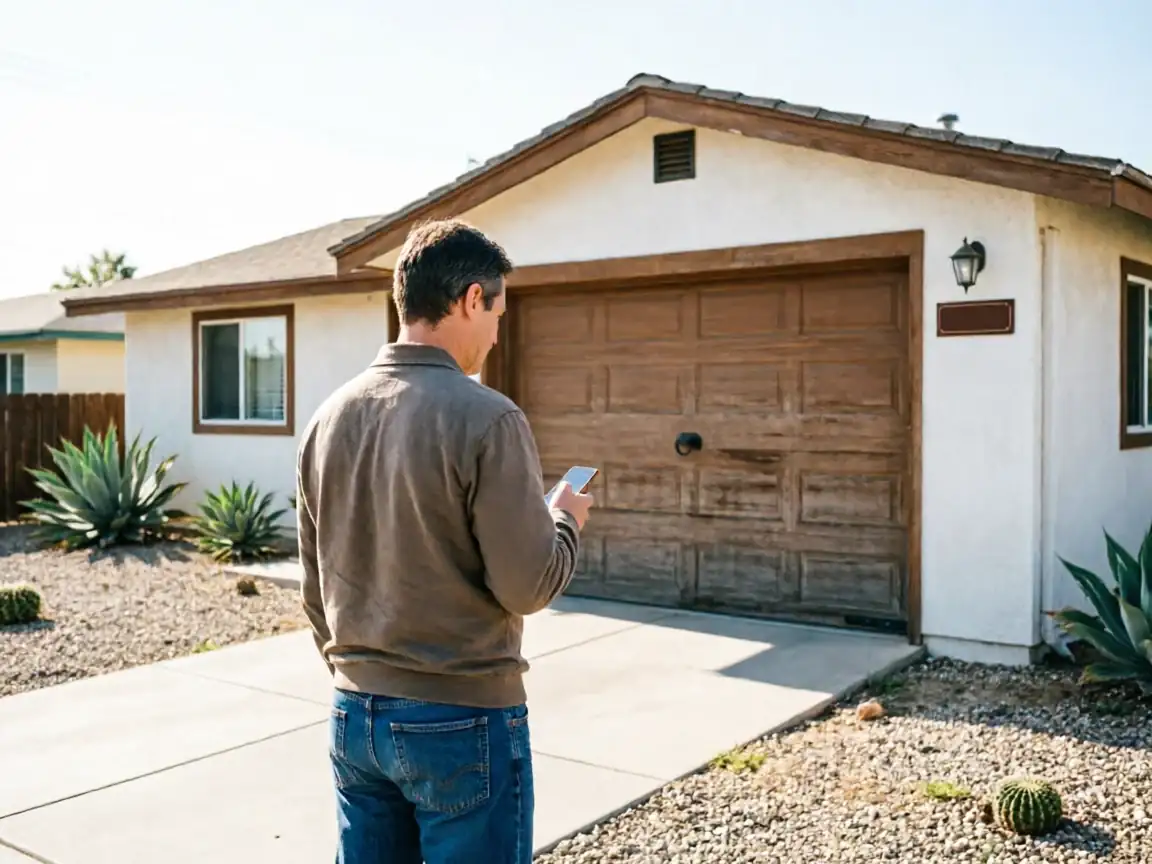
The call we get most from Fallbrook is an opener that runs but won't lift, or one that lifts partway and reverses. Sometimes it's a motor that hums and does nothing. With a service area where the median home was built around 1980, a lot of what's up on the ceiling is either the original chain-drive opener or a first replacement from the 90s or early 2000s - units that are well past any reasonable service life. Gears strip, capacitors weaken, and the logic board that used to reset itself with a yank of the pull cord starts acting up in ways a new owner has never seen on a modern unit.
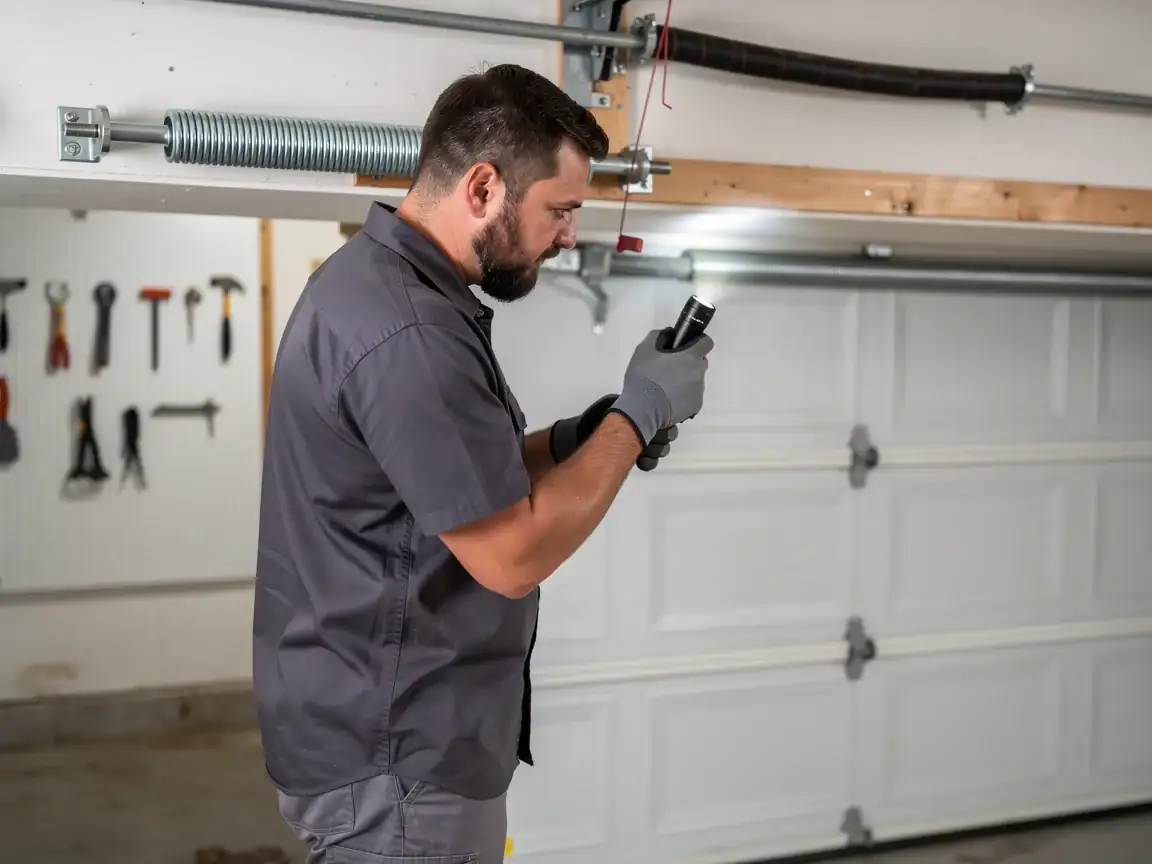
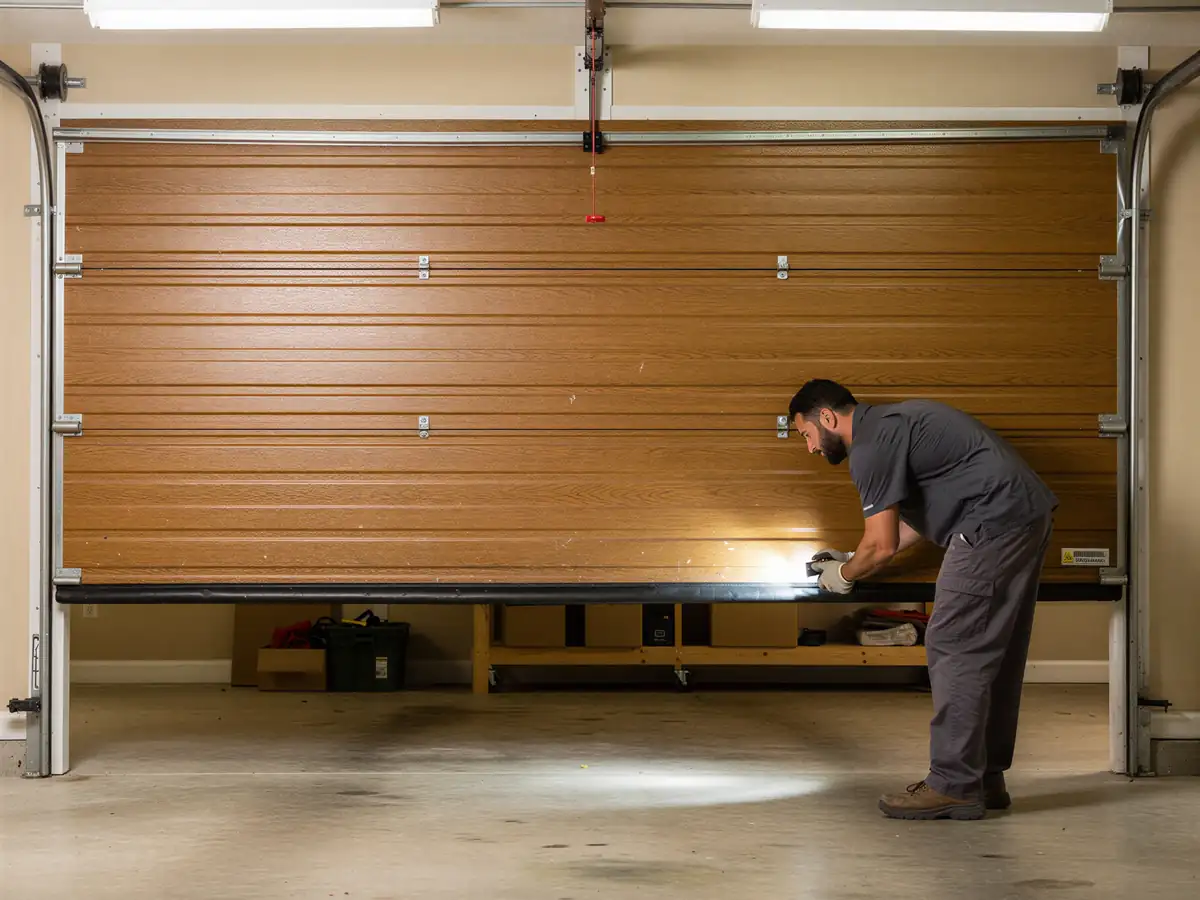
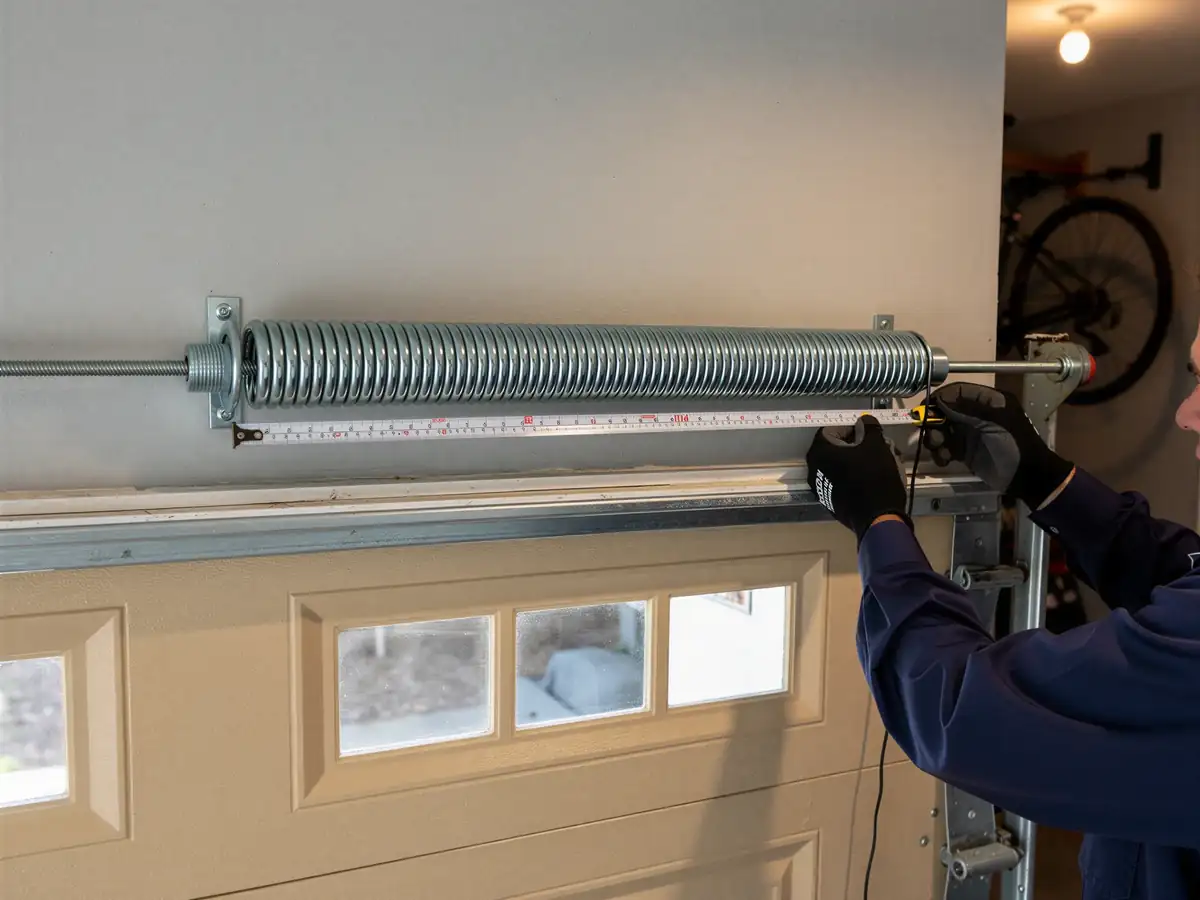
Sometimes the fault isn't the opener at all. A spring losing tension or a track that's gone slightly out of alignment will make a healthy opener strain and act like it's failing. We check the door itself before we touch the opener, because replacing a motor to fix a spring problem is money spent in the wrong place.
What the Fix Involves
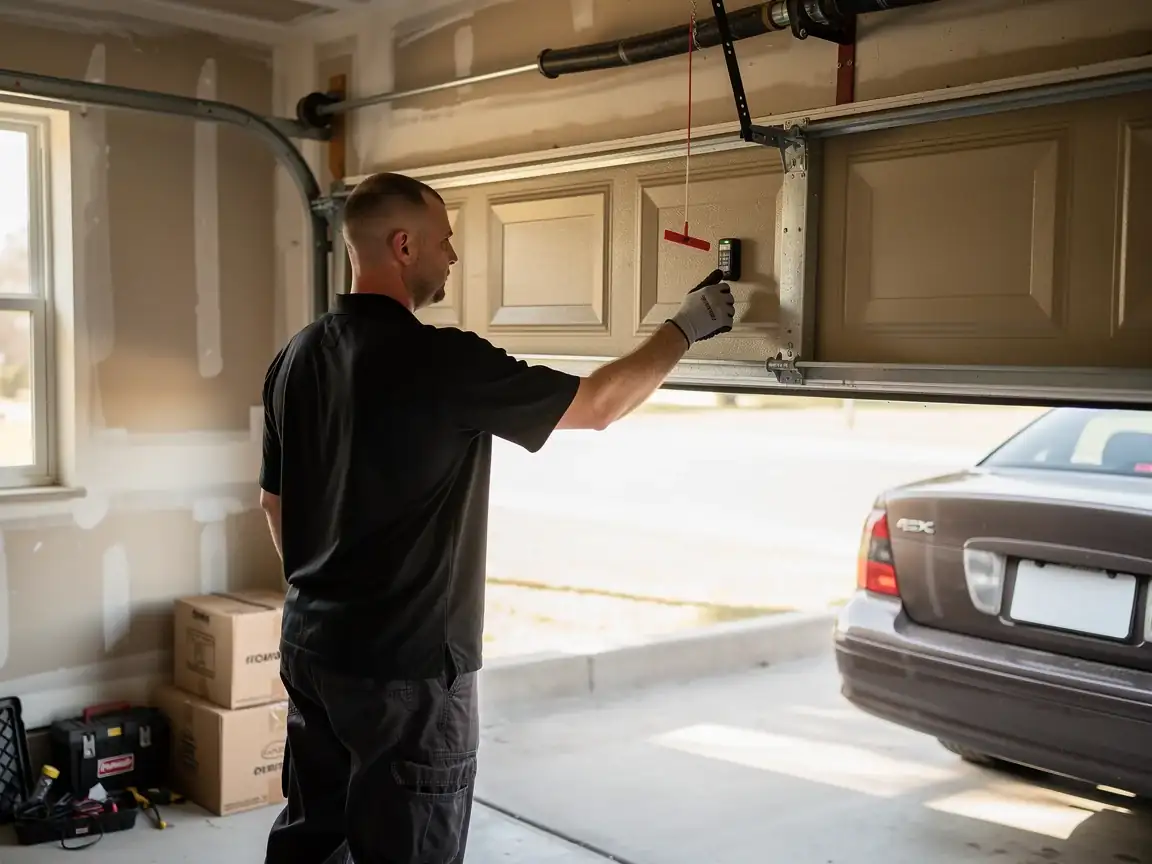
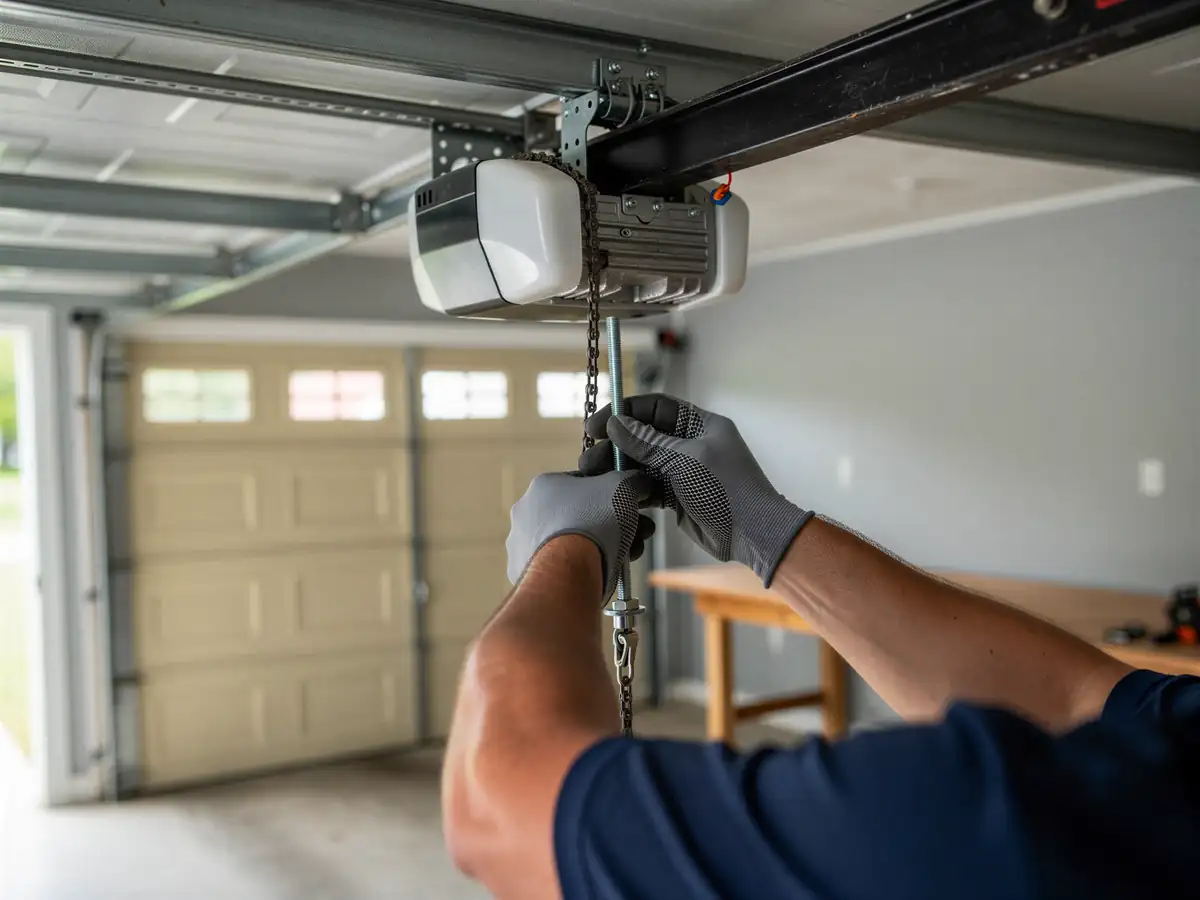
First we test the wall switch and remote separately from the motor unit, since a bad circuit board can mimic a dead motor. We check the drive gear and sprocket for wear - this is the part that fails most on units from the 1980s and 90s, since the nylon gear was never meant to run this many cycles. We check the safety reversal sensors, the travel limits, and the force setting, since an opener fighting a misadjusted limit will burn itself out faster than one running clean.
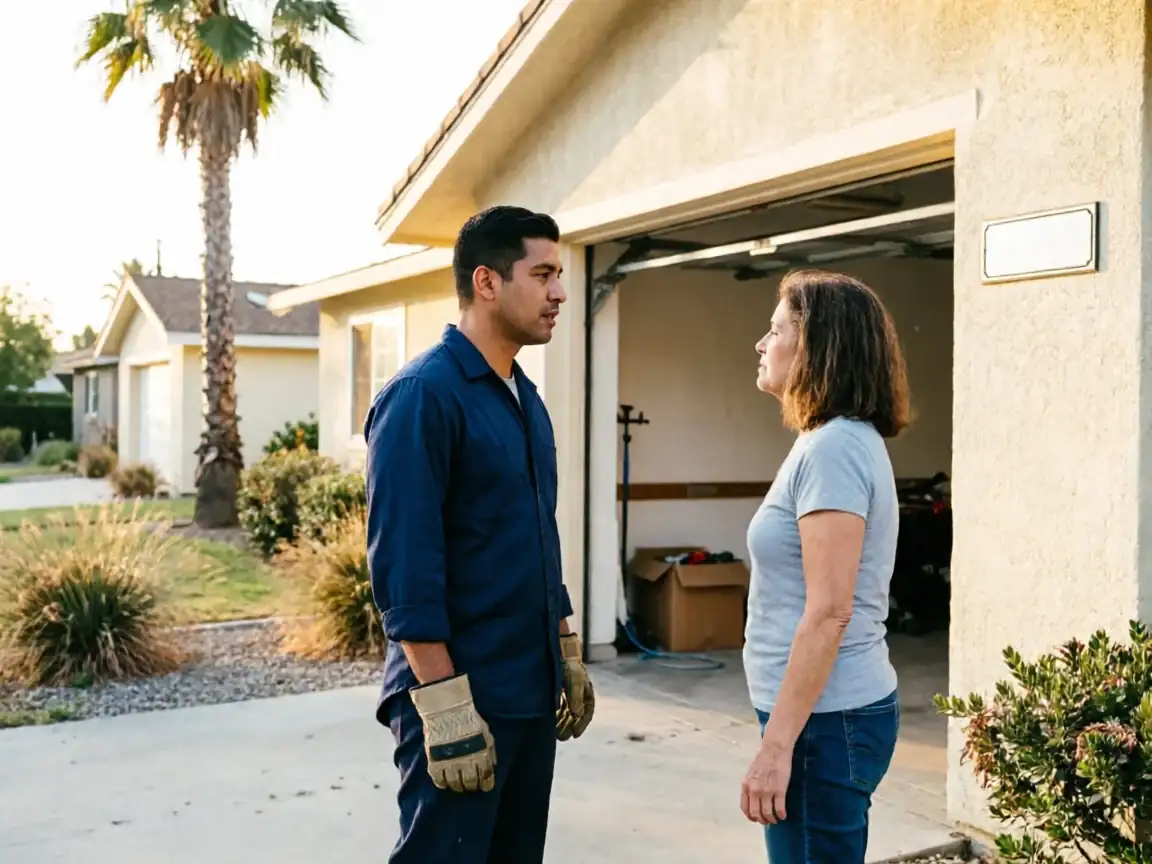
If the motor and board test fine, we look at capacitor condition and listen for bearing wear in the motor housing - a grinding or whining opener usually means the bearings are going, and that's not something worth chasing with lubricant. Once we know what's actually wrong, we tell you straight whether it's a part swap or a full unit.
Parts We Carry
We carry drive gears, sprockets, limit switches, and safety sensors that fit the chain and belt-drive openers common in homes from Fallbrook's build era
Circuit boards are more of a problem - a lot of the units running here are old enough that the manufacturer has stopped making the exact board, and we won't promise a same-day fix on a board that has to be sourced. When that happens, replacing the opener outright is usually faster and not much more than a hunt for a discontinued part.
We stock standard remotes and keypads on the truck
Along with the wiring and hardware to mount a new opener on existing ceiling brackets, which is common in houses where the bracket is original but the motor isn't.
The DIY Question
Resetting the travel limits or replacing the remote battery is within reach for most homeowners, and the manual that came with the unit usually walks through it. Where we'd stop a homeowner is anything involving the drive gear, the motor housing, or the safety sensor alignment - these interact with a door under spring tension, and getting the force setting wrong on an opener can mean a door that doesn't stop when it should.
If your opener is original to a house built around 1980, our honest advice is often not to repair it at all. Parts for a 40-plus-year-old unit are getting hard to find, and a new opener with modern safety sensors and a quieter belt drive usually costs less over time than chasing parts for one that's near the end of its life anyway.
Why It Happens Here
Fallbrook sits about 13 miles out from our Vista shop, and the housing stock out this way skews toward the same era that put a lot of chain-drive openers into service across the broader area - homes built mostly in the 1980s and 90s, per the housing data for this region. That means a higher share of original equipment still running, simply because the houses haven't turned over as fast as newer tracts closer to the coast.
The climate here is mild temperate, so we're not dealing with the extreme heat or cold that cooks seals or cracks housings elsewhere. What wears these openers out in Fallbrook is mostly age and cycle count, not weather. With roughly 9,978 households in Fallbrook and a median income of $87,293, we see a wide mix - some owners replace an opener at the first sign of trouble, others want it kept running as long as it reasonably can be.