What the Fix Involves
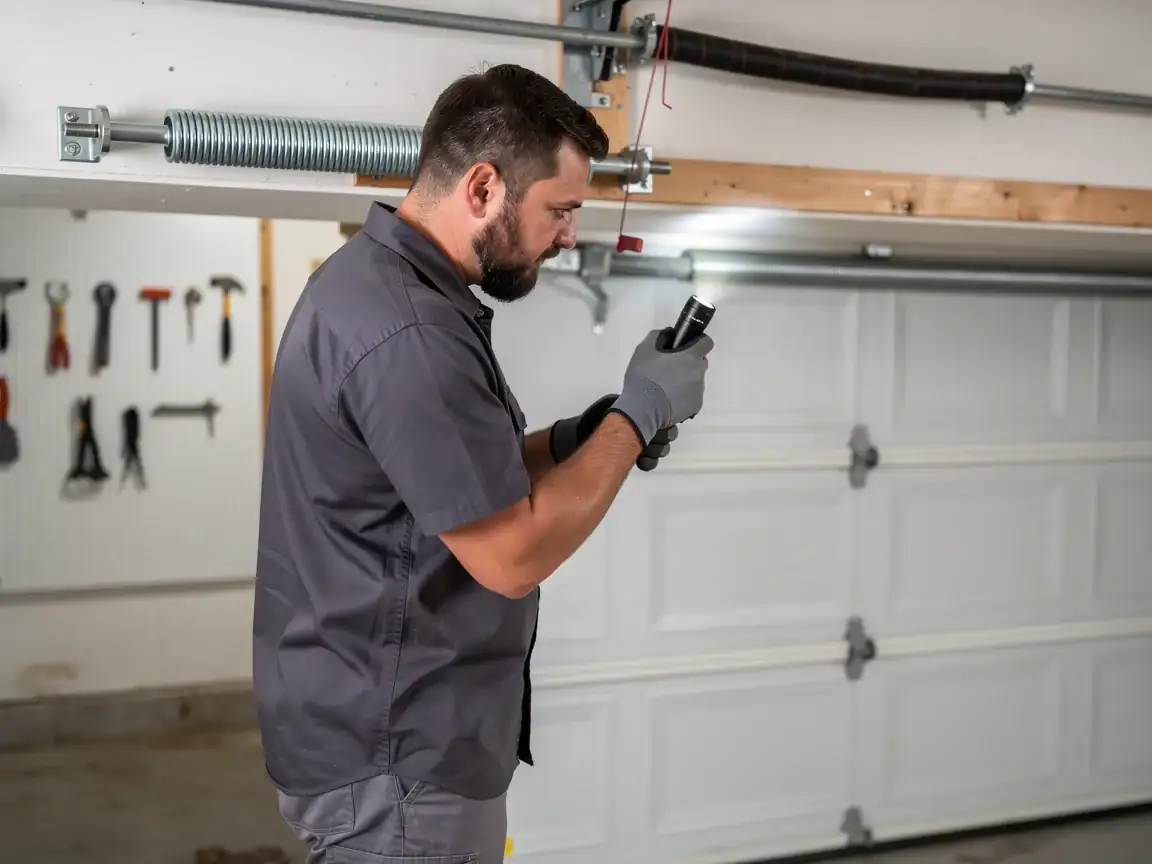
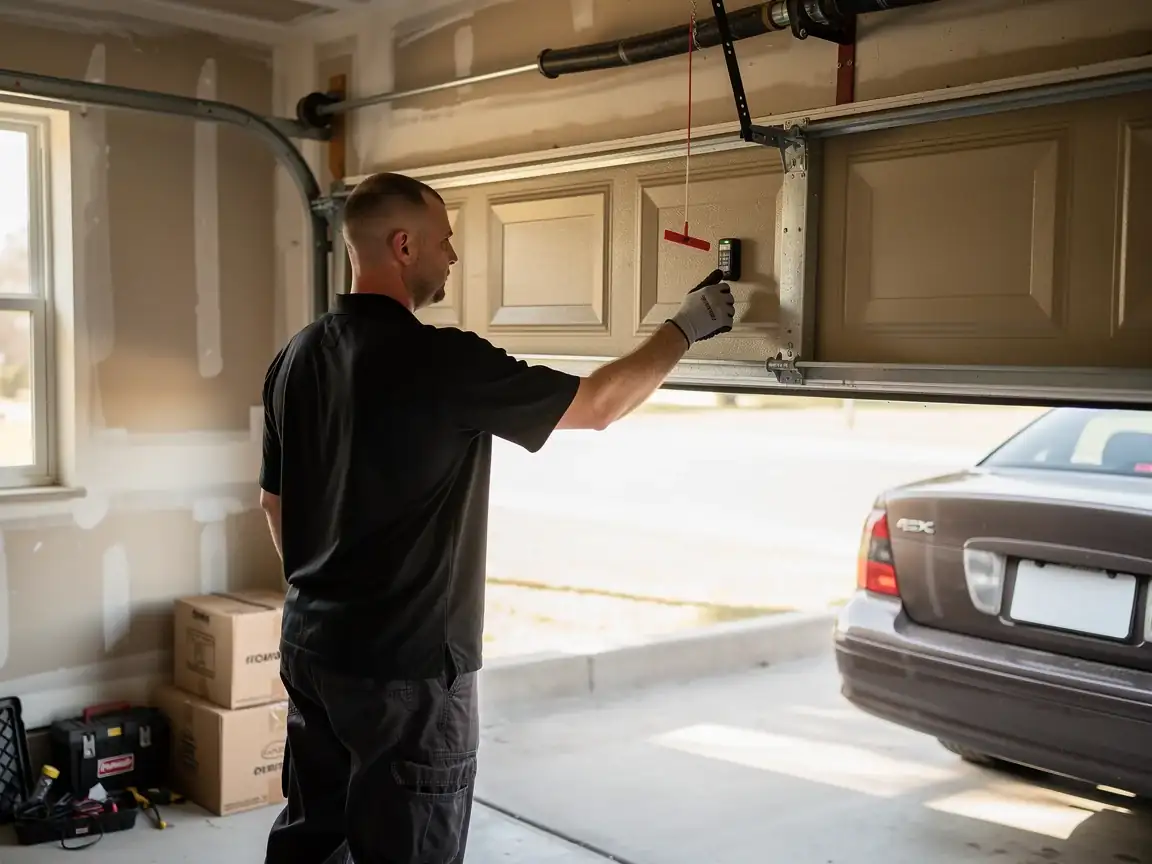
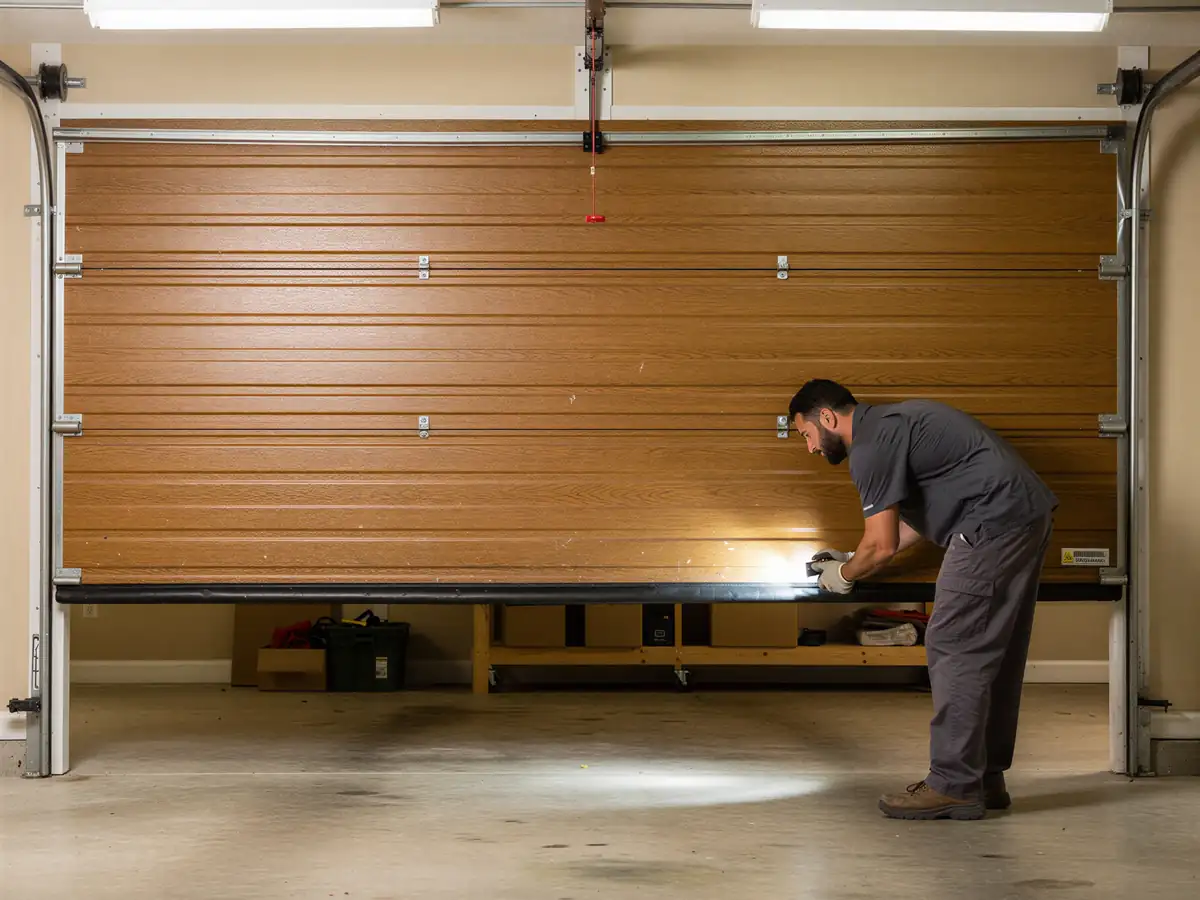
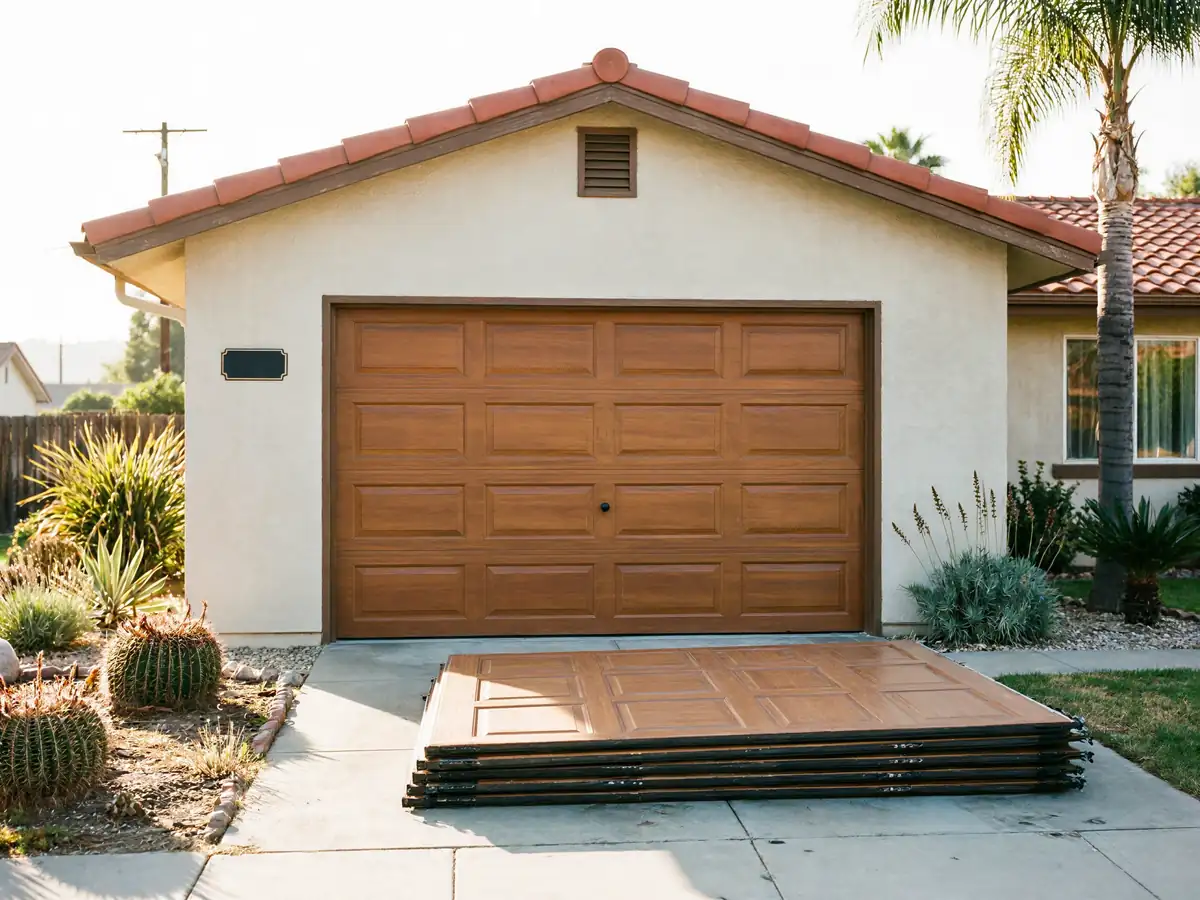
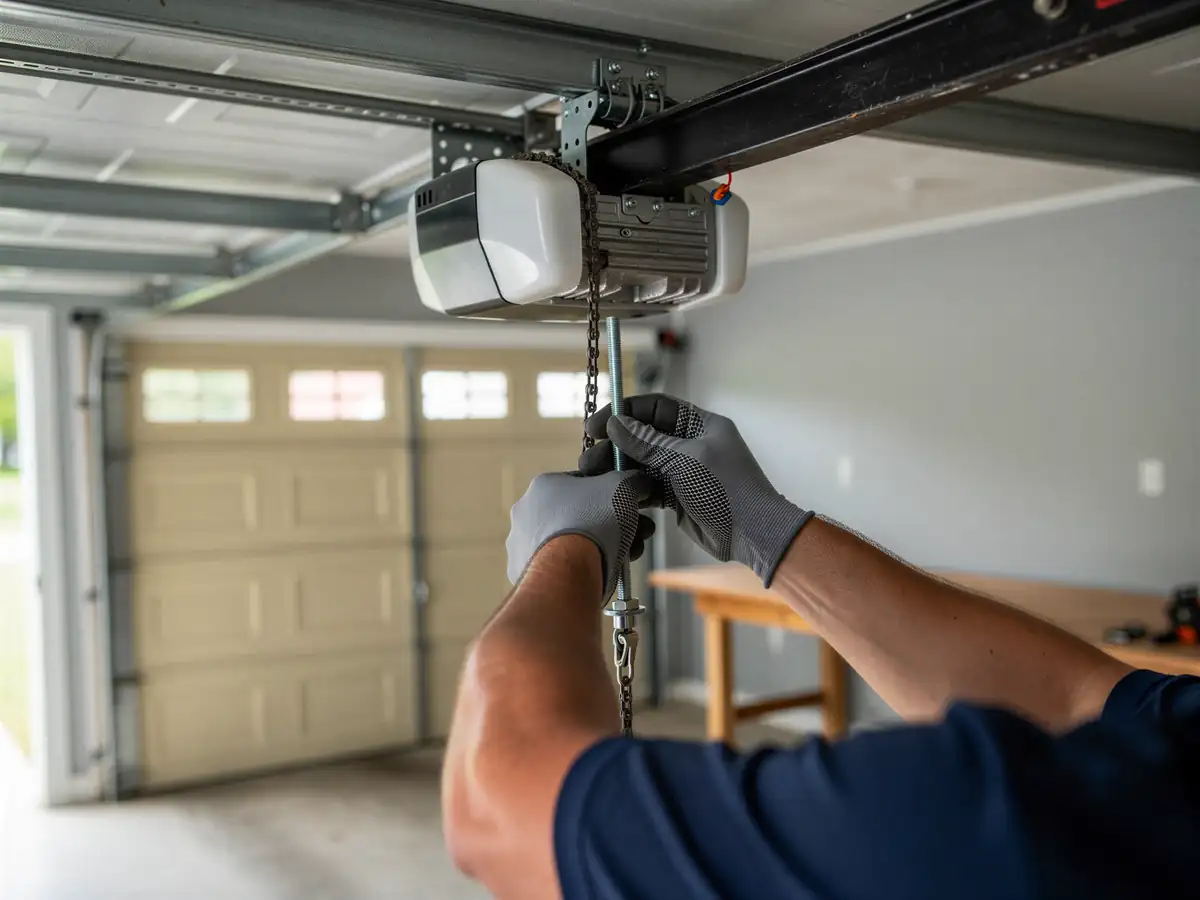
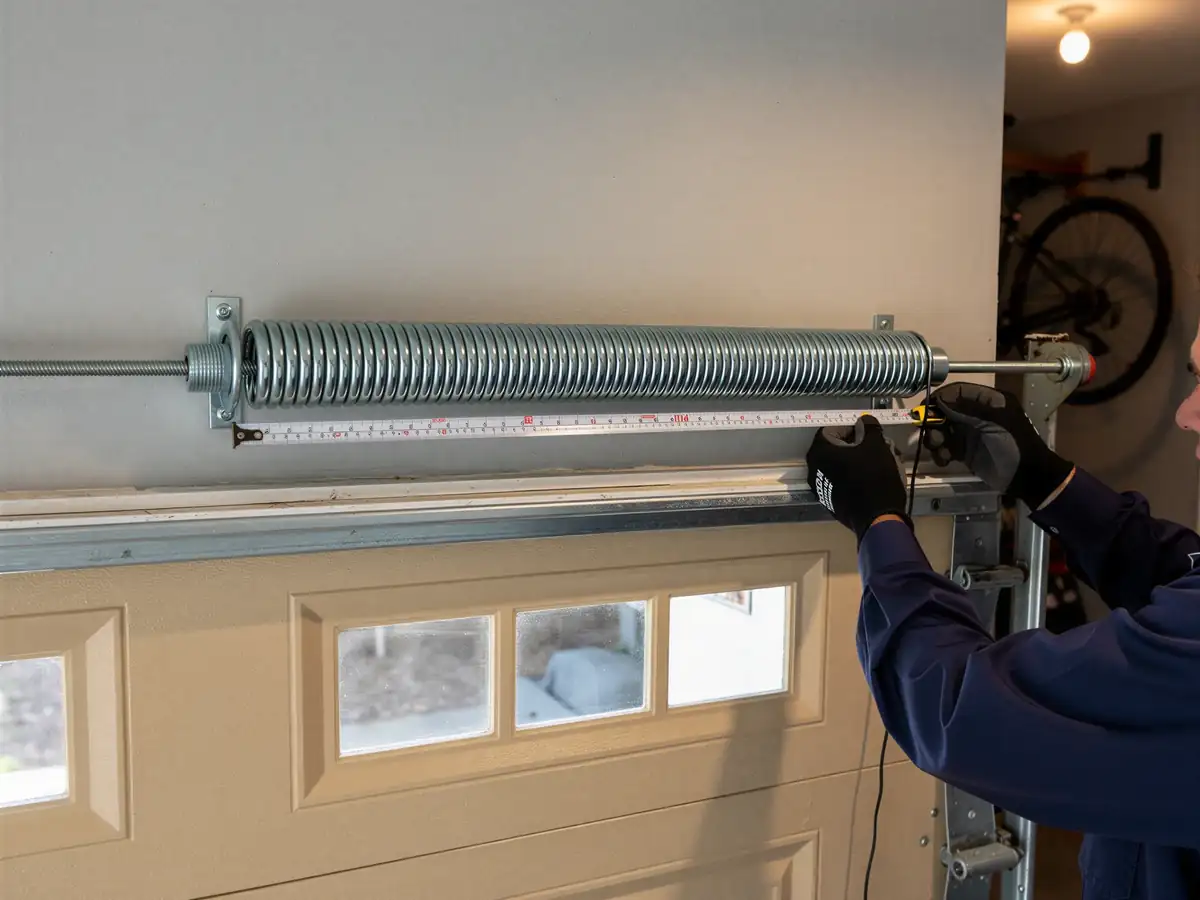
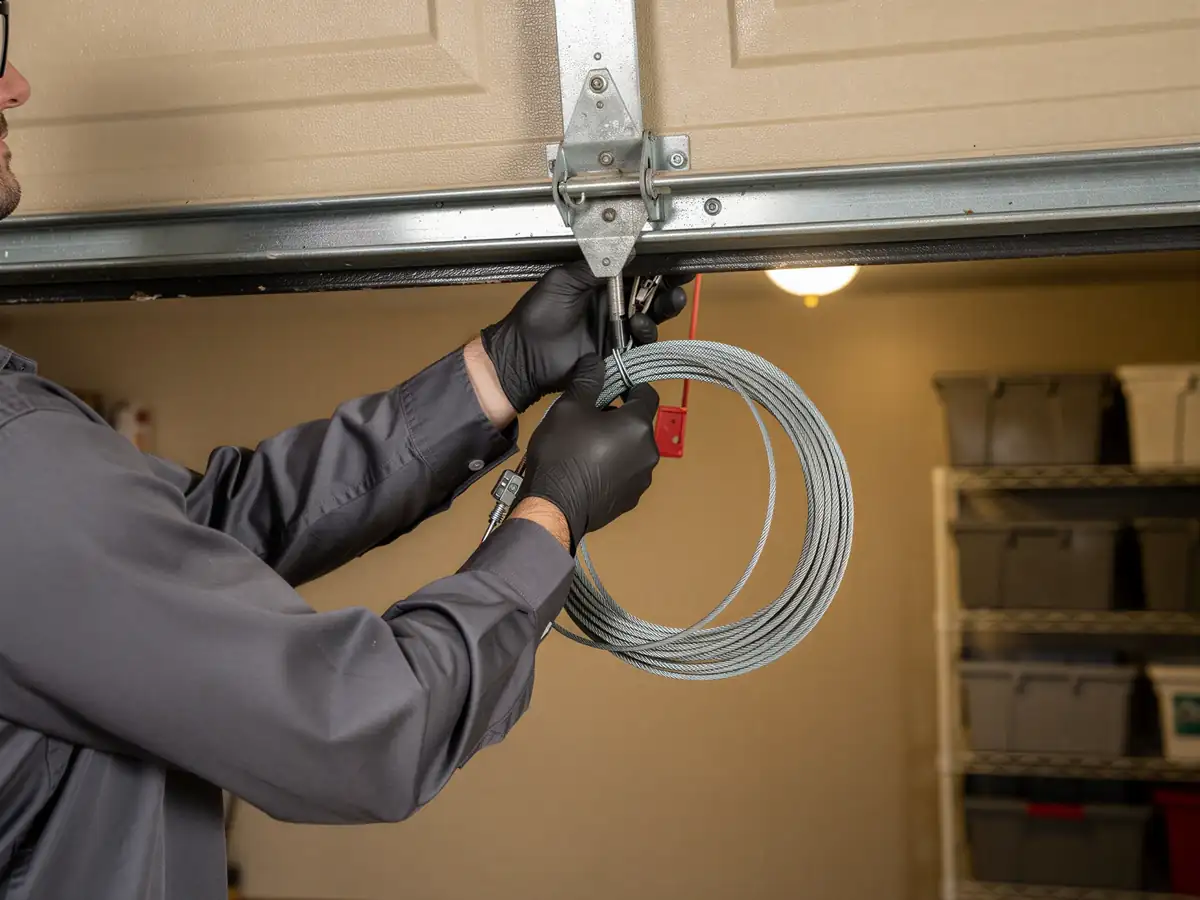
Most calls we get from San Marcos are one of two things: a torsion spring that let go overnight, or an opener that's stopped responding to anything. The spring side is usually quick once we're on site - pull the broken halves, match the wire gauge, set the new spring to the door's weight, and run it through a full cycle. The opener side takes longer to diagnose because it could be the logic board, the capacitor, or just a worn drive gear, and you can't always tell which from the garage floor.
San Marcos homes run newer than a lot of the area - median build year sits around 1994, later than the 1982 median across the wider service territory. That means original torsion springs here are usually still on factory-set torsion bars rather than the older side-mount extension setups you find in 1970s stock. The failure point in a 1994 door is less often the hardware itself and more often the opener's original circuit board hitting end of life, or a cable that's frayed from thirty years of cycles with no one ever lubricating it.
We carry common spring sizes and standard opener logic boards on the truck. What we don't stock is every proprietary board from every opener brand sold in the early 90s - if yours is one of those, we may need to order the part and get you a safe temporary setup in the meantime.
The DIY Question
A broken spring is not a DIY repair, full stop. Torsion springs hold enough tension to break a wrist or worse, and the winding bars needed to set one safely aren't something most homeowners have lying around. If your door won't open and you can see a gap where the spring used to be coiled, leave the door down and call someone.
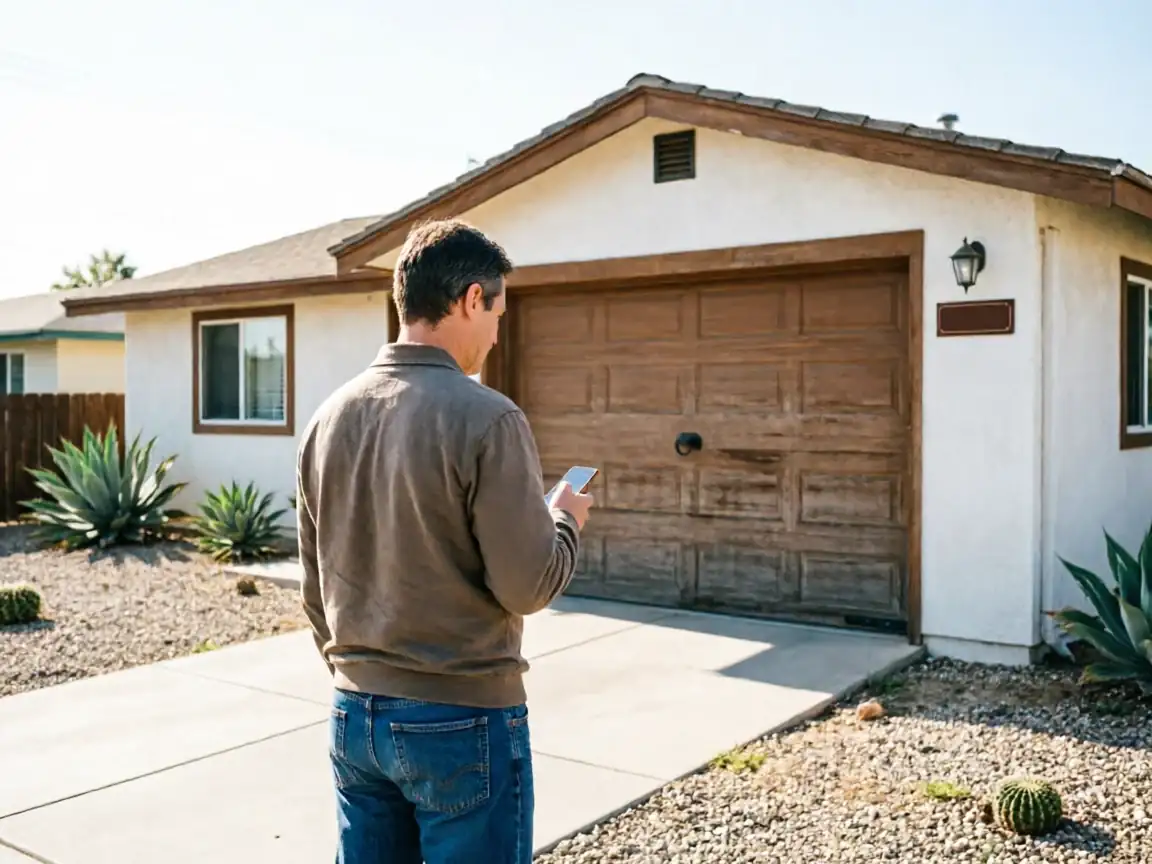
What you can check yourself: whether the opener has power, whether the safety sensors near the floor are aligned and the little light on each one is solid (not blinking), and whether anything is blocking the track. On a 1994-era door, the photo-eye sensors are standard equipment, not an add-on, so a knocked-out-of-alignment sensor is a common and harmless-looking cause of a door that just refuses to close. That one you can usually fix yourself by nudging the sensor bracket back into line.
Beyond that, we'd rather you call than guess. Diagnosing a dead opener board versus a dead opener motor without the right meter just wastes your afternoon.
How Long You Are Without the Door
We're not based in San Marcos
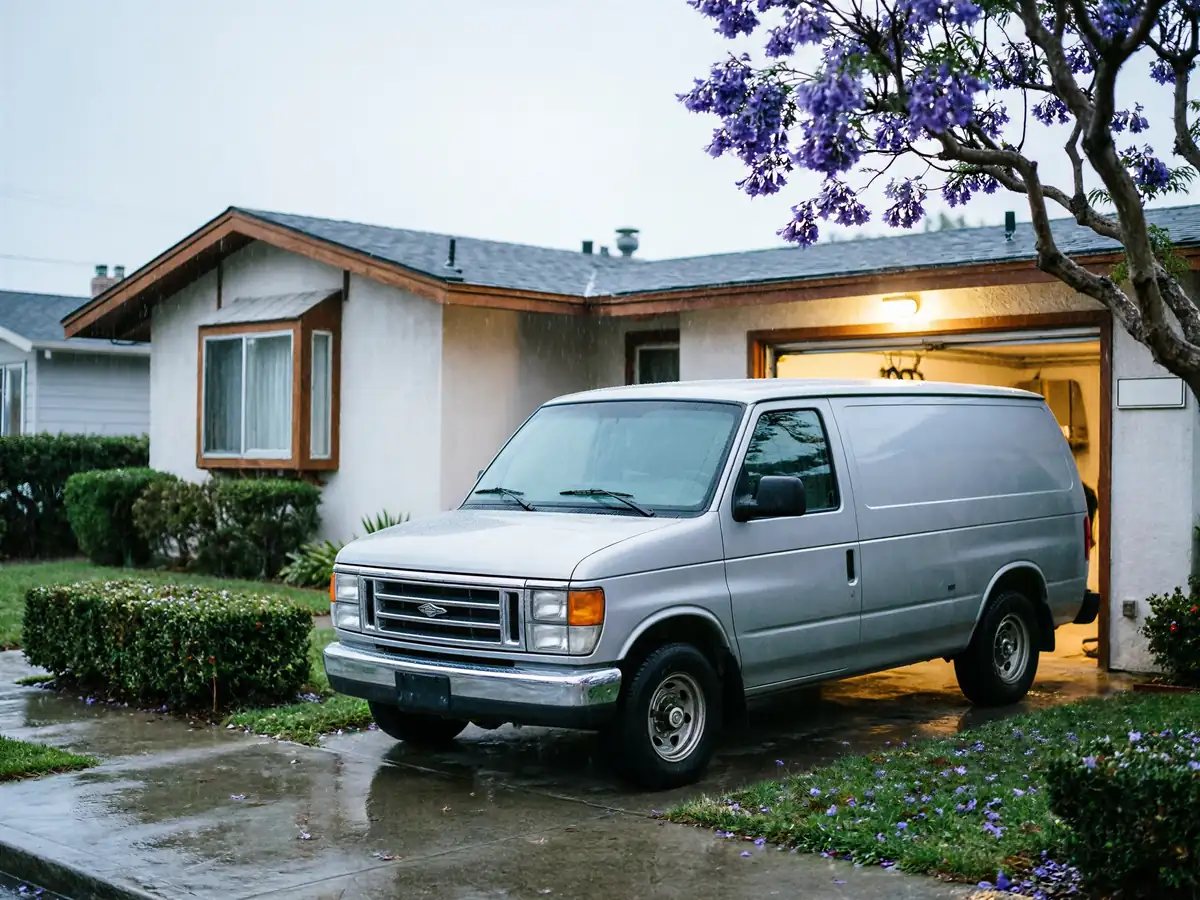
The truck comes from Vista, about 6 miles out, so factor that drive into when you can expect us. Once we're there, a straightforward spring swap is usually done inside an hour. An opener diagnosis can take longer if the fault isn't obvious, and if the part has to be ordered, you may be running the door manually for a day or two.
- 6 miles
San Marcos's mild temperate climate works in your favor here
Unlike areas with real freeze-thaw cycles, you're not dealing with ice jamming a track or a seal cracking from cold, so a manual-open door isn't a weather risk while you wait on parts. It's an inconvenience, not an emergency, once the spring itself is handled safely.
Booking a Visit
Tell us what the door is doing - won't open, won't close, makes a bang and stops, opener runs but nothing moves - and whether you can see a broken spring or snapped cable from the garage. That alone usually tells us what to bring. If you know roughly when the door or opener was installed, that helps too, since a lot of San Marcos installs date to the 1980s-90s build wave across the area and parts availability depends on the exact model.
For the rest of what we do in San Marcos outside of emergency calls, see our page at /garage-doors-san-marcos/. If you're actually closer to our Vista base than the 6-mile San Marcos run, the general emergency page covers that territory directly: /emergency-garage-door-repair-vista-ca.
The Symptom
The most common emergency symptom we see from this part of the service area is a door that drops suddenly or won't lift past a few inches - classic broken torsion spring. Second most common: an opener that hums but the door doesn't move, which usually means the drive gear has stripped, not the motor itself.
Less common but not rare: a door that reverses right before it touches the floor. On a door from the early-to-mid 90s build era, that's almost always a sensor alignment issue rather than anything mechanical, since federal law already required those safety eyes by the time these houses went up. Worth checking before you assume the worst.