What the Fix Involves
San Marcos runs about 30,880 households, which is a bigger base than most of the other spots we cover out of Vista, and it shows in the range of calls we get from this side of town. The median home here was built in 1994, a good decade newer than the 1982 median across the wider service area, so the doors and openers we work on tend to be a step up in age bracket from what you'd find in the older pockets nearer Vista itself.
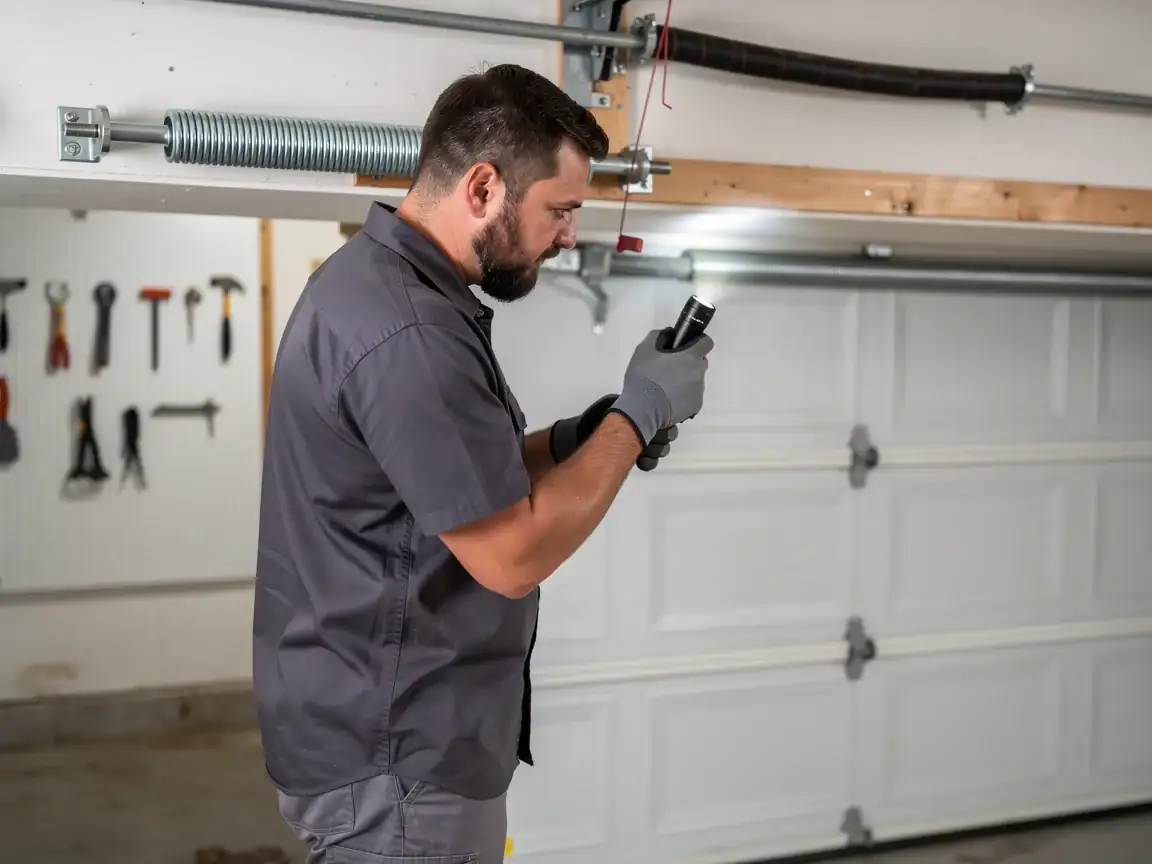
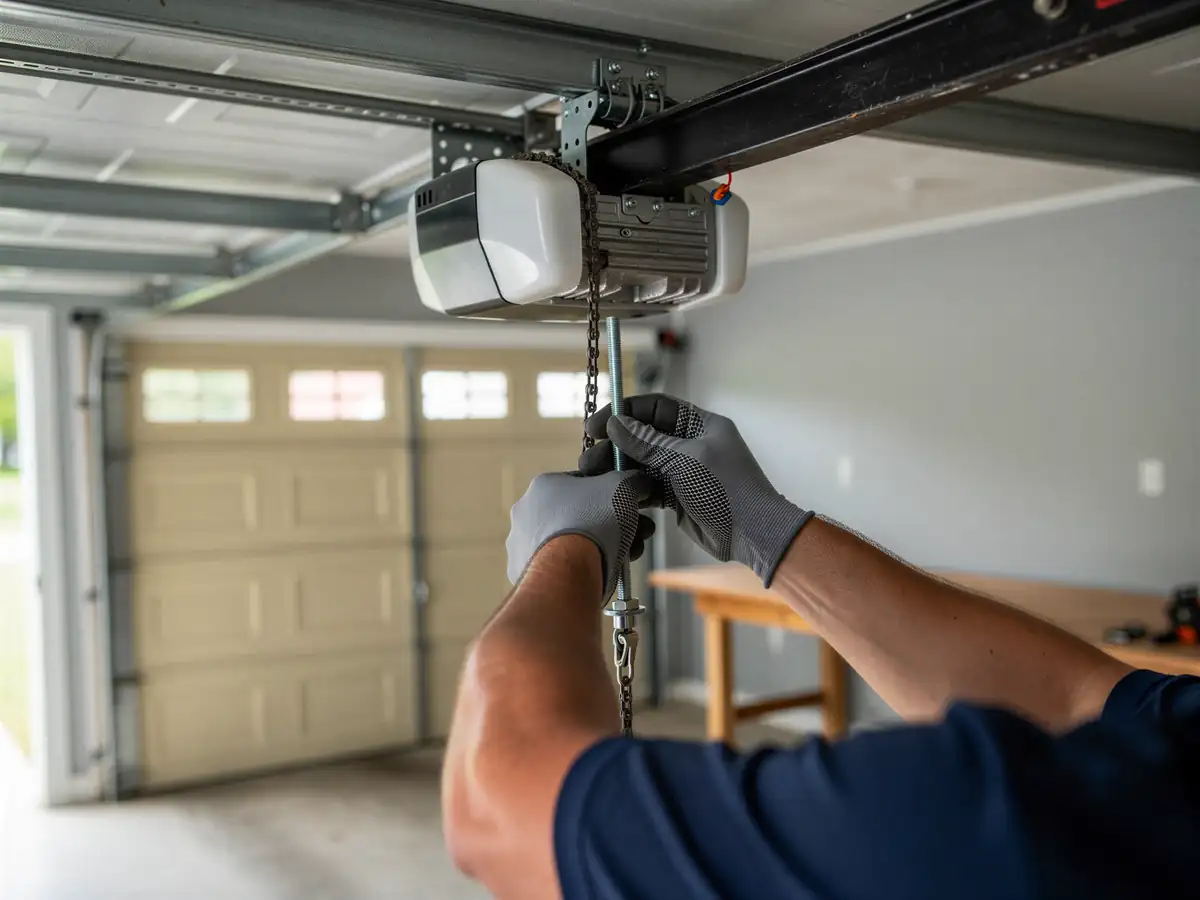
That later build date usually means a steel sectional door on a torsion spring system, with a chain or belt-drive opener from somewhere in the 1990s or 2000s rather than the older extension-spring setups common in pre-1980 housing. The fix usually comes down to one of three things: a torsion spring that's fatigued out after thousands of cycles, a roller or hinge worn enough to bind the panel, or an opener logic board or drive gear that's finally given out after two or three decades of daily use. We diagnose on site and tell you straight which of those it is before any parts come off the truck.
The DIY Question
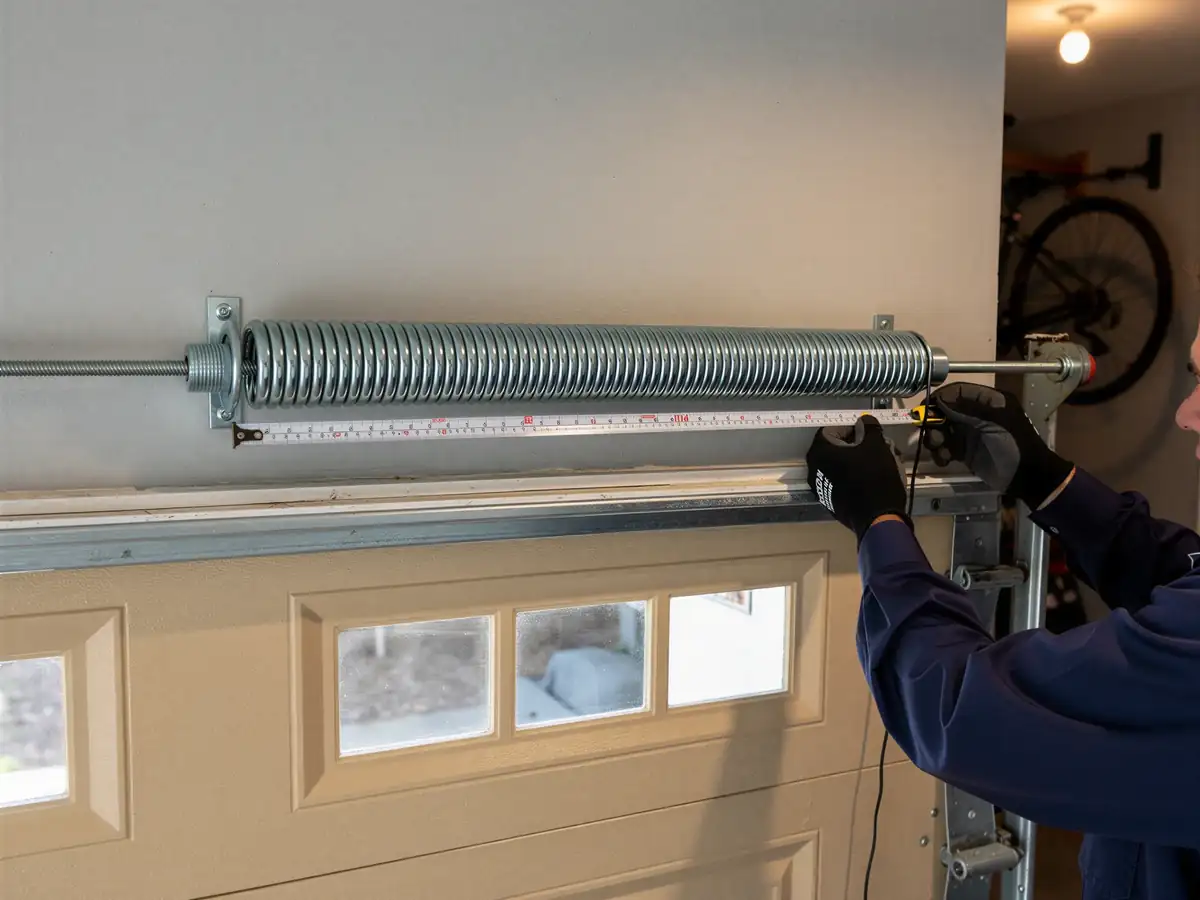
A torsion spring under tension can take a finger off if you don't know the wind count and the right bar, and a door built in the early-to-mid 1990s often still has its original spring, which means the metal has had thirty years to fatigue. That's not a job to learn on your own driveway.
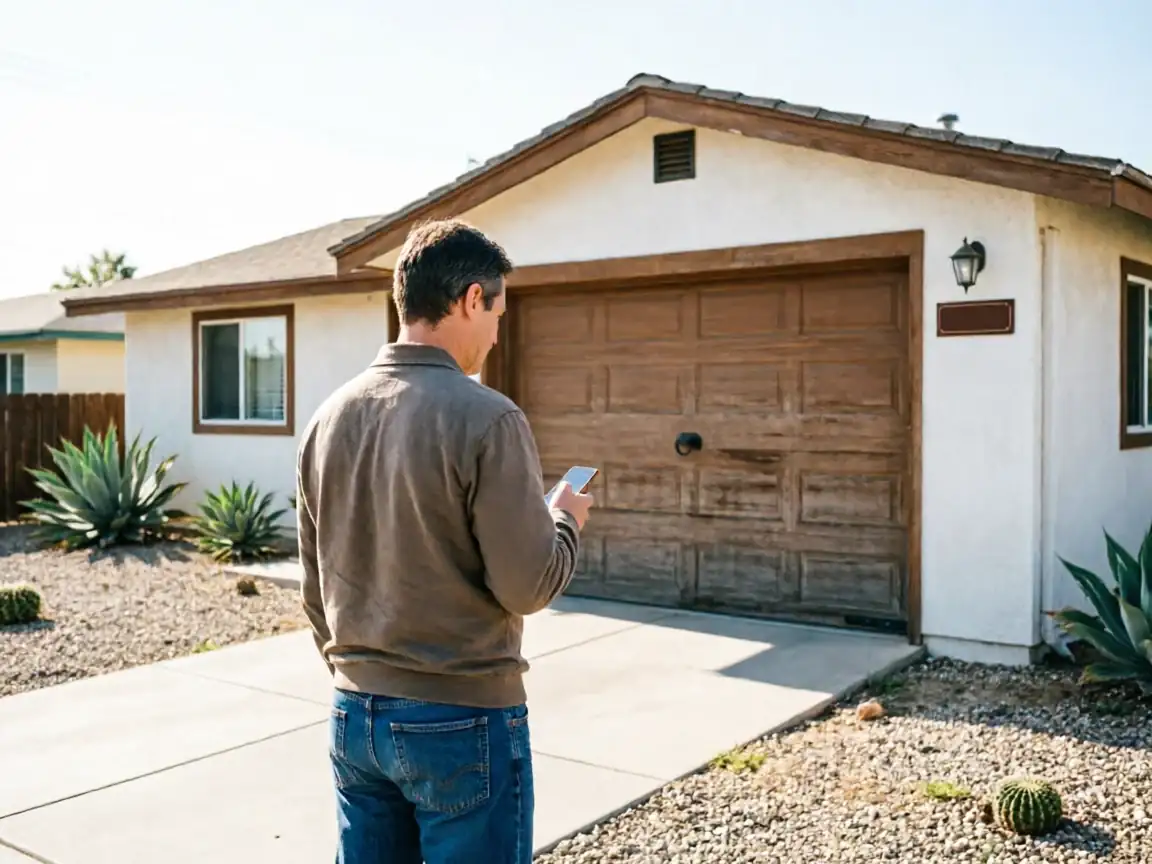
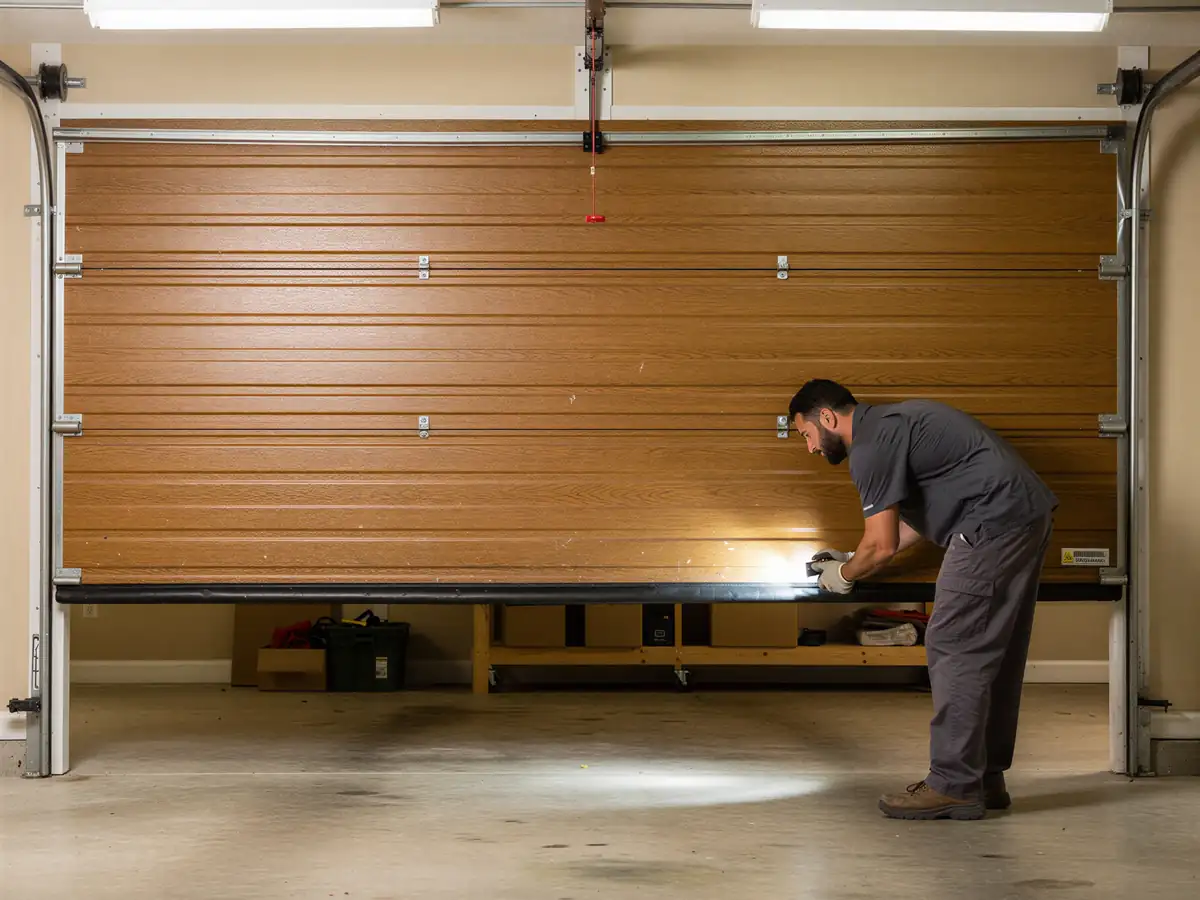
What you can reasonably check yourself: the track for visible dents or gaps at the wall bracket, the weatherstrip at the bottom for cracking, and whether the opener's safety sensors (the two eyes near the floor) are aligned and lighting up. If the door reverses on its own or won't close at all, that's almost always a sensor or alignment issue, not a spring problem, and it costs nothing to check before you call anyone.
Our limitation here is parts, not labor: original hardware from a 1990s build sometimes isn't stocked in the exact size anymore, and we'll tell you straight if that means a slightly different spring rate or a bracket swap rather than a like-for-like replacement. San Marcos's mild climate band means we're not fighting rust or ice-cracked seals the way some inland service areas do, so most failures here are mechanical fatigue, not weather damage.
How Long You Are Without the Door
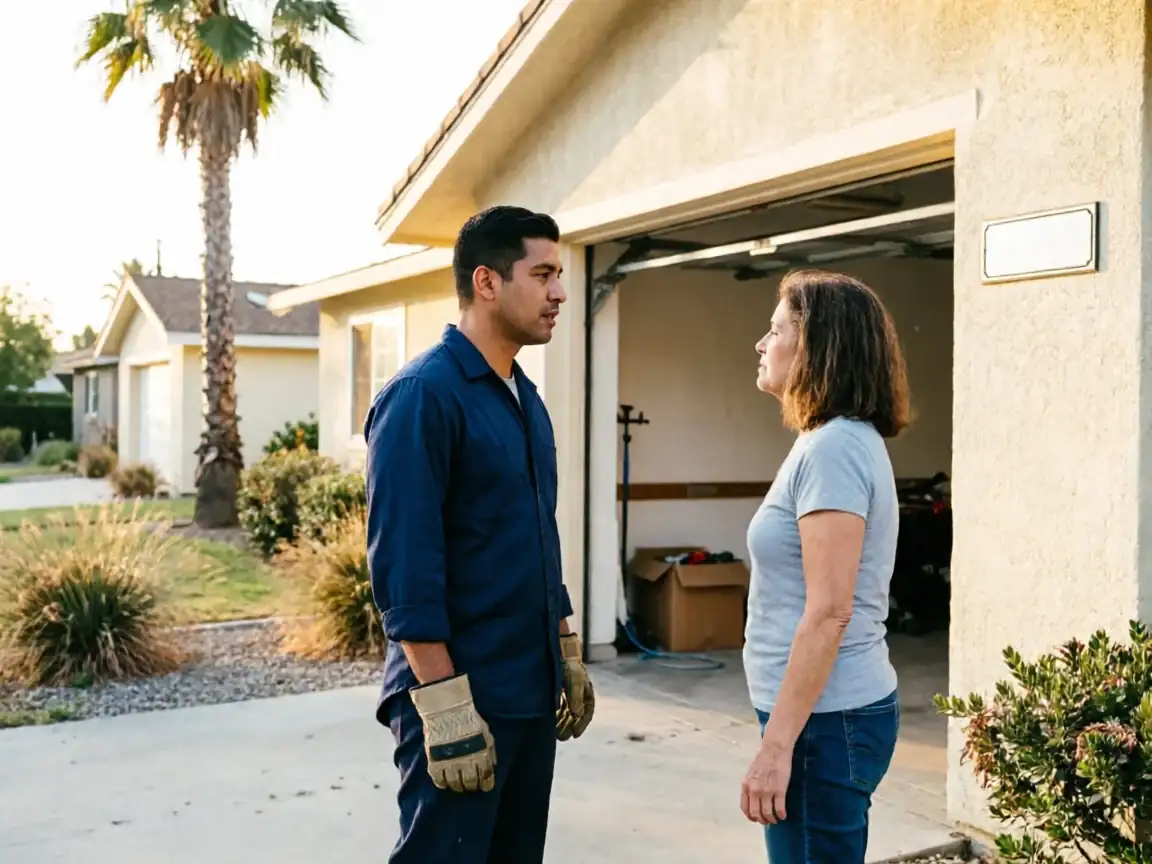
How long a job takes depends on what's actually broken more than anything else
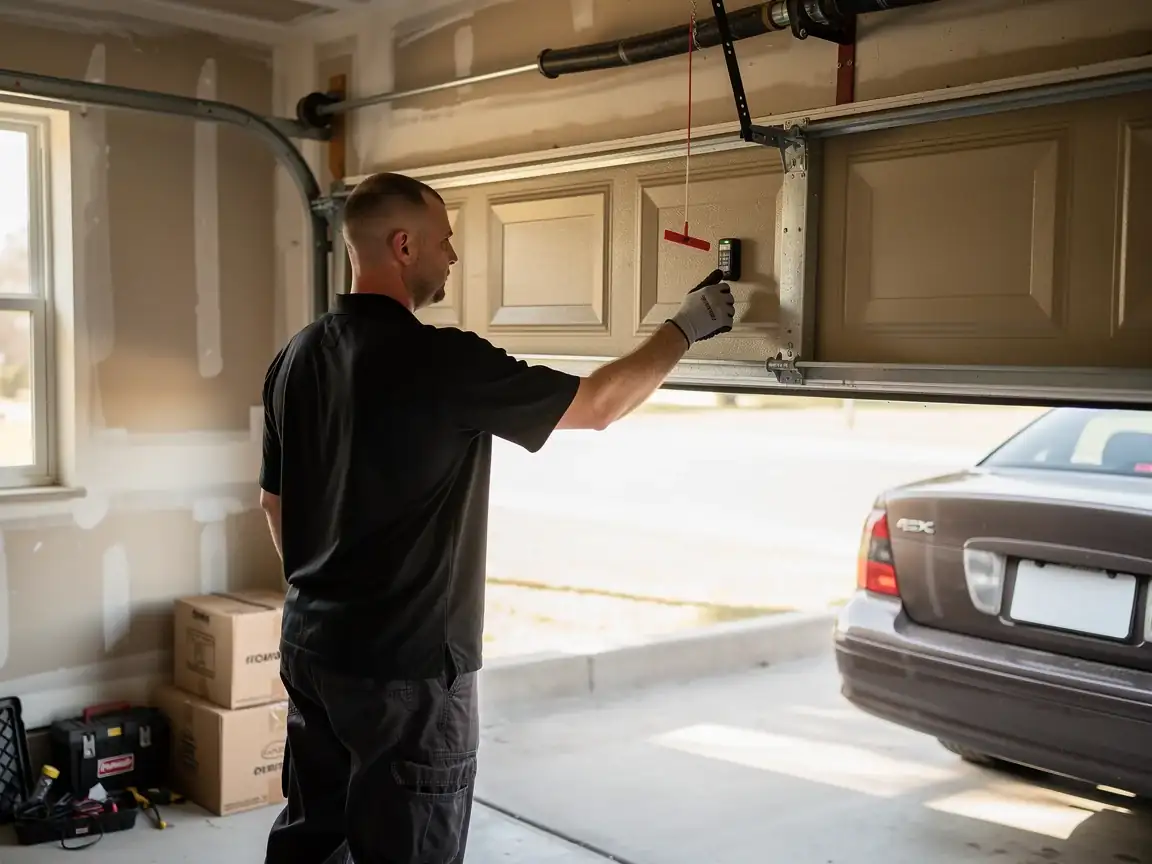
A torsion spring swap on a door from this era is usually a same-visit job once we're on site, because spring sizing for 1990s-built sectional doors is a known quantity. An opener board replacement can go the same way if the part is in stock on the truck.
Where it stretches out is a full opener swap tied to a specific wall-mount bracket or an unusual panel size
Which sometimes means ordering a part rather than carrying it. We won't pretend every job wraps in one trip. If yours needs an ordered part, we'll say so at diagnosis, not after you've waited around for it.
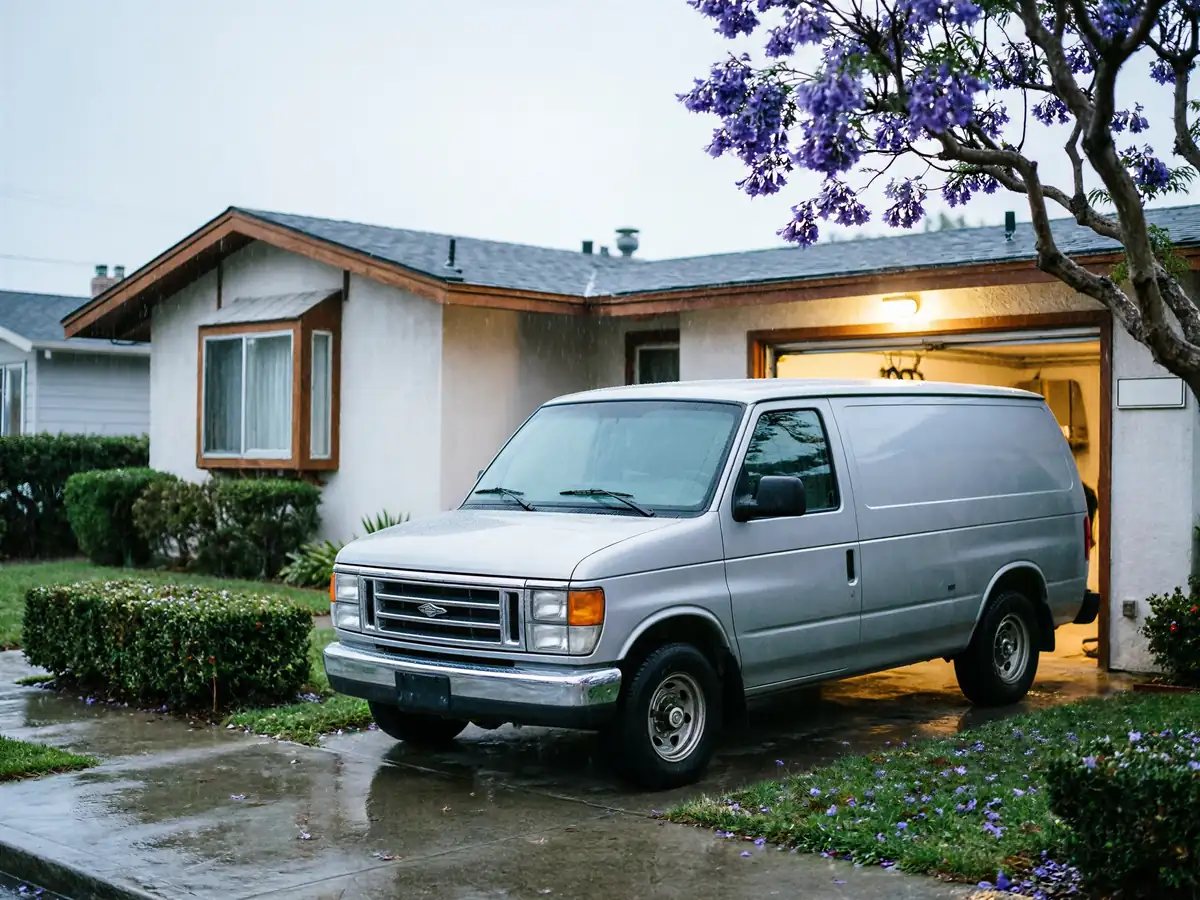
We travel from Vista, six miles from San Marcos
So the trip itself isn't the variable - it's the diagnosis and the parts on hand. We'd rather tell you it's a two-visit job up front than promise a same-day fix we can't back.
Booking a Visit
If you're not sure which service you need - spring, opener, track, or a full door replacement - the San Marcos service page breaks those out individually, since lumping them together doesn't help you figure out what's actually wrong with your door.
For the bigger picture on how we run calls out of Vista, including the areas we cover and how dispatch works from the shop, that's laid out on the Vista garage door service page. We work this San Marcos run regularly enough that the six miles isn't a factor in scheduling, but we're not based in town, so we don't carry a local showroom or walk-in counter here - it's a truck visit, by appointment.
The Symptom
The complaint we hear most from this part of town is a door that's suddenly loud, or one that opens partway and then stutters or reverses. On a house built around 1994, that's often a chain-drive opener with a gear set that's worn thin after thirty years of cycles - plastic gears inside the motor housing strip out gradually, and the noise gets worse for months before it fails outright.
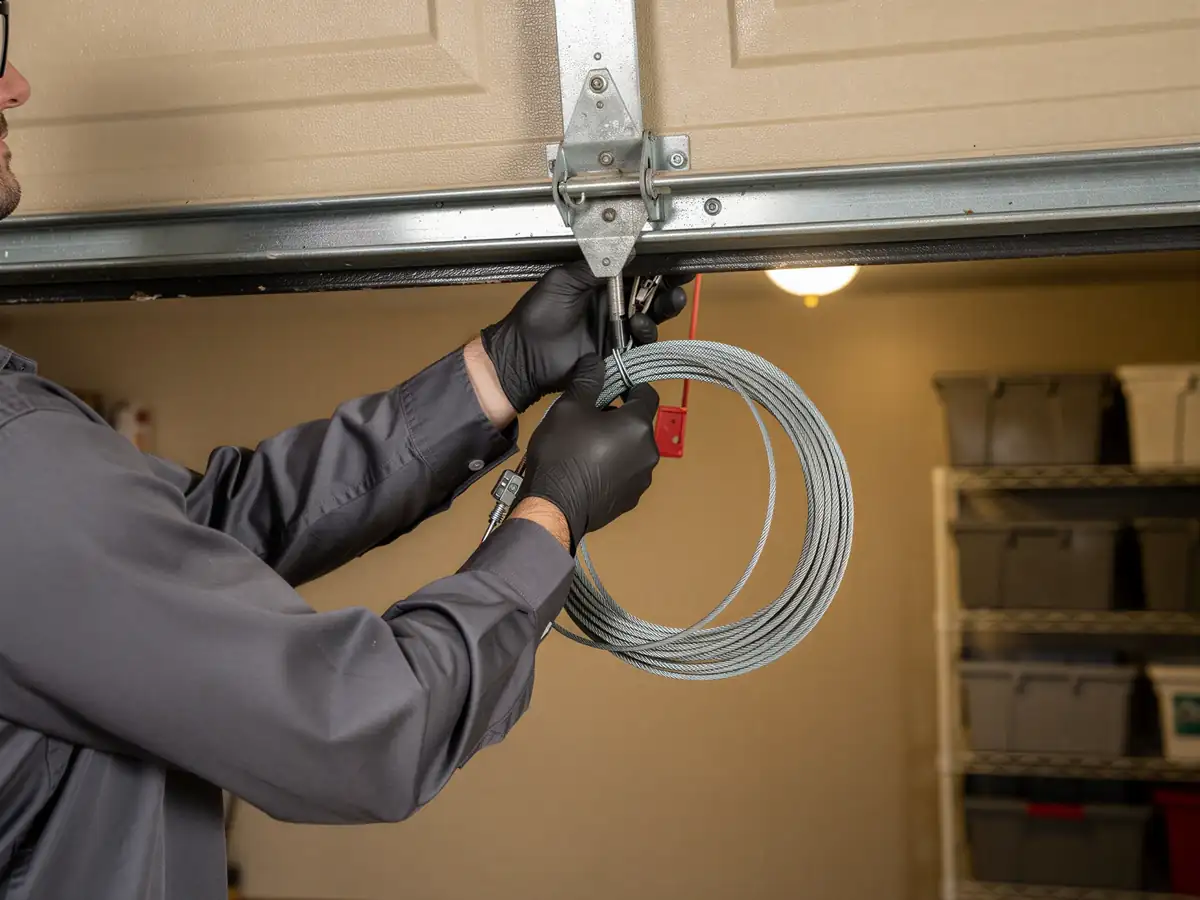
The other common one is a cable that's started to fray at the drum, visible as small wire strands poking out near where the cable winds. That's not a wait-and-see repair; a frayed cable under load can snap, and when it does, the door comes down unevenly and can jam the track or drop hard on one side. If you see fraying, stop using the door and get it looked at rather than running it until it fails.
Less common but real: a torsion spring that's visibly stretched or gapped at a coil. That one usually announces itself with a loud bang, often mistaken for something falling, rather than a gradual warning.