The DIY Question
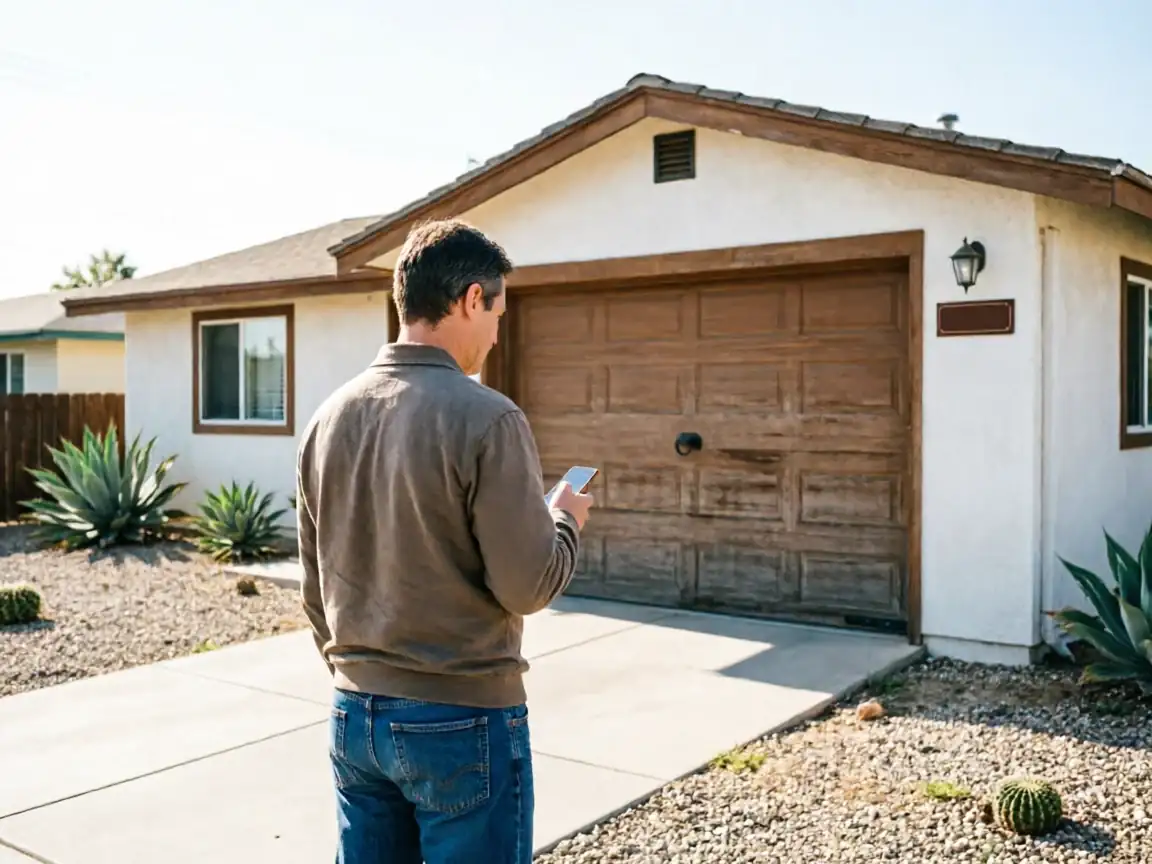
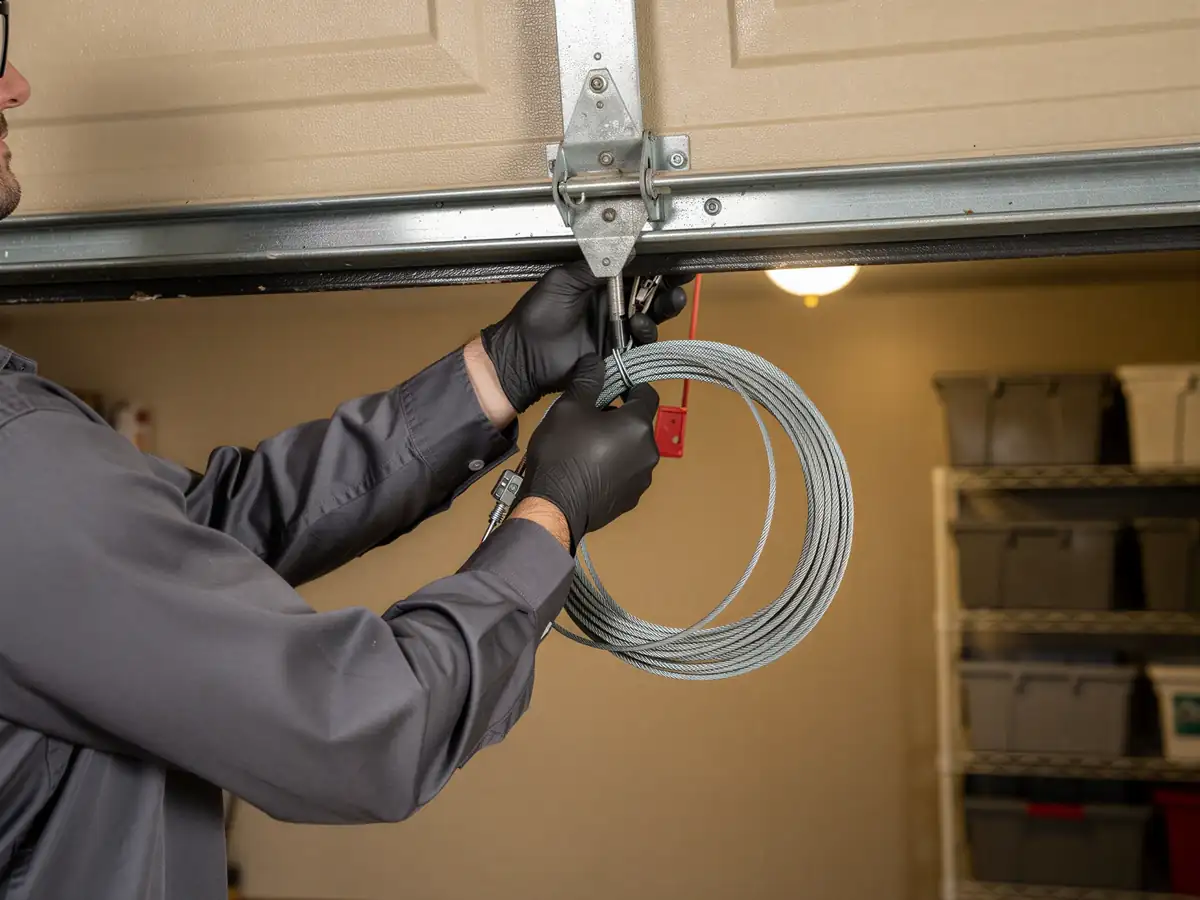
Hidden Meadows has about 1,786 households, which is a small enough number that most of the doors out here were put up by the same handful of builders working through the 1980s. That matters for the DIY question. If your door is a torsion-spring setup from that era, the spring is wound to a tension that can break a wrist or worse if you don't know the drill sizes and winding bars for that specific hardware generation. A cable off its drum is a two-person, right-tool job, not a Saturday project.
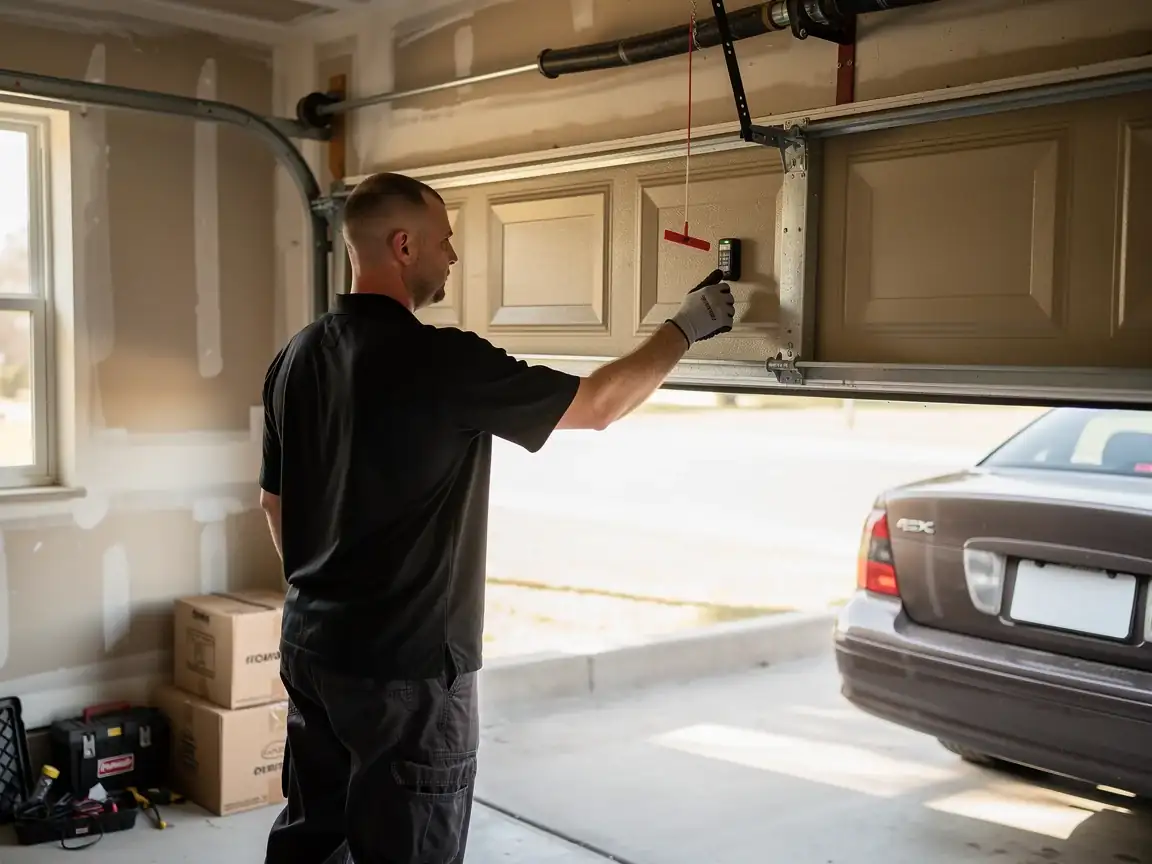
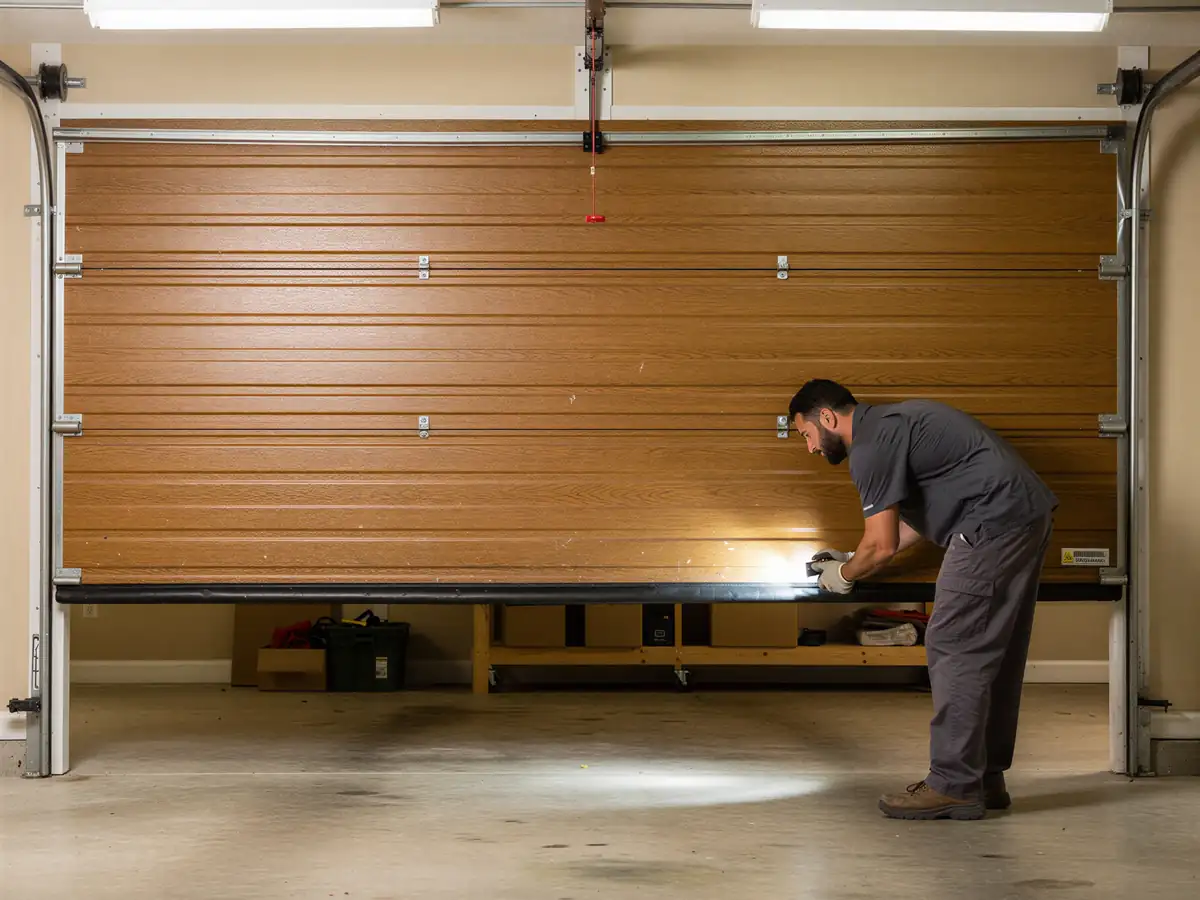
What you can safely check yourself: the photo-eye sensors near the floor on each track, whether the wall switch has power, and whether the opener's manual release cord has been pulled by accident. Those three things solve more "emergency" calls than any part failure. If the door won't move and you've ruled those out, stop pulling on it. A door that's stuck under spring tension and gets forced the rest of the way often tears the bottom bracket off the panel, which turns a spring job into a panel job.
We're honest about the limitation here: we're not based in Hidden Meadows. We run the call from Vista, about 7 miles out, so we're not pulling up in five minutes. If the door is actually trapping a car inside or can't be secured at all, say so when you call, and we'll plan the route accordingly.
What the Fix Involves
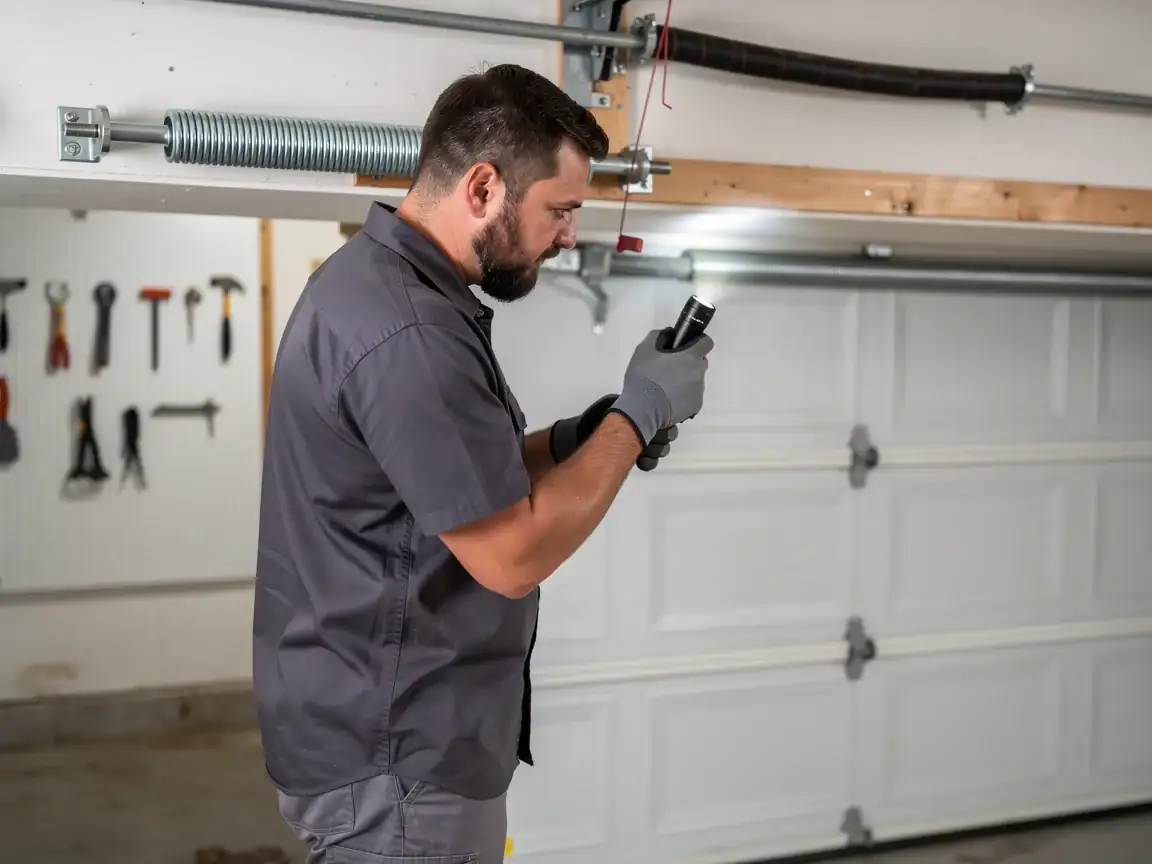
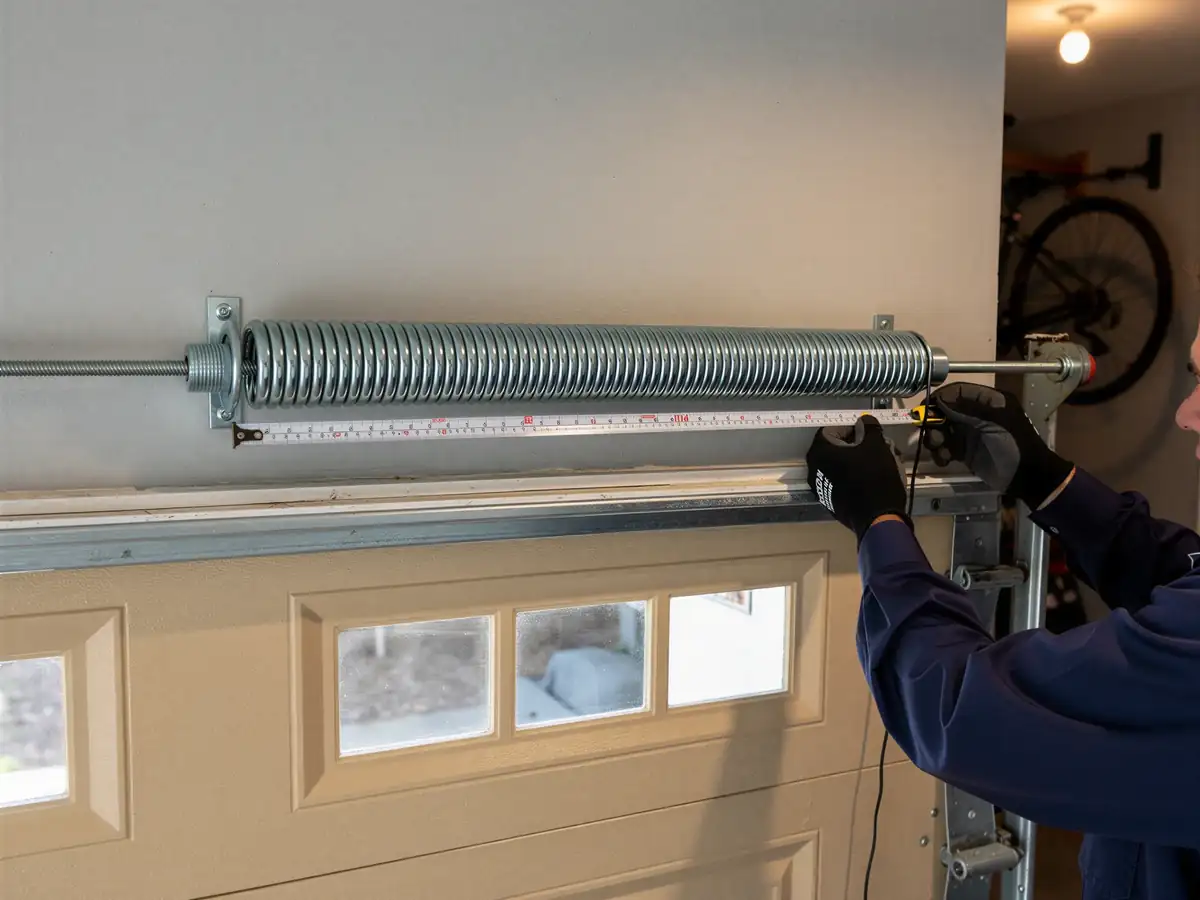
Most Hidden Meadows houses date to around 1984, which puts the original door hardware squarely in the extension-spring-and-steel-track generation, sometimes upgraded to torsion springs if a prior owner replaced the whole unit. The fix starts with figuring out which generation we're actually looking at, because parts aren't interchangeable between them.
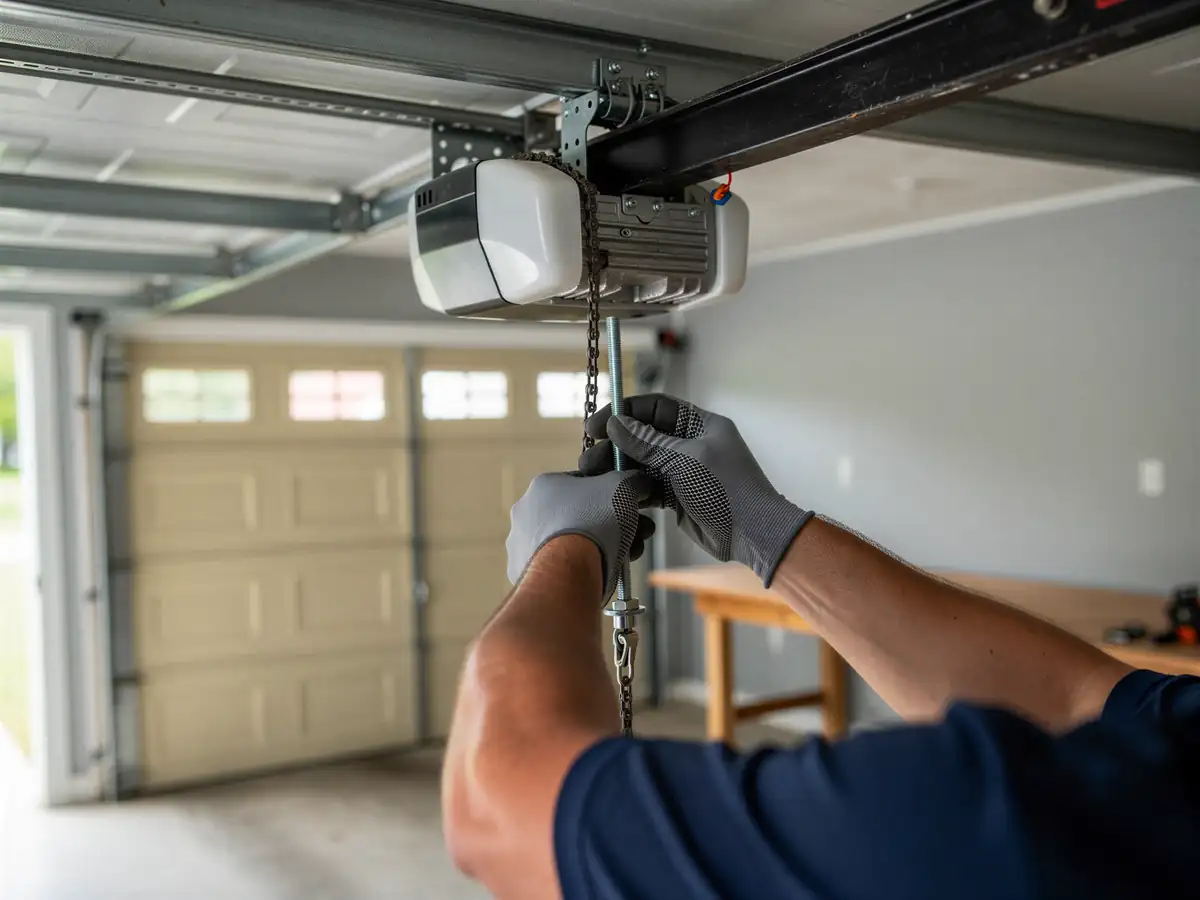
For a broken spring, that means matching wire gauge, coil diameter, and wind direction to the door's weight and height, not grabbing a universal spring off the truck. For a dead opener, it means checking whether the circuit board or just the logic board failed, since on units from this era the motor itself often outlasts the electronics twice over.
Track and roller work is the other common call. On 1980s-stock doors, horizontal track brackets were often set with lag screws into framing that's shifted slightly over four decades, so realignment sometimes means redrilling rather than just loosening and retightening. We check for that before we touch anything, because tightening a bracket that's already stripped out doesn't hold.
The Complications
The mild coastal-inland climate here is kind to garage door steel and rubber seals compared to places with real freeze-thaw cycles or heavy humidity swings
So rust-through on track and hinges is less common than in harsher climates. That's the good news.
The complication is parts availability, not weather
Doors and openers from the early-to-mid 1980s sometimes used spring sizes or opener logic boards that manufacturers have since discontinued. When that happens, the honest options are a close-enough substitute spring recalculated for the door's weight, or a full replacement unit. We won't force a wrong-spec spring onto a door just to finish the call fast - a mismatched spring either won't hold the door open safely or will burn out the opener motor trying to compensate.
Another wrinkle specific to lower-density areas like this
Fewer total doors out here means we're less likely to have a matching stock part already on the truck versus a denser part of the service area, so a repair occasionally becomes a two-trip job - one to diagnose, one to install the ordered part.
How Long You Are Without the Door
A straightforward spring replacement or roller swap on a standard double door is usually finished same-visit once we're on site. Where it stretches out is the parts-order scenario described above: if your door's hardware needs a part we don't carry standard, you're waiting on that part, not on us.
In the meantime, if the door is stuck open, a 2x4 wedged against the track (not under the door) and the opener's manual release disengaged keeps it from dropping on its own while you wait. If it's stuck shut and there's a car inside, that's worth flagging as urgent when you call so we can prioritize the trip out from Vista.
One thing we won't do is rush a spring installation to shave time off the visit. Under-tensioning or over-tensioning a spring to save ten minutes is how a door comes back off the wall a month later, and that second call costs you more than the extra time would have.
The Symptom
The most common call out of this area is a door that won't budge and makes a loud bang right before it stops - that's almost always a torsion or extension spring letting go, and on a door this age it's rarely a surprise; the spring was due. Close behind is an opener that runs but the door doesn't move, which points to a stripped gear inside the opener unit rather than the door itself.
A third pattern worth naming: a door that closes most of the way then reverses back up. On houses built in the early-to-mid 80s, that's often a photo-eye sensor that's drifted out of alignment over the years, not a safety-system failure, though we check both.
What we don't see much of here, given the mild climate, is the swollen-wood-panel or rust-frozen-track failure that shows up in wetter or colder regions. The failures out here are mechanical fatigue - parts simply reaching the end of their working life after four decades - more than weather damage.
The Cost of This Job
We don't have a posted price list for this page
And quoting a number without seeing the door and confirming the hardware generation would be a guess, not a quote. What we can tell you is what drives the number up or down: whether it's a standard spring swap versus a discontinued part that needs sourcing, whether it's one trip or two, and whether the opener logic board needs replacing alongside the motor.
Given the median household income in this area runs higher than many nearby communities
We sometimes get asked whether that means higher quotes - it doesn't. Pricing is based on the door and the part, not the ZIP code. The most useful thing you can do before calling is to know roughly how old the door is and whether anyone's touched the springs before; that alone narrows down which of the two hardware generations we're dealing with and saves a round of questions on site.