The DIY Question
A broken torsion spring is not something to wind back yourself. The spring is holding the full weight of the door under tension, and a slipped winding bar has put people in the hospital. That part of the advice is the same everywhere.
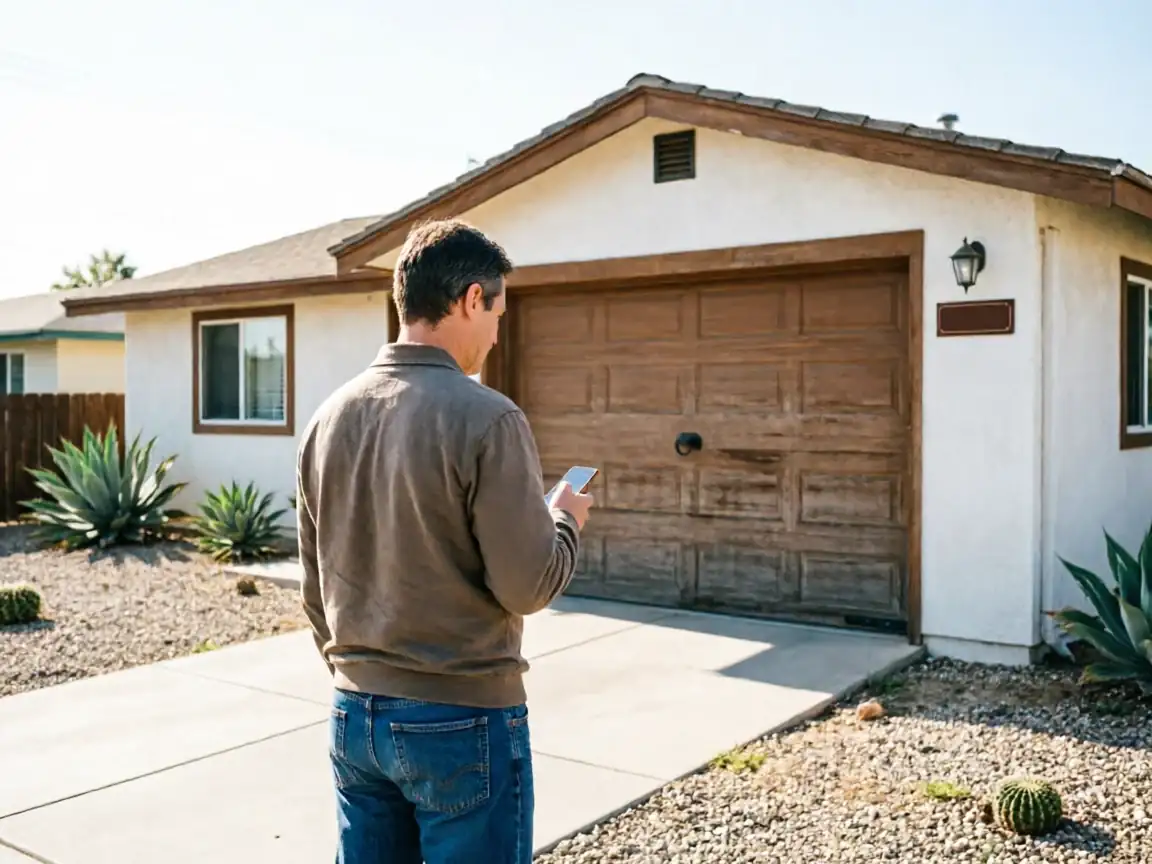
What's specific to Hidden Meadows is the door behind that spring. Most of this area was built around 1984, right in the middle of the 1970 to 2003 build window that covers this whole service area. A door that age is almost always running its second or third spring, not its first, because torsion springs are rated for a cycle count, not a calendar date. If your door has never had the spring swapped, you're due. If it has, the winding cones and end bearing plates on a 1984 build can be a slightly different size than what a hardware store assumes, which is where a homeowner trying to match parts by eye runs into trouble.
The mild temperate climate out here means rust isn't usually what kills these springs early - it's straight fatigue, thousands of open-close cycles on steel that was coiled forty-odd years ago. That's a reason to replace by wear, not by guesswork.
What the Fix Involves
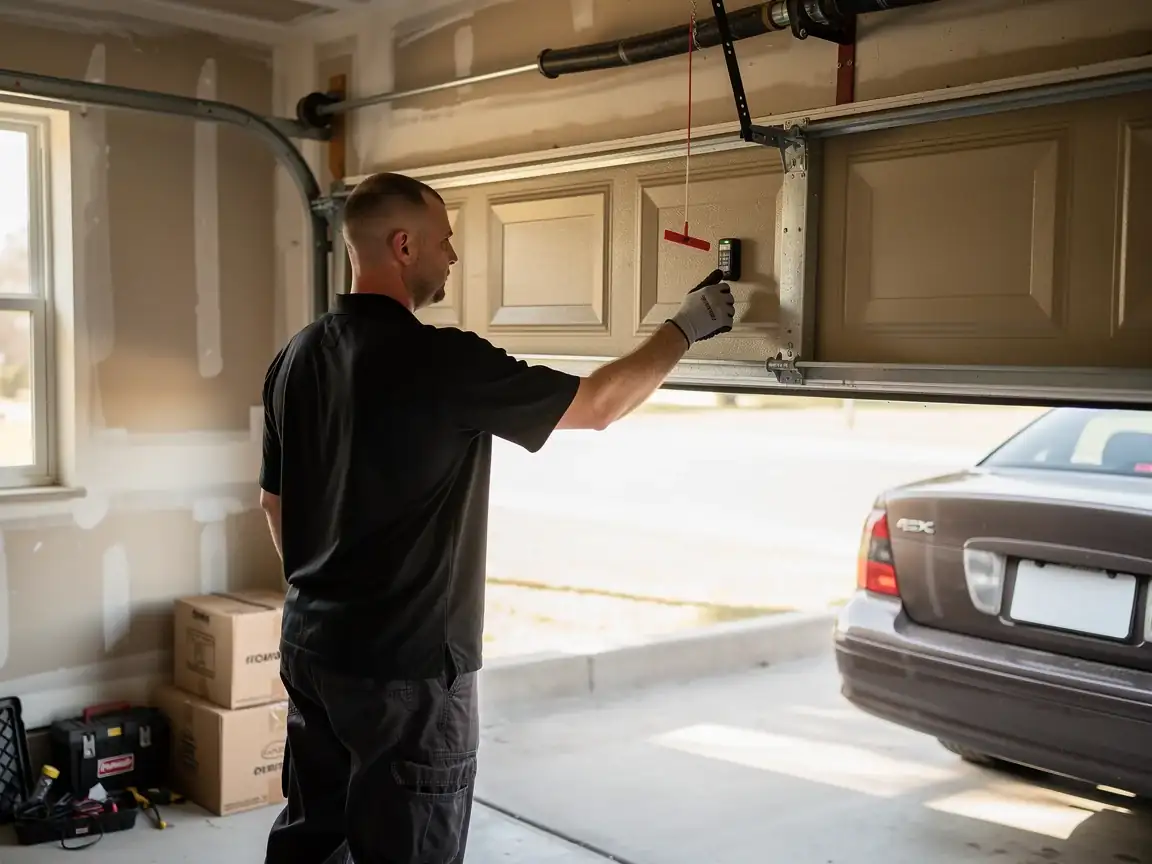
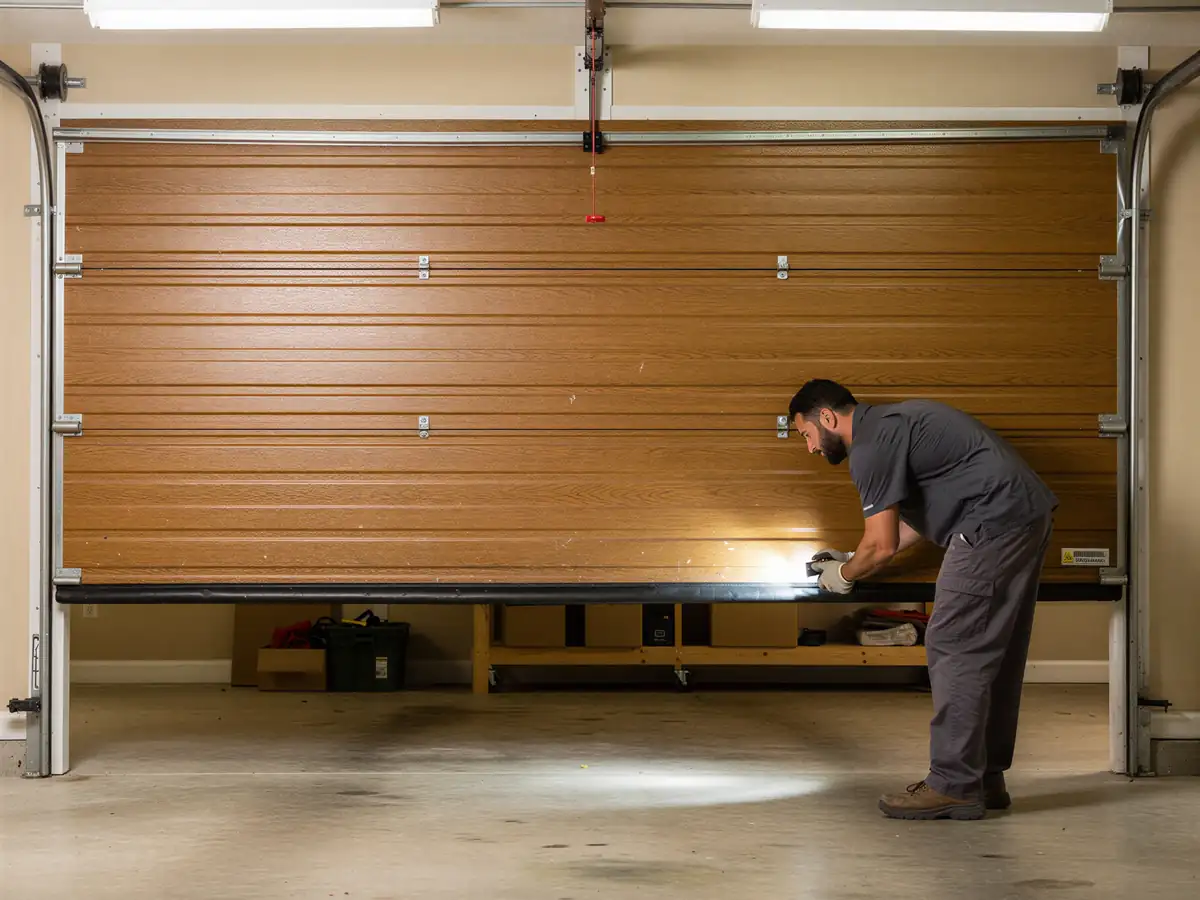
We pull the door down, lock it with clamps so there's no load on the track, and unwind the old spring in controlled turns before it comes off the shaft. On a standard double-car door from this era, that's usually a matched pair of torsion springs sized to the door's weight, not a single spring - a lot of 1980s-stock doors in this area were built heavier than the garage doors going up today, so the spring has to match the door, not a generic size off a shelf.
Once the new spring is on, we wind it to the manufacturer's turn count for that door's weight and width, lubricate the shaft and bearings, and run the door a dozen times to check balance - a door that drifts up or down on its own when you let go halfway isn't balanced yet, and we don't call it done until it is.
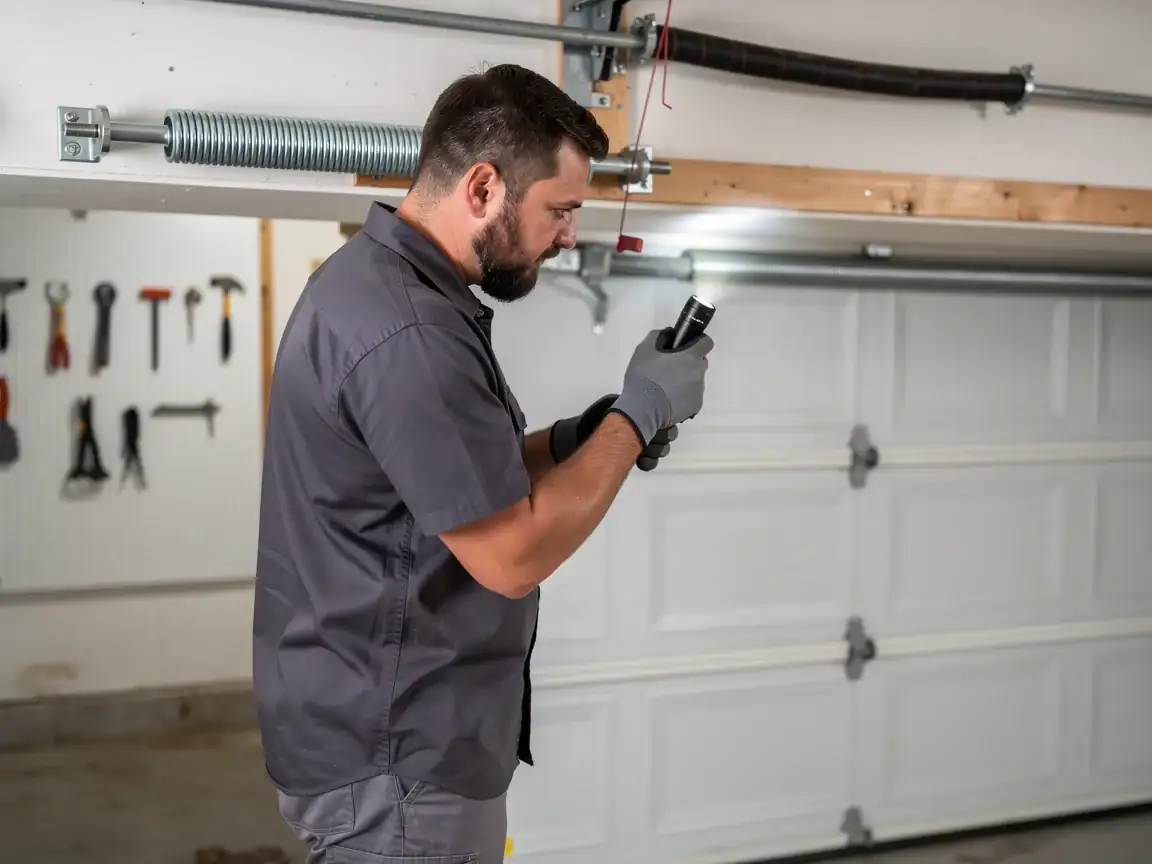
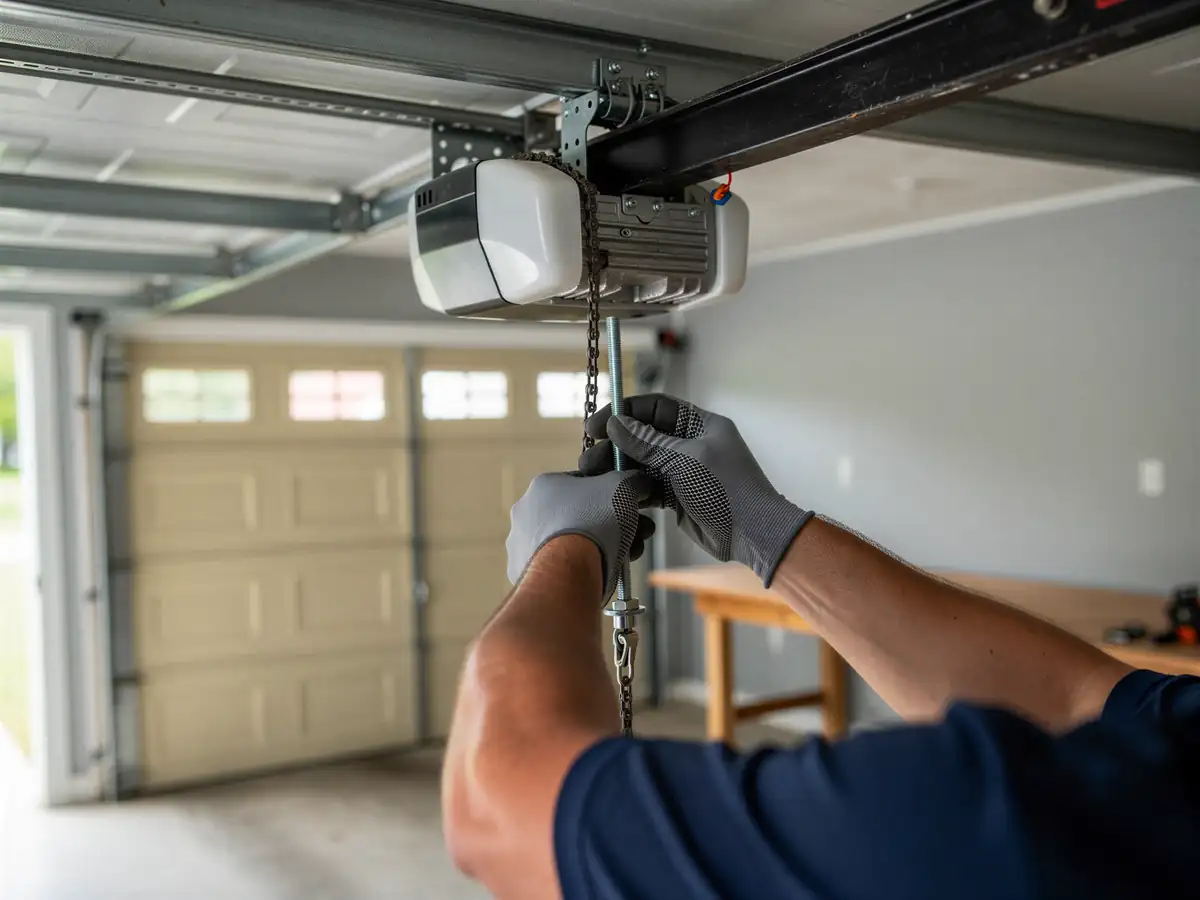
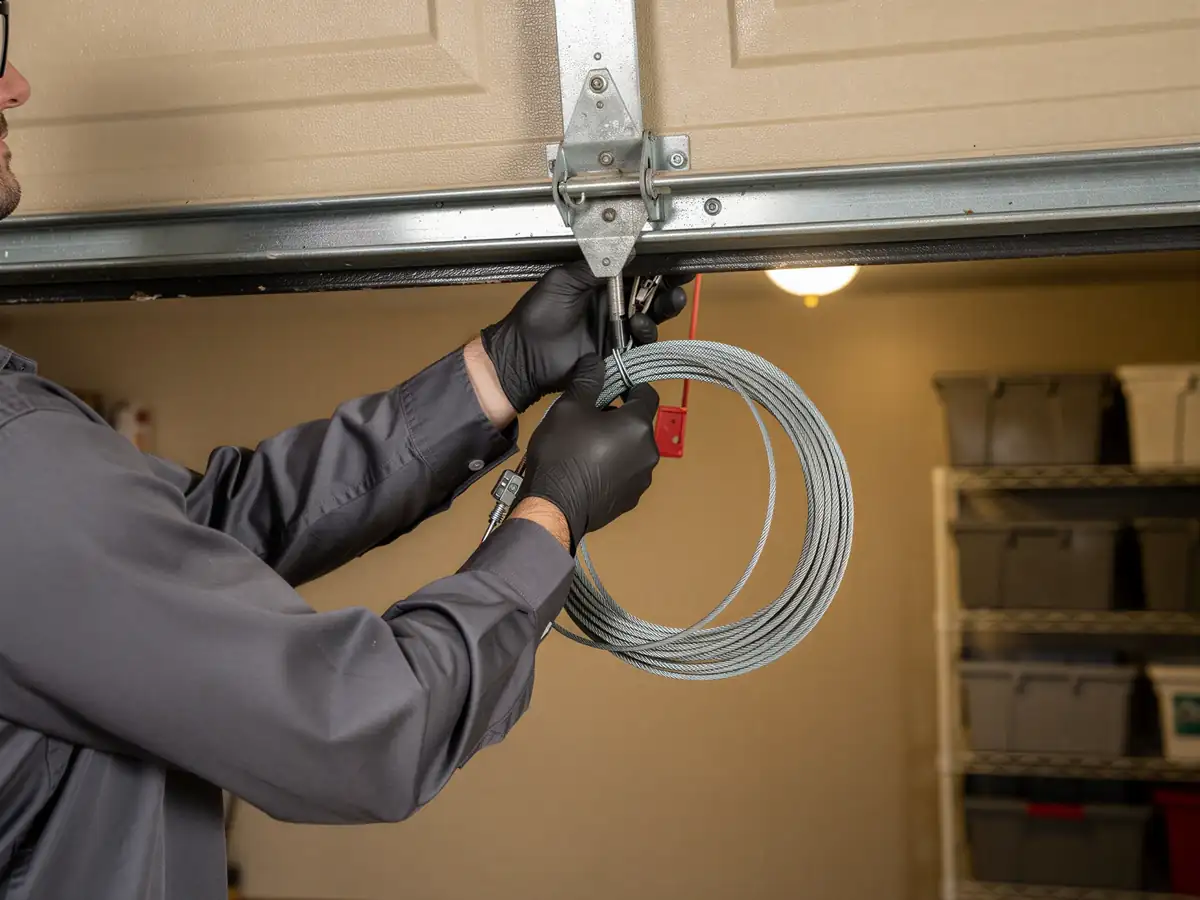
We also check the cable drums and the set screws on the winding cone while we're in there, since those are the parts most likely to be the actual reason a spring failed early rather than from age alone. If the opener's been fighting an unbalanced door for months, we'll flag that too, but that's a separate conversation - see our Hidden Meadows page for the rest of what we cover out here.
The Complications
The complication on a 1984-era door usually isn't the spring itself
It's what's holding the spring. Winding cones and stationary cones from that build period sometimes don't match the bolt pattern on a current replacement spring, and the track hardware on an original one-piece or sectional door from this window can use a center bearing bracket that newer universal kits don't fit cleanly. We carry adapters for the common cases, but every so often a bracket has to be swapped along with the spring, which adds time to the job.
The other complication is galvanization
Doors from the early-to-mid 1980s sometimes have springs with a thinner zinc coating than what's standard now, so by the time one breaks, the shaft underneath can show pitting even without serious climate wear. If that shaft is pitted enough, replacing just the spring and leaving the shaft is a short-term fix - we'll tell you straight if that's the case rather than quote a spring swap that won't hold.
Honest limitation: if the door itself is original to a 1984 build and the track geometry is bent or the panels are delaminating
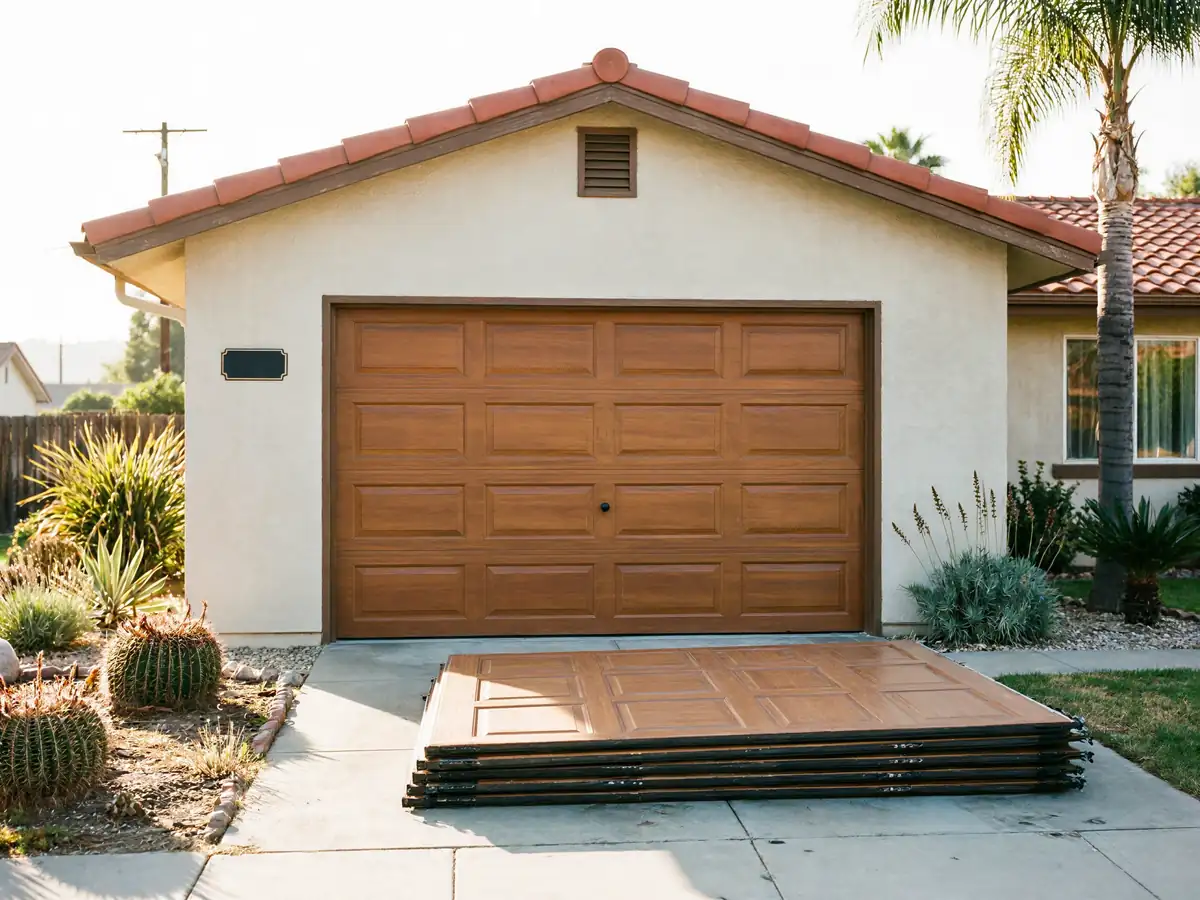
A new spring won't make an old door perform like a new one. Sometimes the right call is to talk about replacement, not repair.
How Long You Are Without the Door
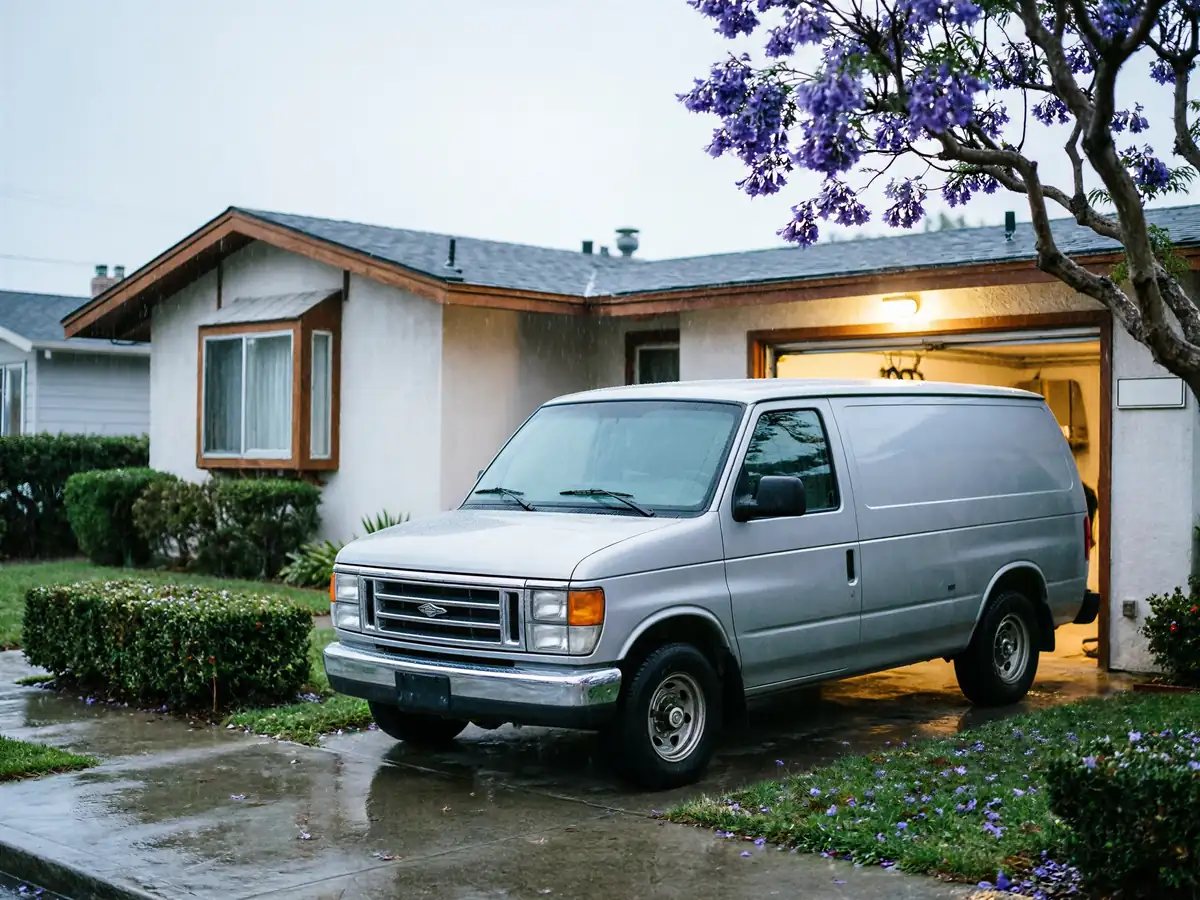
We run out of Vista, about 7 miles from Hidden Meadows, so the door isn't getting worked on until the truck's on-site - we're not quoting a response window here because that's a scheduling question, not a fact about the repair itself.
Once we're there, a standard torsion spring replacement on a double door, including balance check, usually takes under two hours. If the bracket or shaft turns out to be pitted or mismatched to the current hardware - which happens more often on doors from this build era than on newer ones - add time for sourcing the right part. We don't stock every obsolete bracket size on the truck, so a job that turns into a hardware mismatch can mean a second trip rather than finishing same-day.
The door stays closed and unusable from the moment the spring goes until a tech gets there and gets it back under tension - there's no safe way to operate a double door on a broken spring, even by hand, so plan around that rather than around a repair-time estimate alone.
The Symptom
The door won't move, or it moves and then drops hard halfway up. That's the classic broken-spring call: the opener motor tries, strains, and either trips its own force sensor or the door just doesn't lift because nothing's counterbalancing its weight anymore.
Before full failure, the warning sign is usually a loud bang from the garage - the spring snapping under tension - followed by the door suddenly feeling much heavier if you try to lift it by hand. Some owners notice the door closing faster than it used to, or hanging slightly crooked in the opening, which points to one spring in a pair having already gone while the other is still holding on.
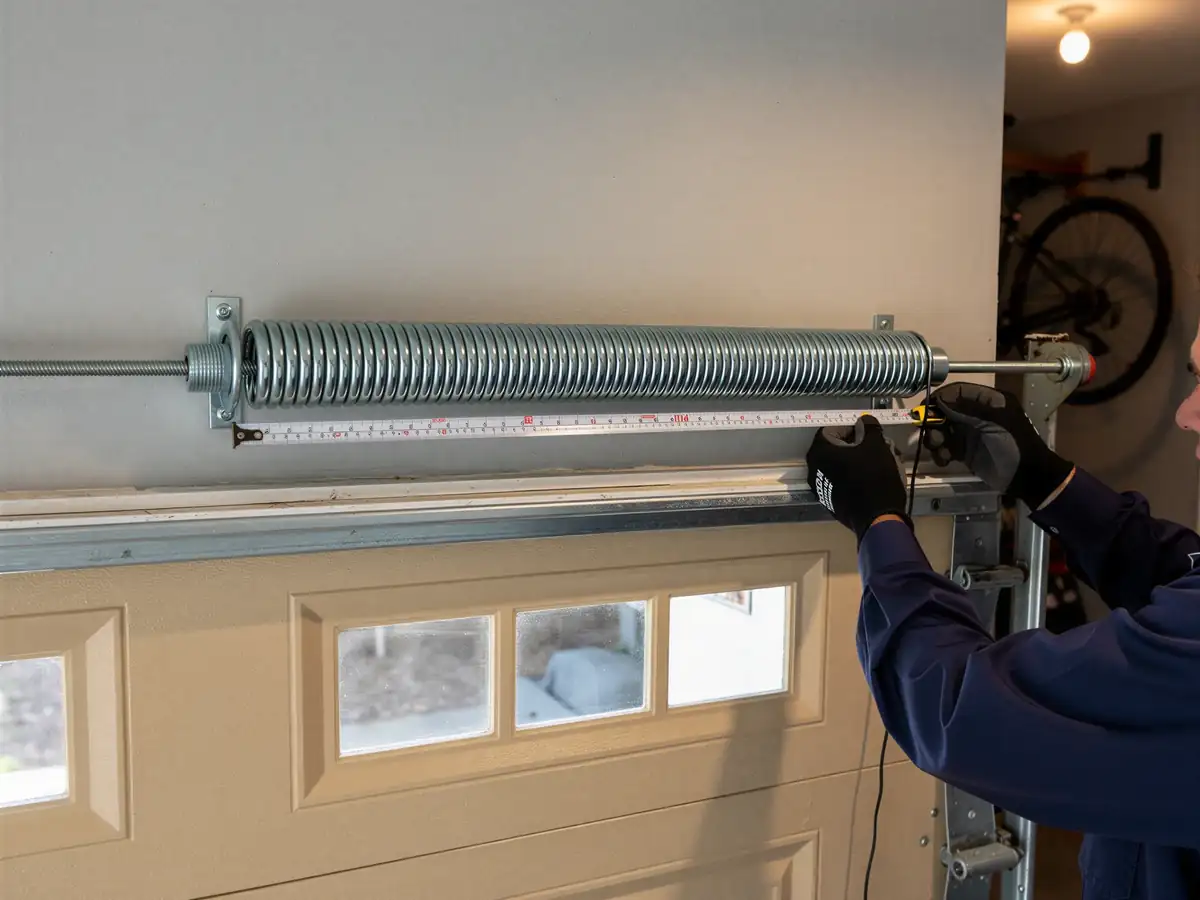
On a door built around the same year as most of this neighborhood, a visible gap in the torsion spring coil, sitting above the door, is the giveaway once you know to look for it. If you see that gap, don't test the opener again - call before you cycle the door and put more load on whatever's left holding it up.
The Cost of This Job
We don't have a posted number for you here, and we'd rather tell you that than make one up
What drives the cost on a job like this is whether it's one spring or a matched pair, whether the shaft or bearing plates need replacing alongside the spring, and whether the bracket hardware on an older build matches current parts or needs an adapter - all things we only know once we're looking at the door.
What we can tell you is that a straightforward spring swap on a double-car door, no bracket issues, is a different job than one where the shaft is pitted or the cones don't match
We'll give you the number before we start work, not after, and we'll tell you if the smarter spend is a full replacement rather than another repair on an aging door.
Median household income in this area runs higher than the wider service area average
Which sometimes means owners choose to replace an aging opener or full door alongside the spring rather than patch one part at a time - but that's a choice we lay out for you, not one we push.