The DIY Question
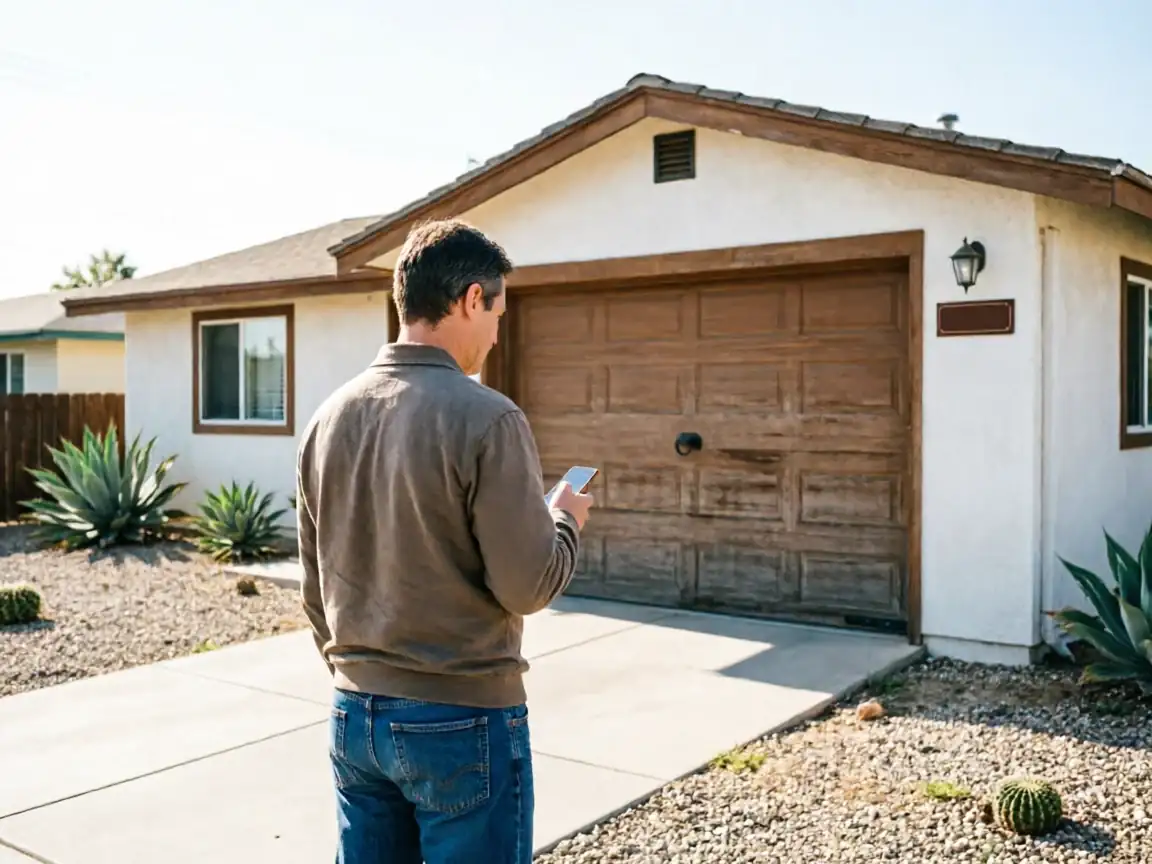
Hidden Meadows households run a median income of $119,394, well above the $110,316 average across the wider Vista service area we cover. That matters here because it changes the math on DIY. A homeowner who can absorb a $400 opener replacement without blinking has less reason to spend a Saturday chasing a logic board fault than someone stretching a tighter budget. That said, some of what goes wrong on an opener is genuinely a five-minute fix - a misaligned photo-eye sensor, a dead remote battery, a limit switch that needs resetting after a power outage. Those are worth trying yourself before you call anyone. What isn't worth DIY-ing is anything involving the drive gear, the circuit board, or a motor that hums but doesn't move the trolley. Opening the housing on a chain-drive unit from the 1980s often means parts that aren't sold anymore, and guessing wrong turns a repair into a replacement anyway. If your opener is original to a house built around 1984, which is typical for this area, the honest first question isn't "can I fix this" - it's "is this unit old enough that fixing it just delays the inevitable."
What the Fix Involves
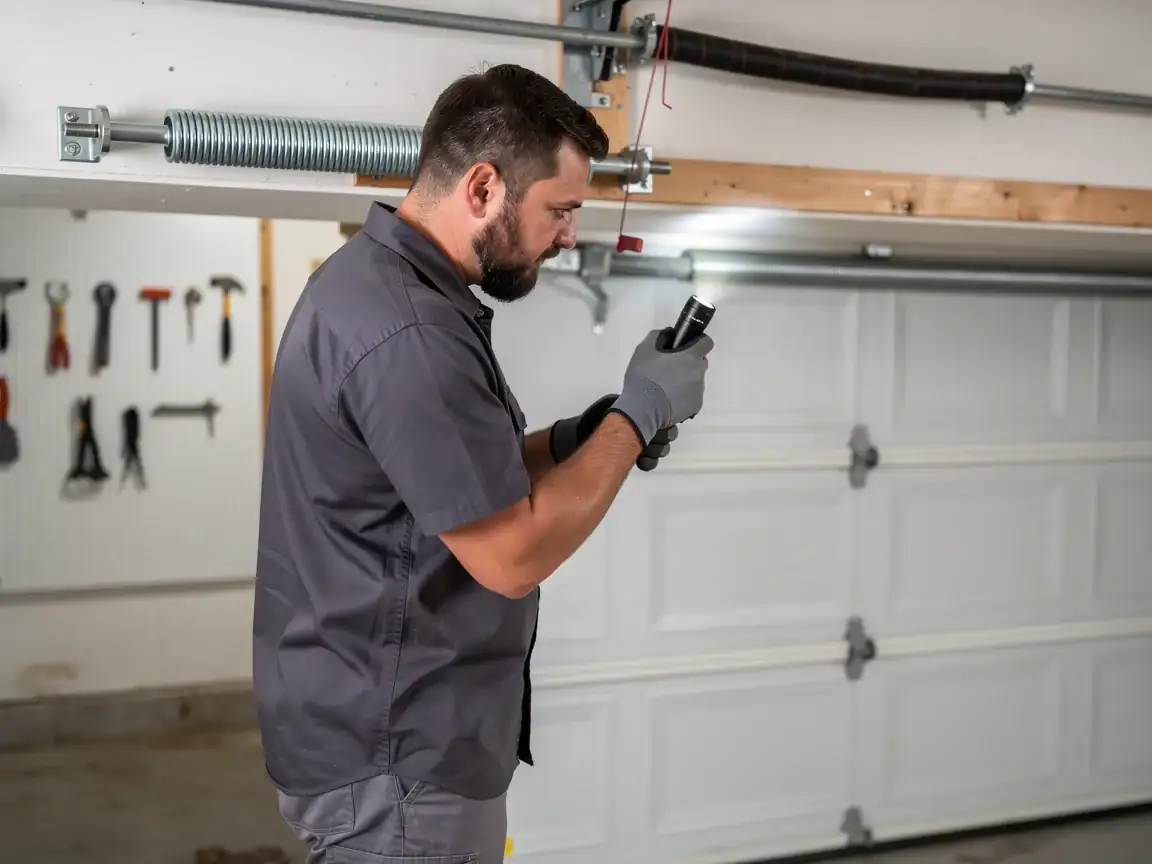
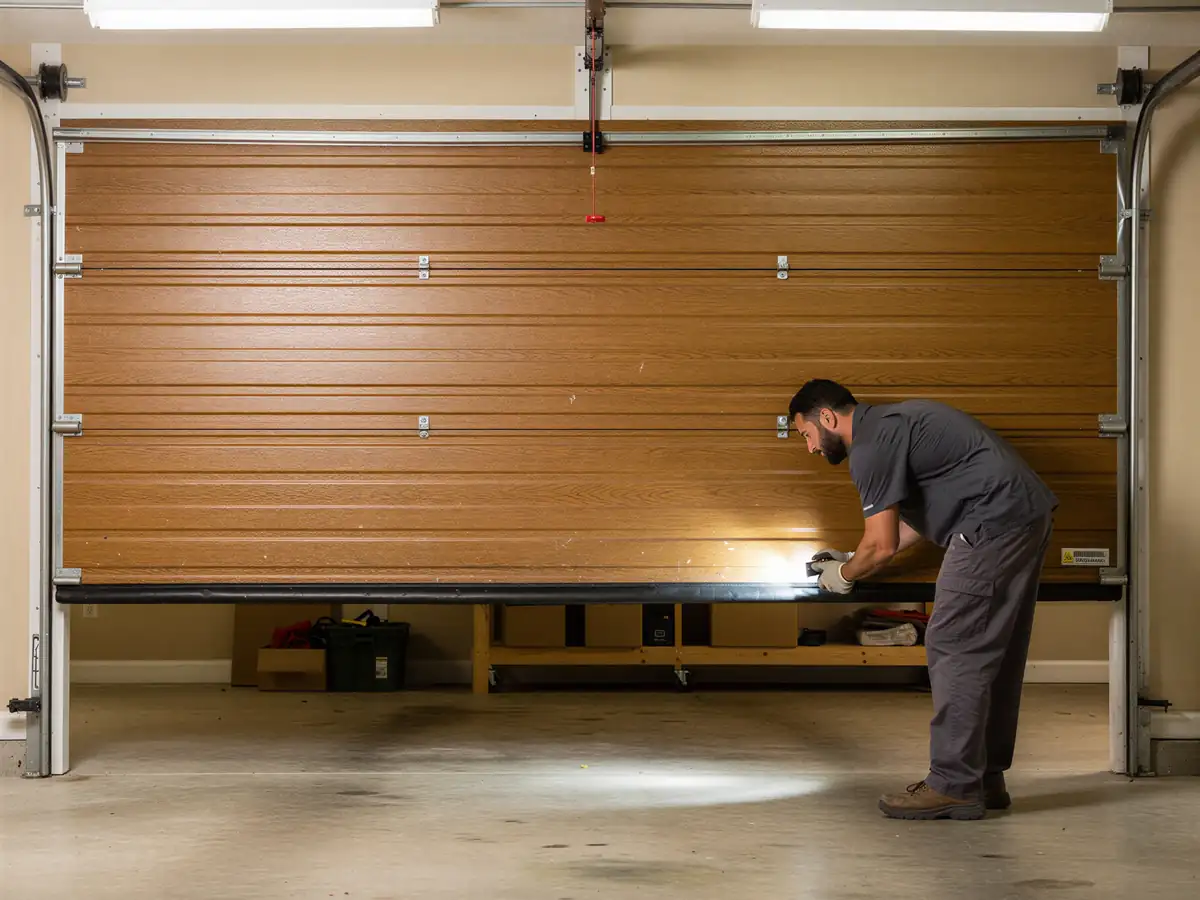
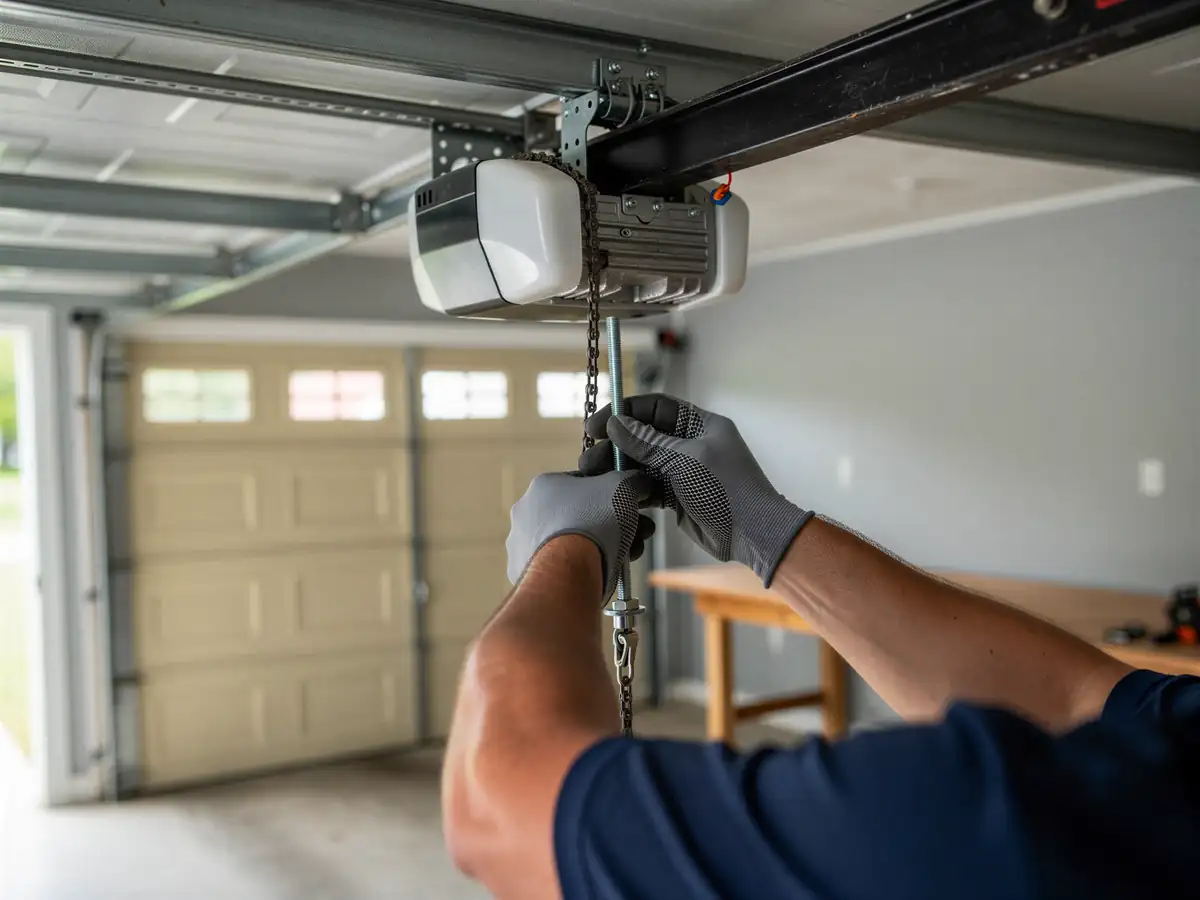
Most calls here break into a short list: a stripped drive gear on an older chain-drive unit, a failed capacitor on the motor, a logic board that's stopped reading the wall switch, or safety sensors knocked out of alignment. Houses in this area were mostly built in the 1980s and 90s, per the housing data for the broader service territory, which means a good number of original openers are chain-drive models nearing or past their expected lifespan. The fix usually starts with testing the motor under load, checking the circuit board for burn marks or corrosion, and confirming the sensors are reading clean. If the gear's stripped, that's a part swap. If the board's dead, we check whether a replacement board exists for that model before quoting anything - some older chassis just don't have boards in production anymore, which pushes the job toward a full opener swap instead of a board-level repair.
How Long You Are Without the Door
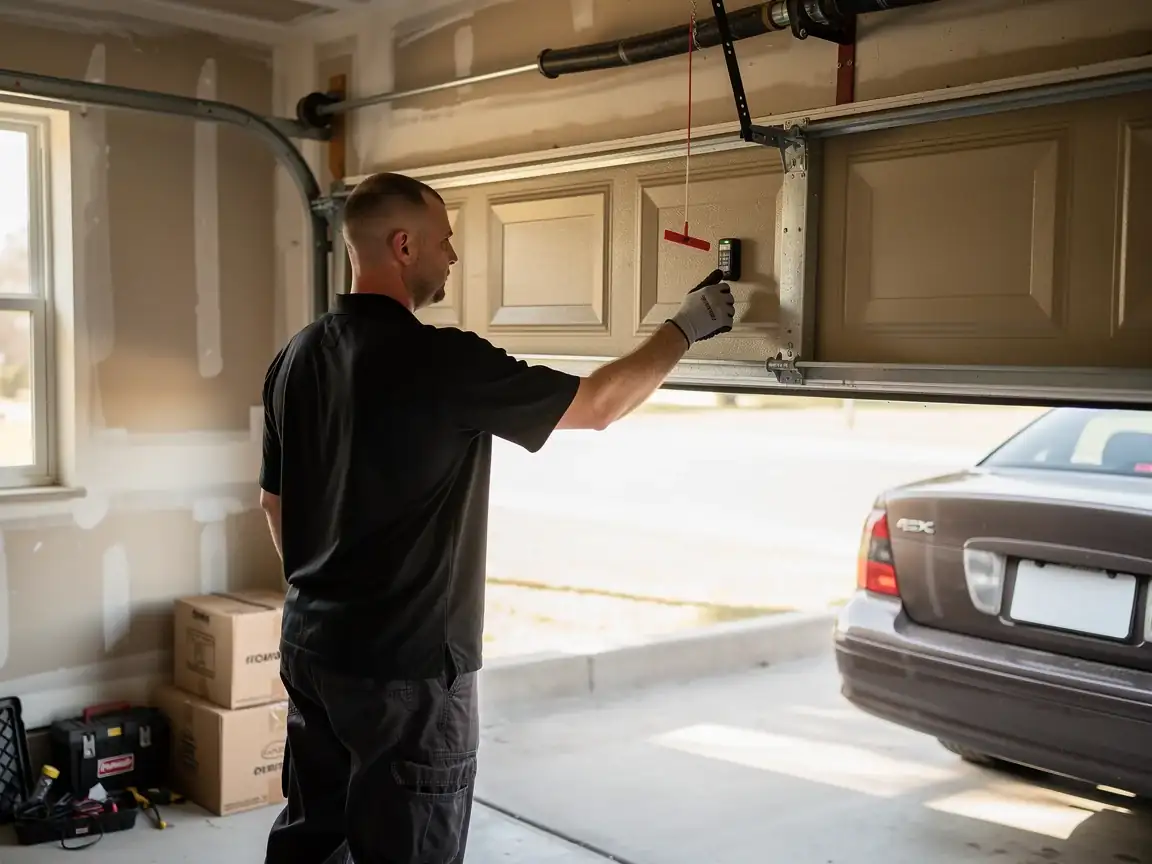
A straightforward swap - sensor realignment, capacitor replacement, a new logic board when one's available - is usually done in one visit once the truck's on site, roughly 7 miles out from Vista. Where it stretches is parts. If your opener needs a gear kit or board that isn't in stock, you're waiting on that part to arrive before the job finishes, and for older chain-drive units that can mean a return trip. We won't promise a same-day fix on a part we don't have in hand - that's not a Hidden Meadows thing, it's true of any opener repair where the model's been out of production a while.
The Symptom
The most common complaint we hear from this area is an opener that runs but the door doesn't move, or moves partway and reverses. On a unit built in the 1980s, that's almost always the drive gear - a plastic or nylon component that wears down after years of use and eventually strips its teeth, leaving the motor spinning without catching the chain or belt. The second most common is a door that won't respond to the wall switch or remote at all, which usually traces back to a dead circuit board rather than the motor itself. Less often, we find the safety sensors knocked out of alignment, which stops the door from closing even though everything else works fine - an easy fix, but one people often assume is a bigger problem than it is.