The DIY Question
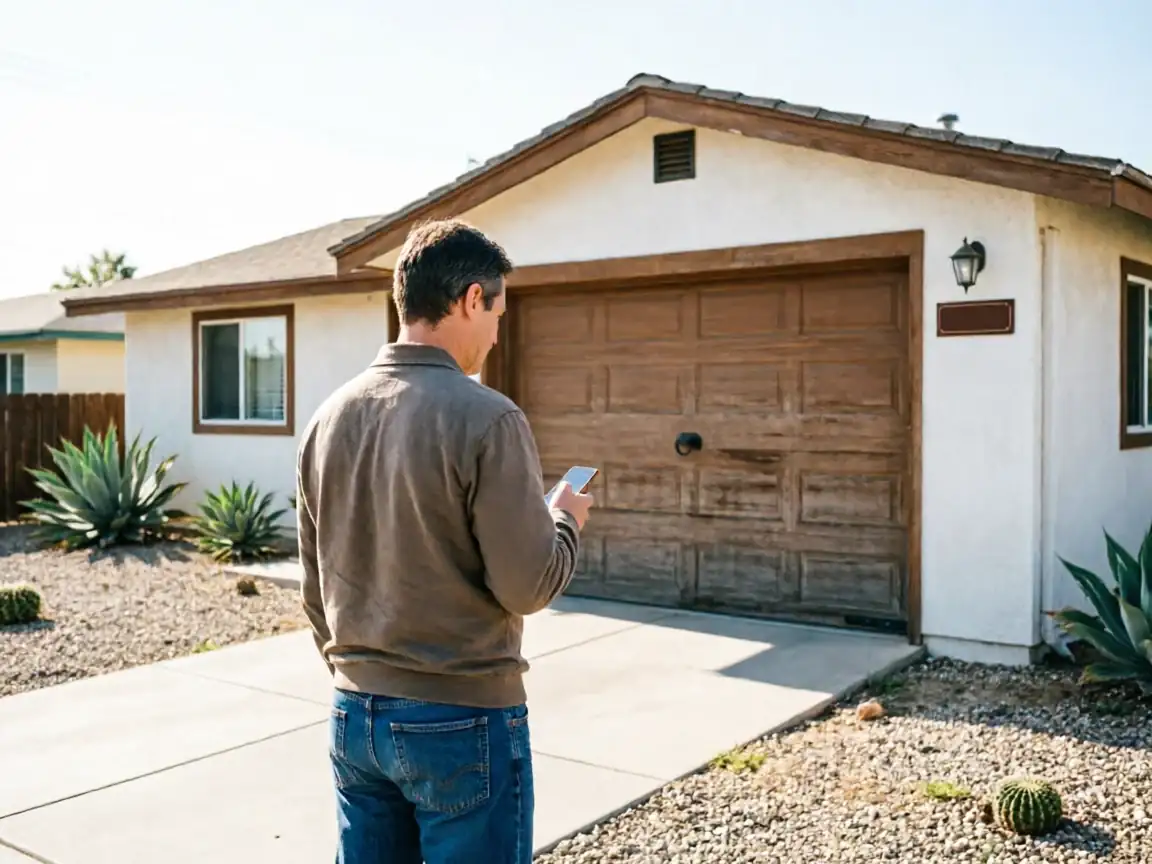
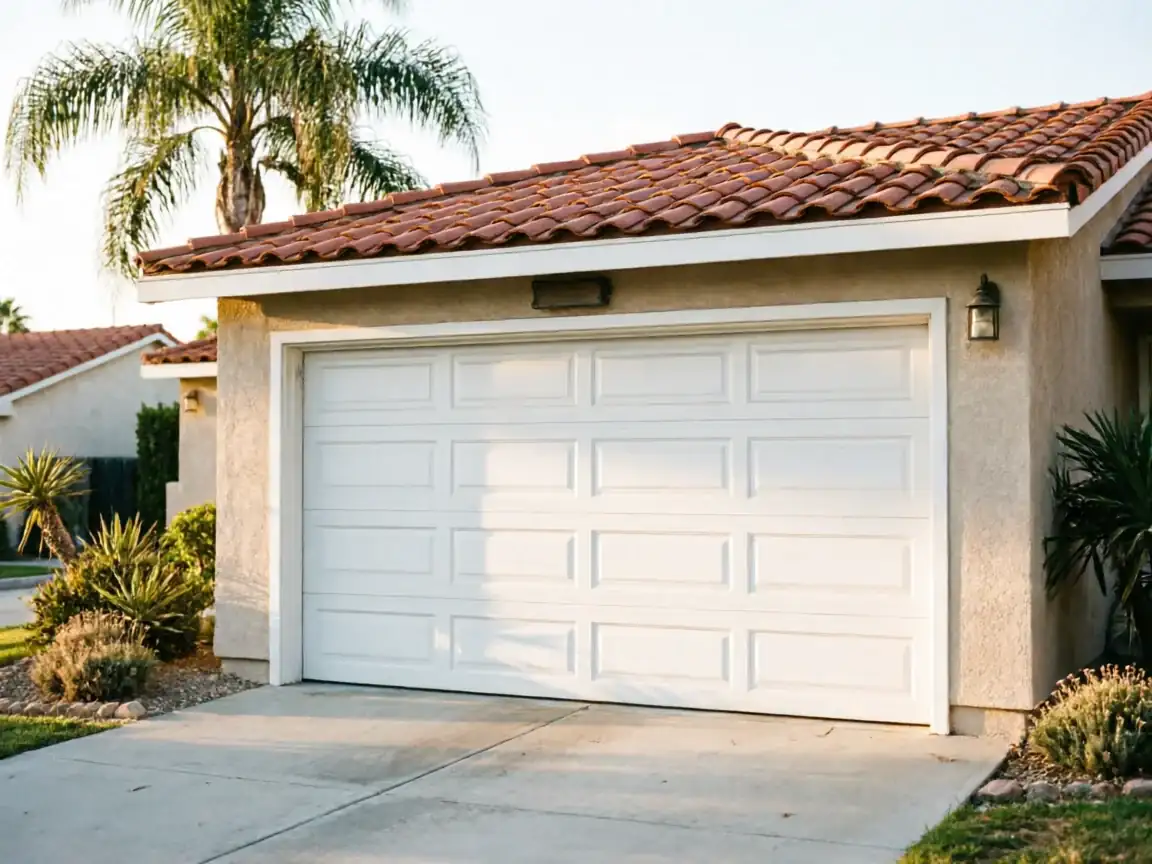
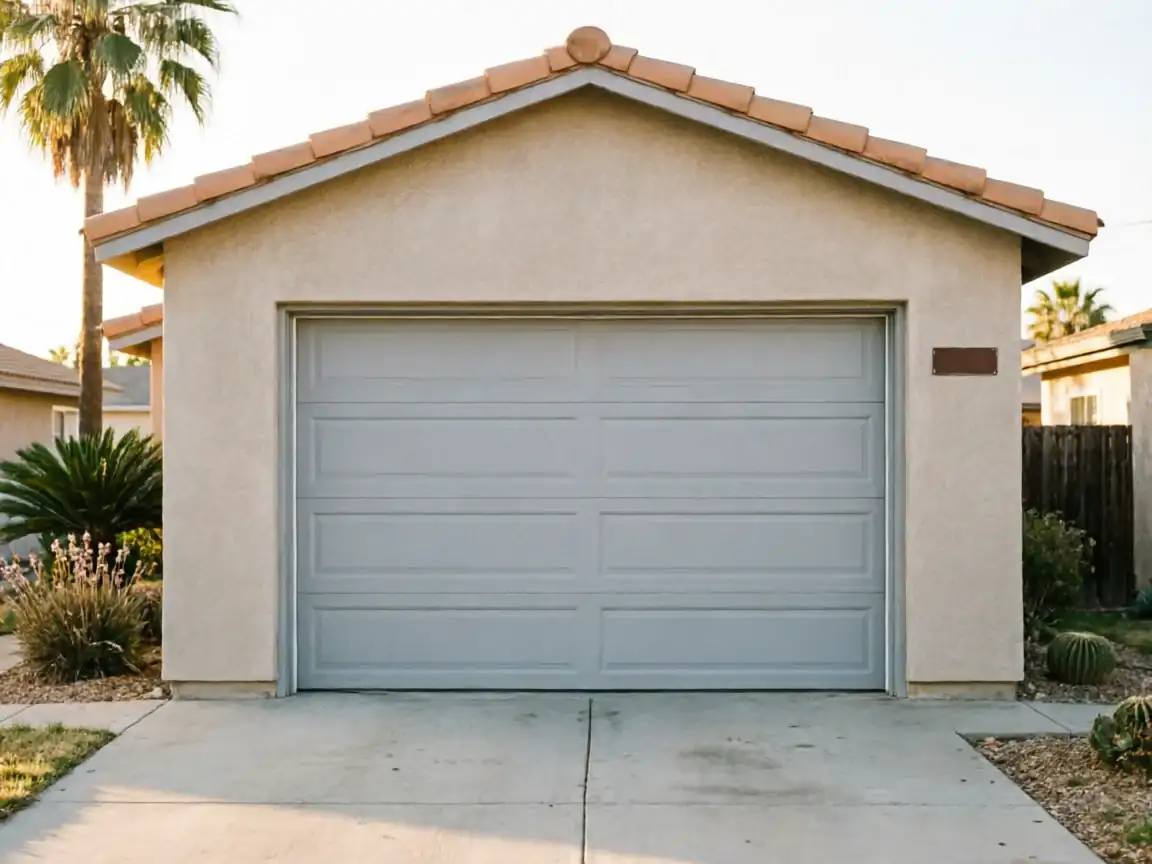
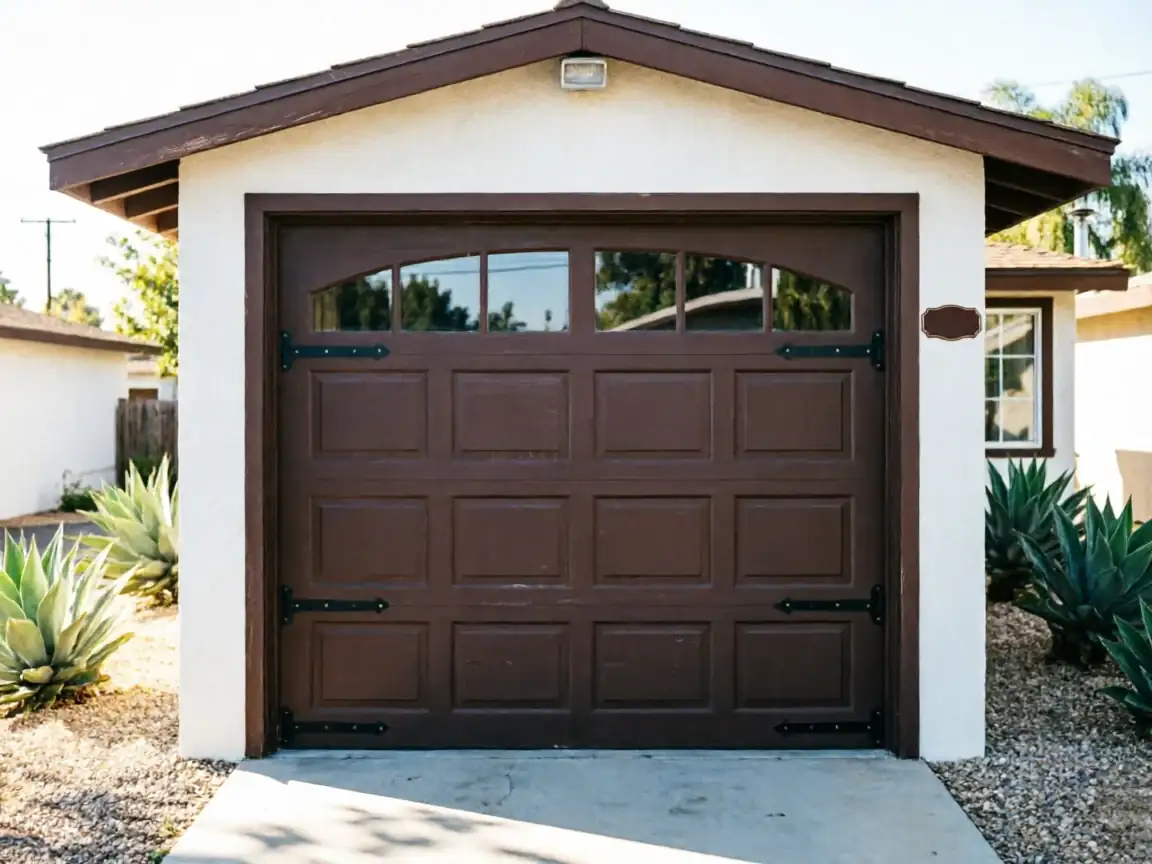
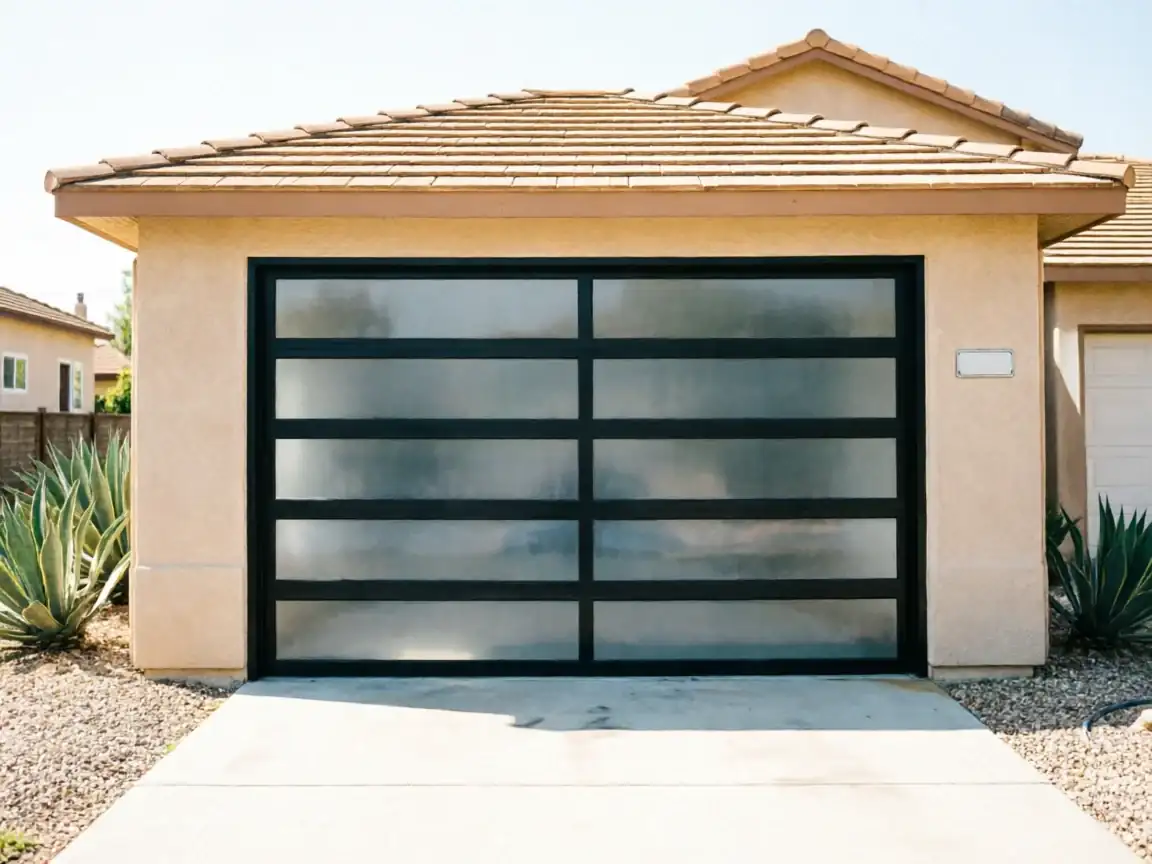
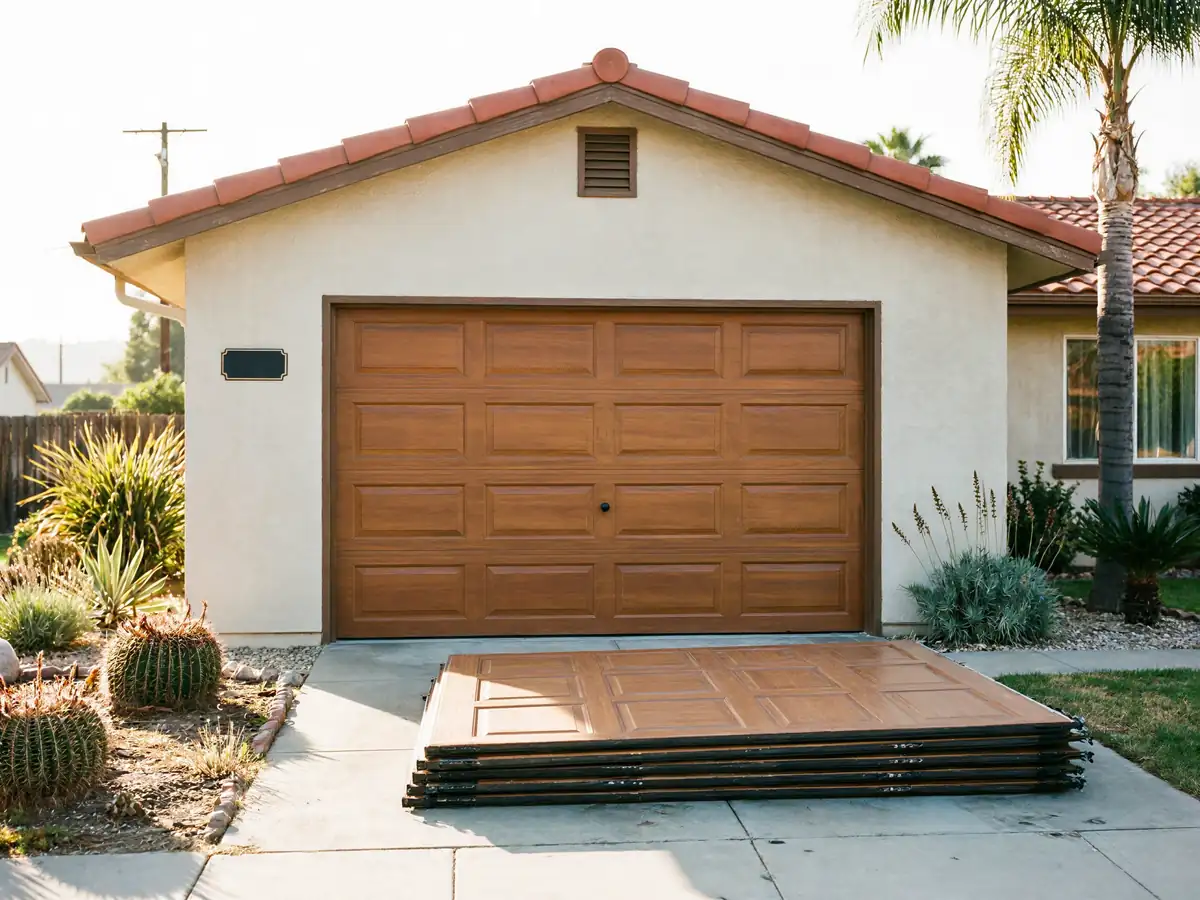
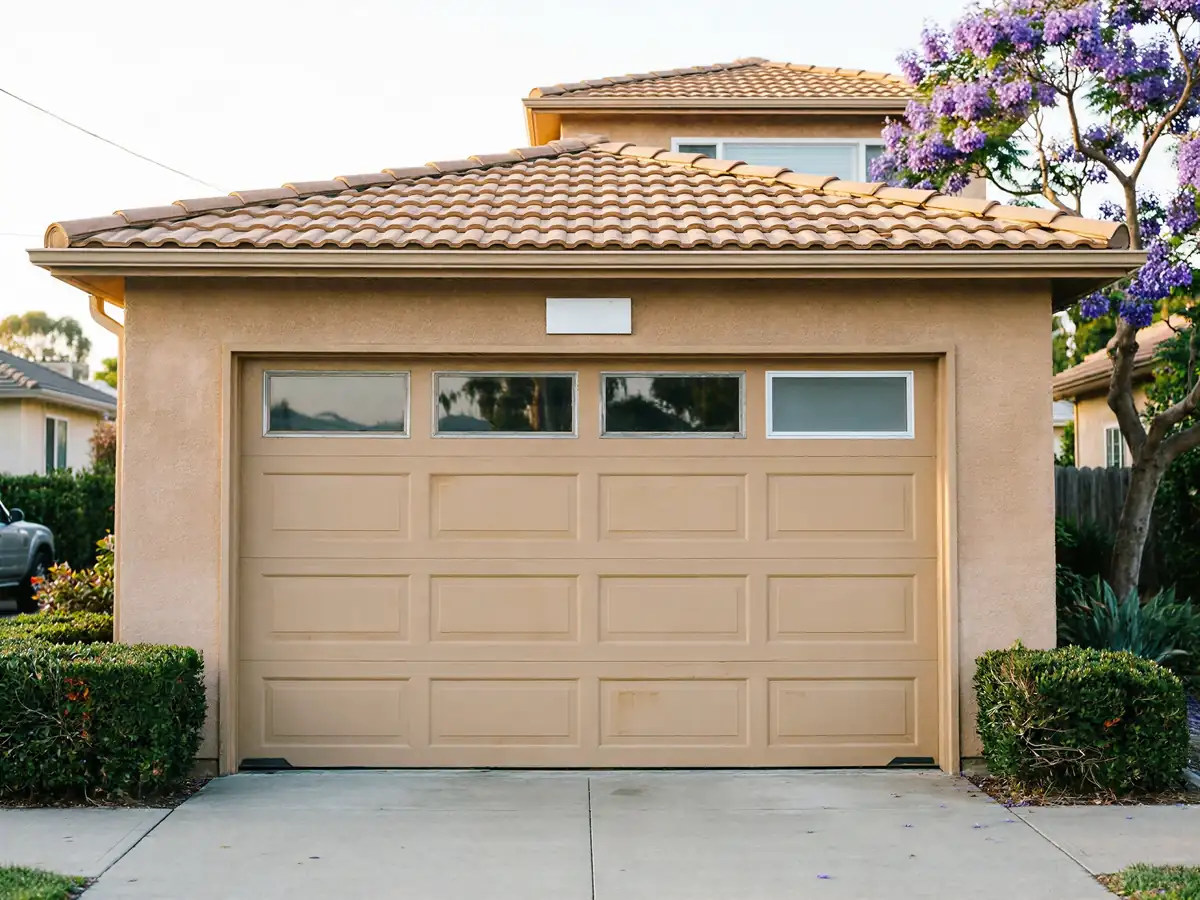
Hidden Meadows sits about 7 miles out from our Vista shop, and the houses out here skew newer than a lot of what we see closer in. Median build year here runs around 1984, a few years past the 1982 midpoint for the wider service area we cover - which doesn't sound like much until you're standing in front of the door. A door from 1984 is more likely to be a sectional steel door on a standard torsion system, not the older single-panel or odd-width setups you find on pre-1975 stock. That's good news for DIY in one sense: panel kits for that era's door widths are easier to source. It's bad news in another: by now that steel has had close to forty years of sun and salt air to work on it, and the fasteners are often seized. You can pull a bottom panel yourself if you've got the right clamps and a second set of hands. Swapping a panel mid-stack on a door still under spring tension is where people get hurt or warp the new piece trying to force a fit. If the door is more than one panel deep in damage, or the track's bowed from the impact, that's a call, not a weekend project.
What the Fix Involves
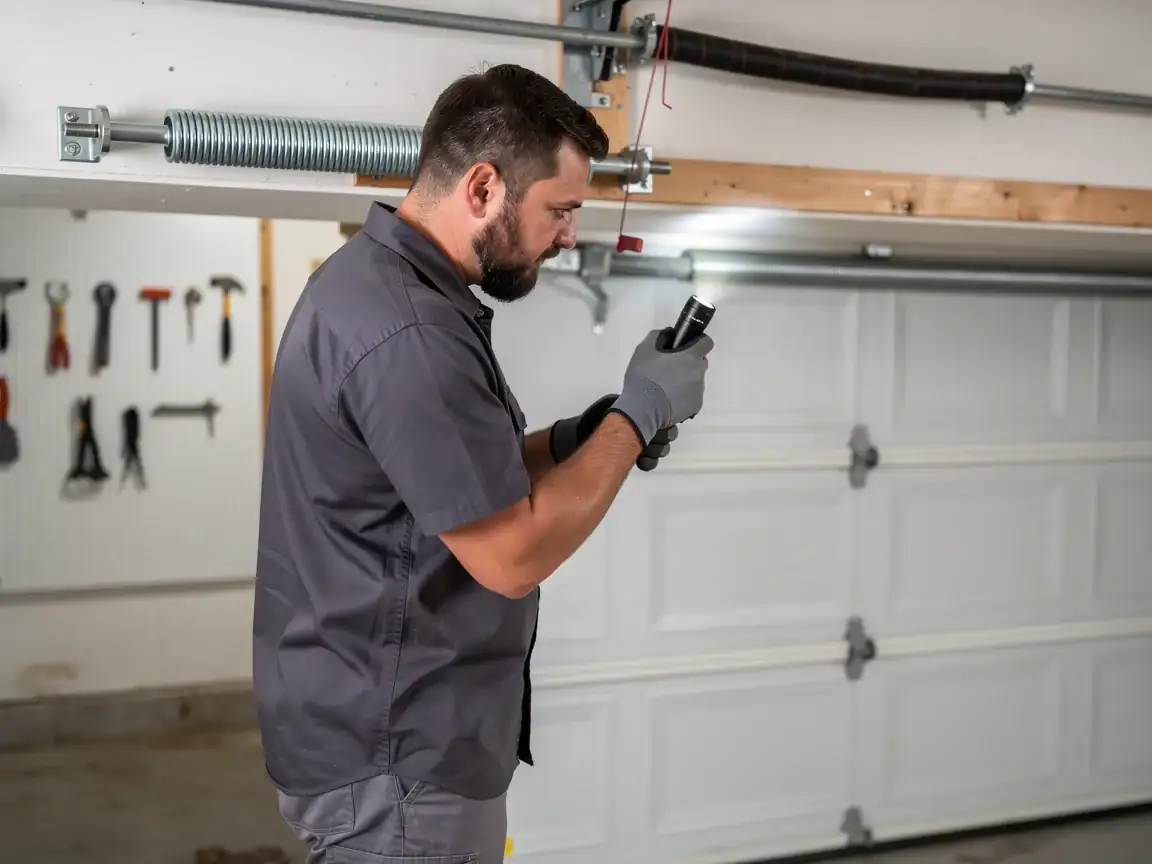
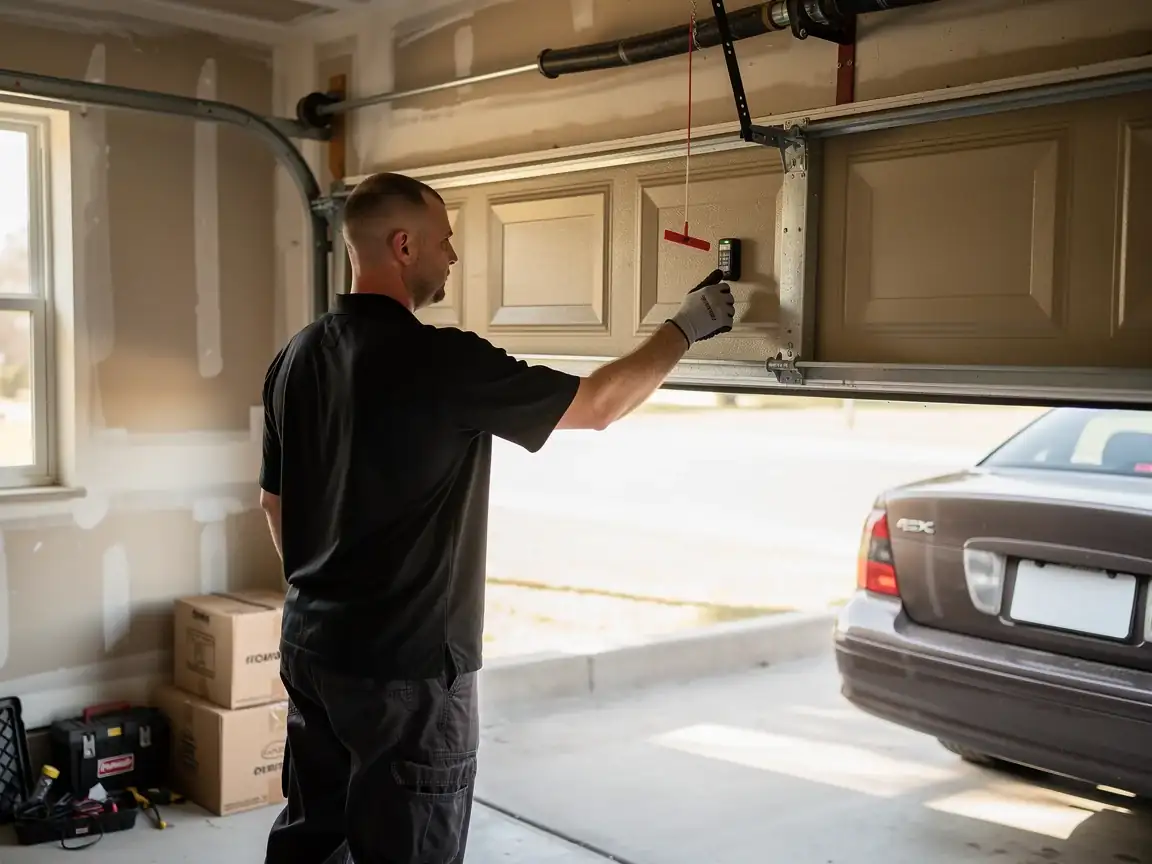
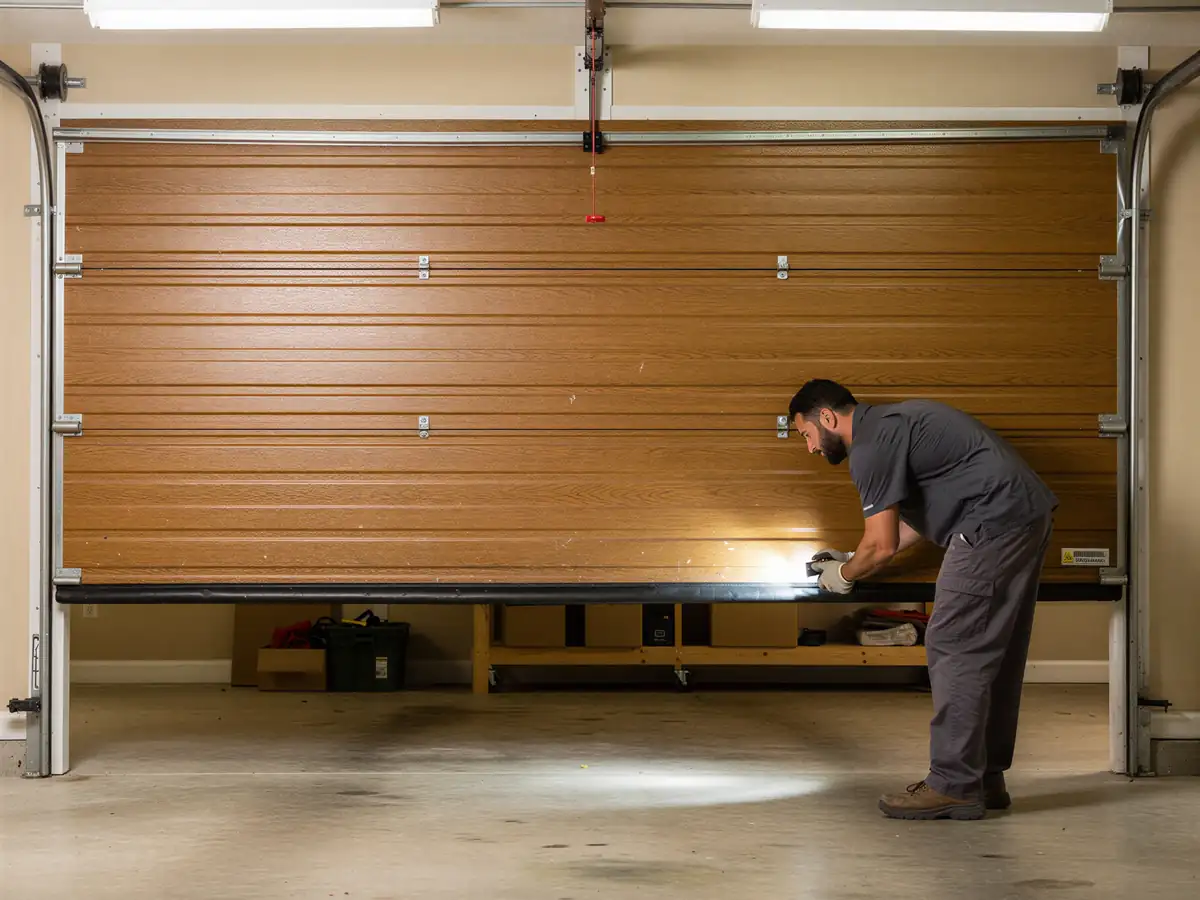
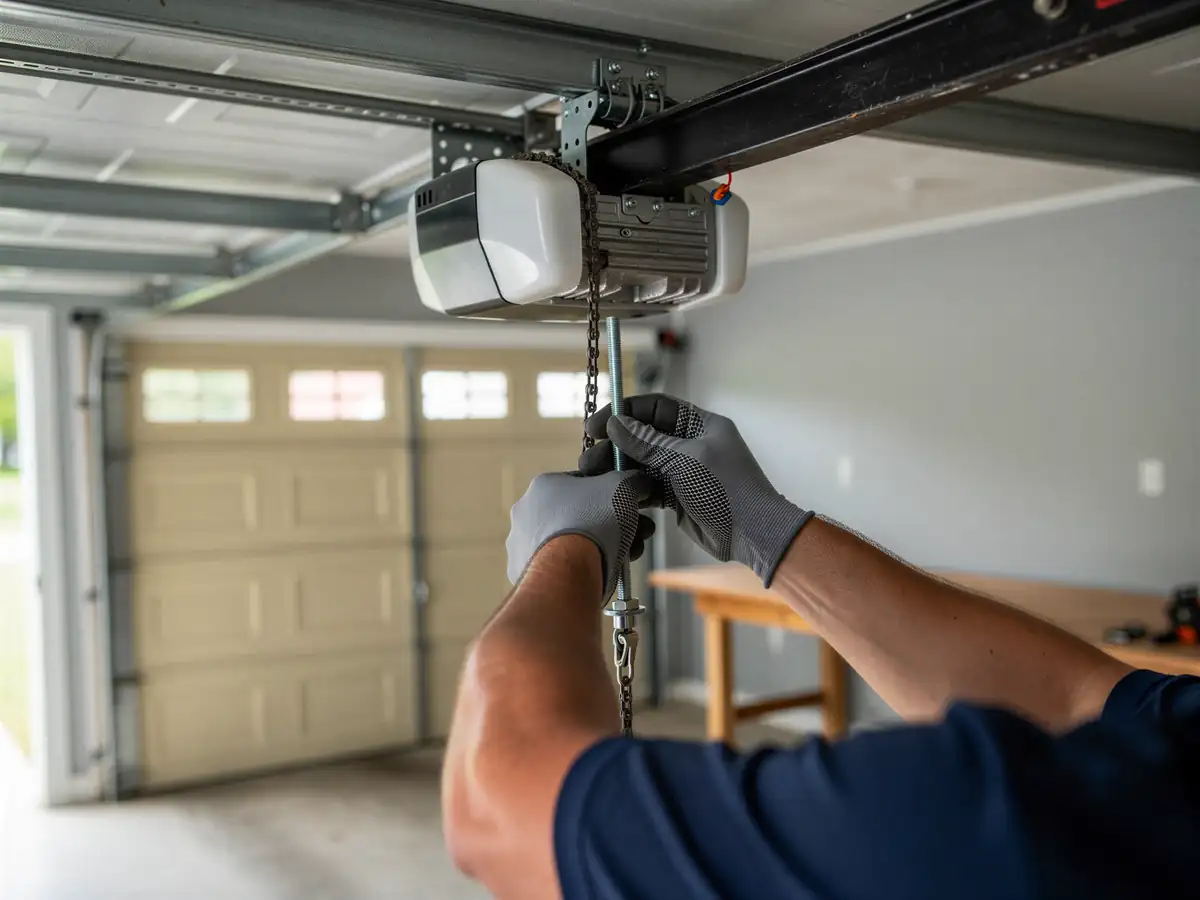
We pull the section that's damaged, match the panel profile and color, and set it back into the track without disturbing the spring tension on the rest of the door. On a 1984-era door that's usually a straightforward swap - the hardware is consistent and parts are easier to match than on the 1970s single-panel doors we see elsewhere in the service area. We check the hinges and rollers on either side of the new panel before we close up, since a bent panel often takes a hinge or roller with it, and leaving that alone just means a second call in a few months. We also check the opener's travel limits after, because a replaced panel can sit a few millimeters off from the original and throw the auto-reverse sensor out of alignment. We don't paint on site - if your panel needs color-matching beyond a close factory match, that's a separate step, not something we do from the truck.
How Long You Are Without the Door
Once we've confirmed the panel and it's in hand, the swap itself is usually done in one visit - pulling the damaged section, setting the new one, checking rollers and hinges, and running the door through a full cycle before we leave. The variable isn't the install, it's getting the matching panel in from the manufacturer if it's not something we're already carrying on the truck for this door style. We'll tell you at the estimate whether we have it on hand or need to order, and we won't guess at a timeline we can't back up.
The Symptom
The panel job usually starts with one obvious sign: a dent or crack in one section, usually the bottom one, from a car bumper, a stray basketball, or just age pushing the seams apart. Sometimes it's less obvious - a section that's bowed enough to bind against the track on the way up, making the opener strain or reverse partway through the cycle. On doors around this build year, we also see delamination starting at the panel seams, where the steel skins separate from the insulation core after decades of heat cycling. If the door still opens and closes smooth and it's just cosmetic, that's a one-panel job. If it's binding the track or throwing the opener's amp draw up, that's worth a look before you replace anything, since sometimes the real problem is a bent track, not the panel itself.